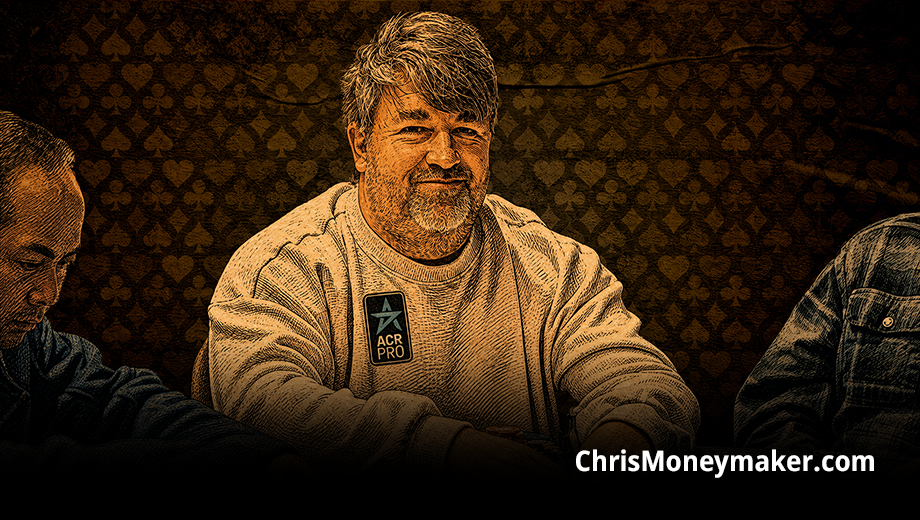

I had $200 in my online account. The satellite that got me into the whole thing cost $86. That’s not a typo, and it’s not a metaphor — that’s genuinely how cheap the entry point to the biggest poker tournament in the world can be, if you understand how satellites work. Most people who watch the WSOP think it’s a $10,000 buy-in event for rich people. It is a $10,000 event. Almost nobody actually pays $10,000 to get in.

What the WSOP Actually Is
The World Series of Poker Main Event is a $10,000 buy-in no-limit hold’em tournament held every summer, historically at Binion’s Horseshoe and now at various venues in Las Vegas. It’s been running since the early 1970s, but the event most people know about is the modern era — thousands of players, a massive prize pool, and a final table that gets broadcast on TV.
In 2003, when I won it, there were 839 players and a prize pool of $7,987,860. First place was $2,500,000. Today the field is many times larger and the money has grown accordingly. The structure hasn’t changed much — you get a starting stack, you play down levels over multiple days, and the field shrinks until nine players are left at the final table.

How Satellites Actually Work
The Path I Took
I didn’t pay $10,000. I won an $86 satellite, which fed into a $615 qualifier with 69 players that gave away three seats to the Main Event. That’s the whole model. Instead of paying full price, you play a cheaper tournament where the top finishers win a seat to the bigger one. It’s how most amateur players get into events they’d never otherwise afford.
Why This Matters for Beginners
If you’re new to this, the takeaway is simple: you don’t need $10,000 to have a shot at playing the Main Event. You need enough to buy into a satellite, and the discipline to treat that satellite seriously instead of assuming you’ll just lose it. I almost didn’t take mine seriously — I thought I was entering a cash game, not a satellite to a satellite. Read the tournament details before you register. Learn from my mistake.
What the Structure Actually Feels Like
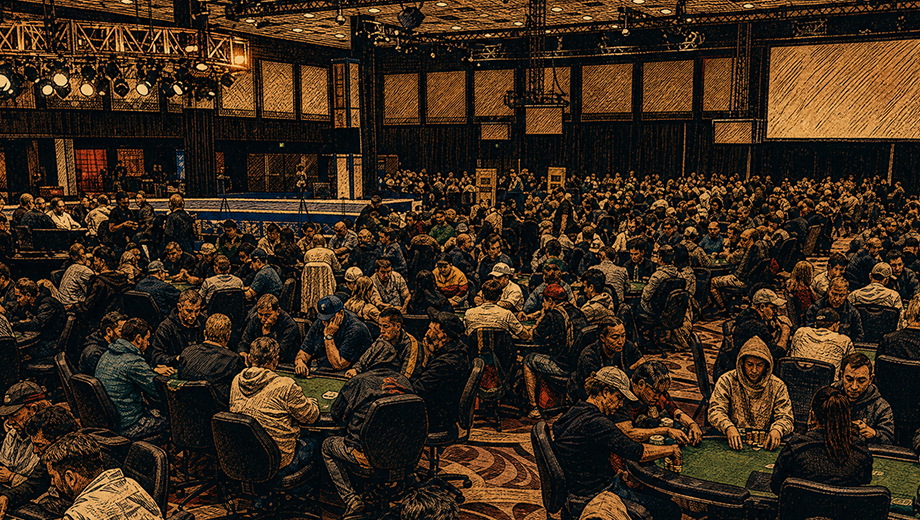
Day 1 is long and mostly boring. Players are cautious, stacks are deep relative to the blinds, and not much happens that matters. That changes by Day 2 and beyond, when blinds go up, stacks get shorter relative to the pot, and players start making real decisions instead of just waiting.
You get a starting stack — mine was 10,000 in 2003 — and you’re trying to survive and grow it across multiple days. Most players don’t make it past Day 1 or Day 2. Making the money at all (getting paid anything) usually means outlasting the vast majority of the field. In 2003, only 63 out of 839 players got paid.
What I Only Knew Going In
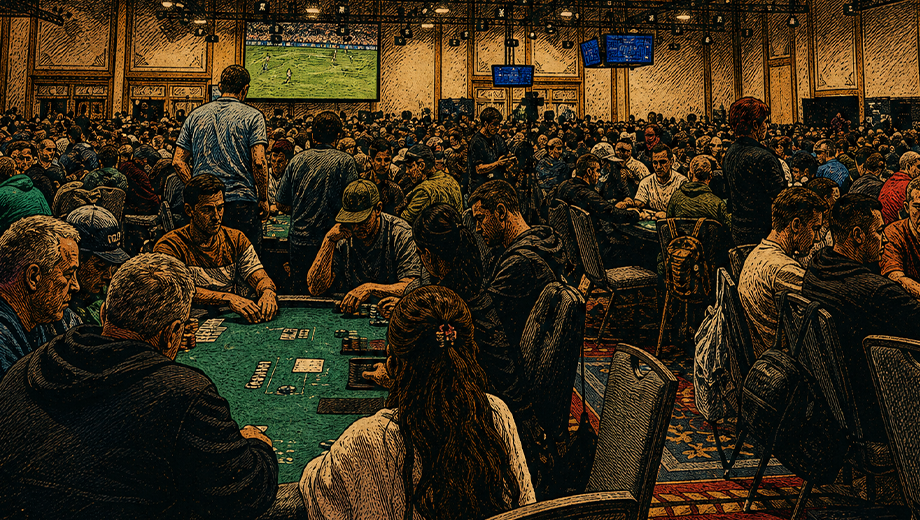
I want to be honest about how little I knew before playing. I could name exactly three professional players: Phil Hellmuth, Doyle Brunson, and Johnny Chan — and I only knew the last two from watching Rounders. That’s not a great foundation for playing the biggest tournament in poker, and it’s also proof you don’t need one to have a chance. I was the worst player in that field. I knew that going in.
Where to Start If You’re New
Understand the Bracelet Events, Not Just the Main Event
The WSOP Schedule includes dozens of events every summer at different buy-in levels, not just the $10,000 Main Event. Smaller buy-in events exist specifically because not everyone can or should jump straight into the biggest tournament on the schedule.
Learn to Read, Not Just Calculate
You don’t need solvers or GTO training to start. It’s not rocket science. It’s simple observation — watching how people play, guessing their hands, checking yourself at showdown. That’s how I built whatever skill I have, and it’s still the most accessible way to improve as a beginner.
Respect the Format Before You Play It
Tournaments reward patience more than aggression, especially early. Day 1 isn’t the day to get creative. Save that for when the stakes and information actually justify it.
Nobody walks into the WSOP already knowing what they’re doing. I certainly didn’t. What matters is paying attention once you’re there, and not assuming the buy-in price is the only door in.
Frequently Asked Questions
How much does it cost to enter the WSOP Main Event?
The WSOP Main Event has a $10,000 buy-in, but many players qualify through cheaper satellite tournaments instead of paying full price.
How did Chris Moneymaker qualify for the 2003 WSOP Main Event?
He won an $86 online satellite, which fed into a $615 qualifier with 69 players that awarded three seats to the Main Event.
How many players competed in the 2003 WSOP Main Event?
There were 839 players in the 2003 WSOP Main Event, competing for a prize pool of $7,987,860.
How many players got paid in the 2003 WSOP Main Event?
Only 63 of the 839 players in the 2003 field received a payout, showing how difficult it is to cash in a tournament of that size.
Does the WSOP only have one tournament?
No. The WSOP runs dozens of bracelet events each summer at various buy-in levels, in addition to the $10,000 Main Event.