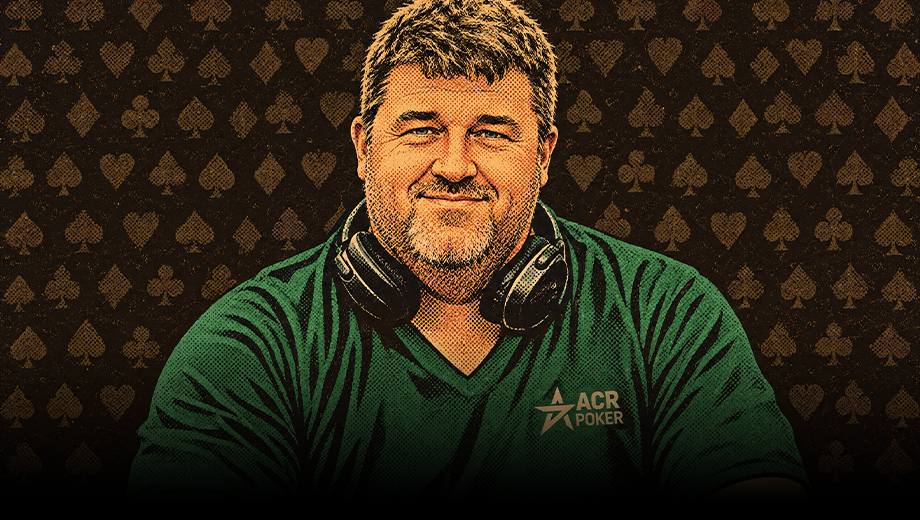

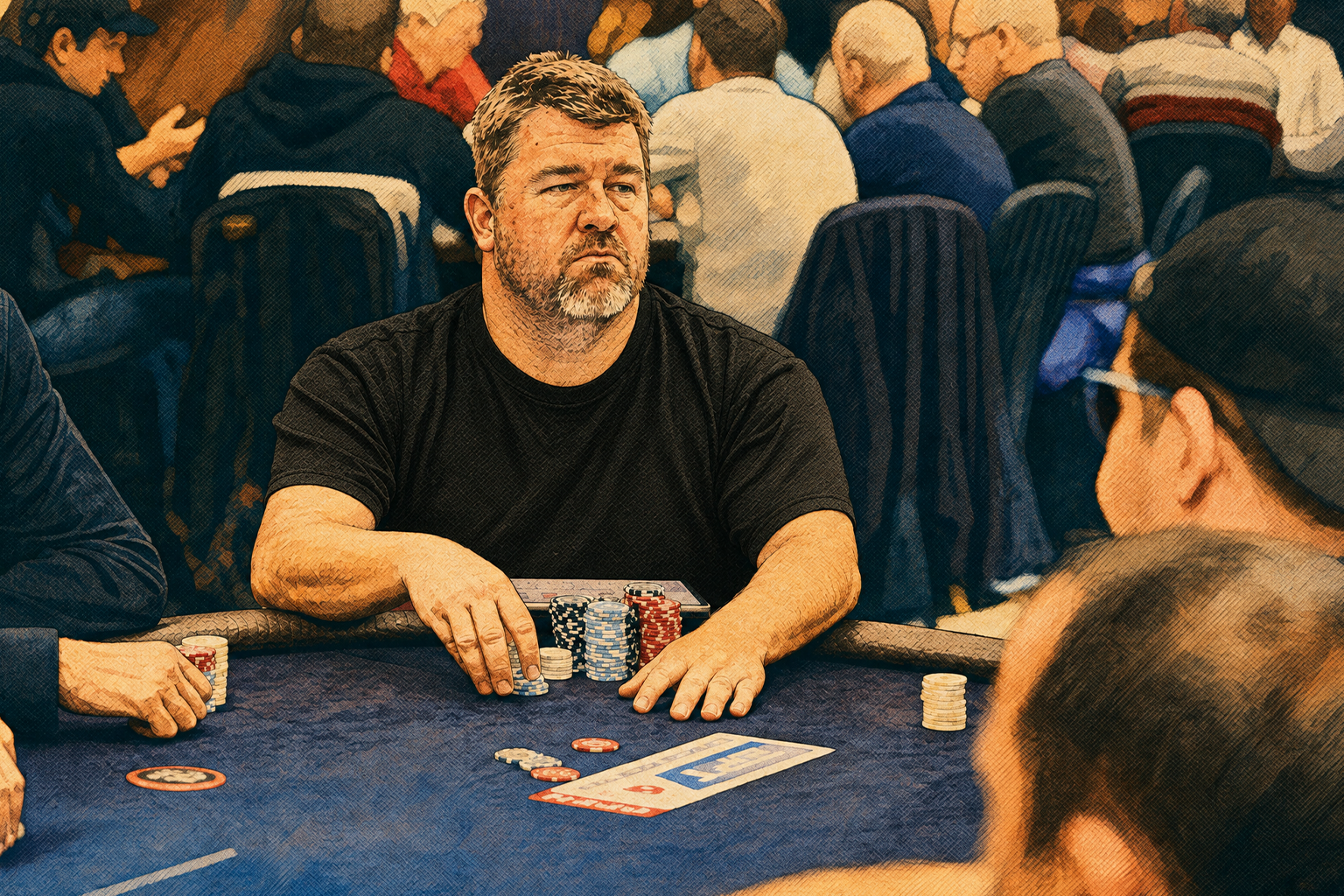
I watched Phil Hellmuth go from controlled to completely unrecognizable in the space of about four hands. He’d been chipped up all day, playing solid. Then somebody clipped him on a hand he didn’t like, and something flipped. Suddenly he’s raising every pot, snapping at people, playing hands he’d never touch on a normal day. That’s an ultra-aggressive chip leader. And the good news is, they’re actually easier to play against than the quiet kind.
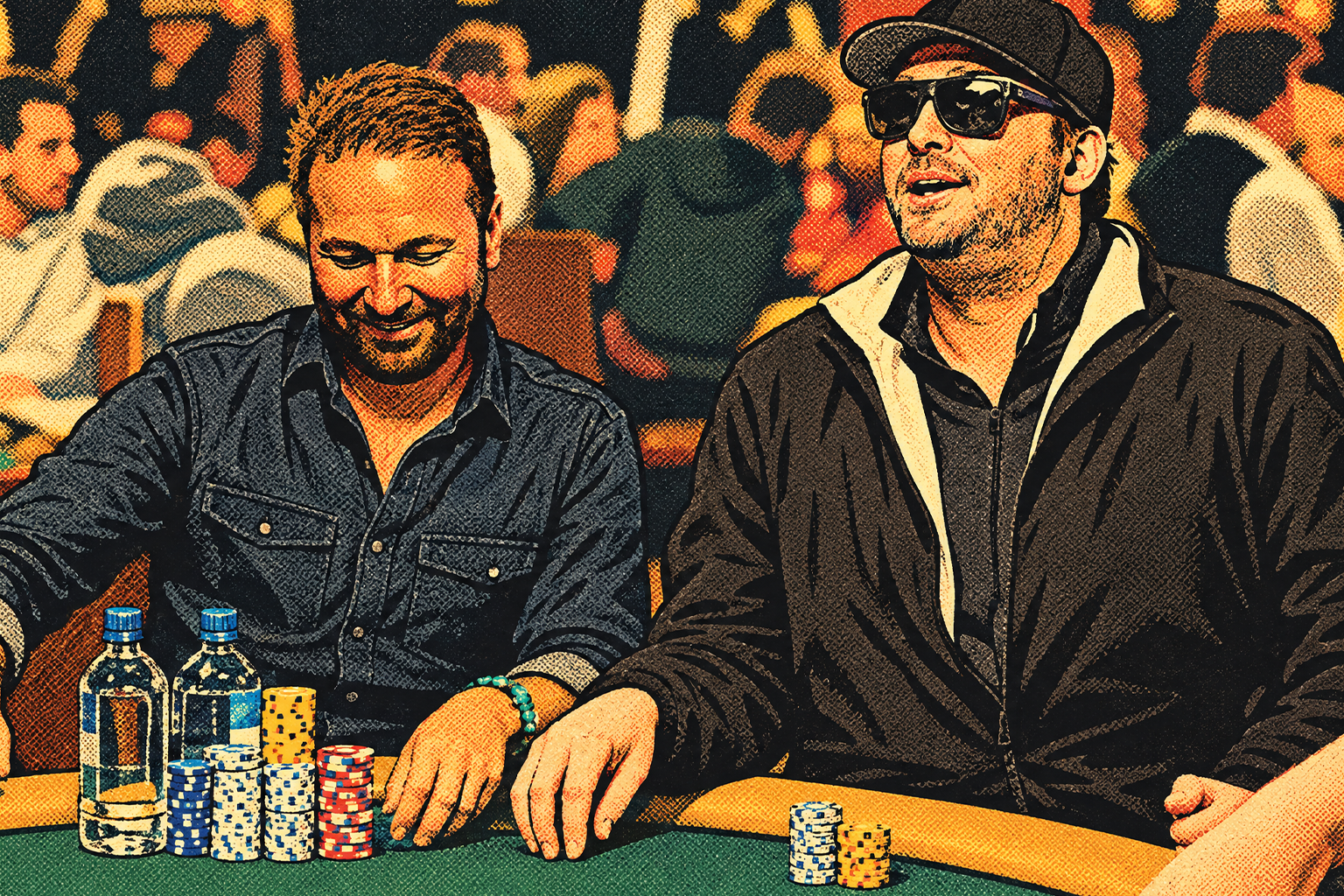
Why the Aggression Usually Isn’t a Real Read on His Hand
Once they go on tilt — and Hellmuth is a good example — hitting that button just makes a guy go spew crazy. The raises get bigger, the timing gets faster, and the hands he’s playing get wider than they have any business being. That’s not strength. That’s someone reacting to what happened two hands ago instead of the cards in front of him right now.
I don’t need to guess at this in the moment. My method for years has been simple: fold a hand, then quietly guess what everyone else had, then check myself when the cards get shown at showdown. Do that for a few orbits against an aggressive chip leader and you’ll get a rough shape of what he’s actually raising with — and it’s almost never as narrow as his bet sizing wants you to think.
“It’s not rocket science. It’s simple observation.”
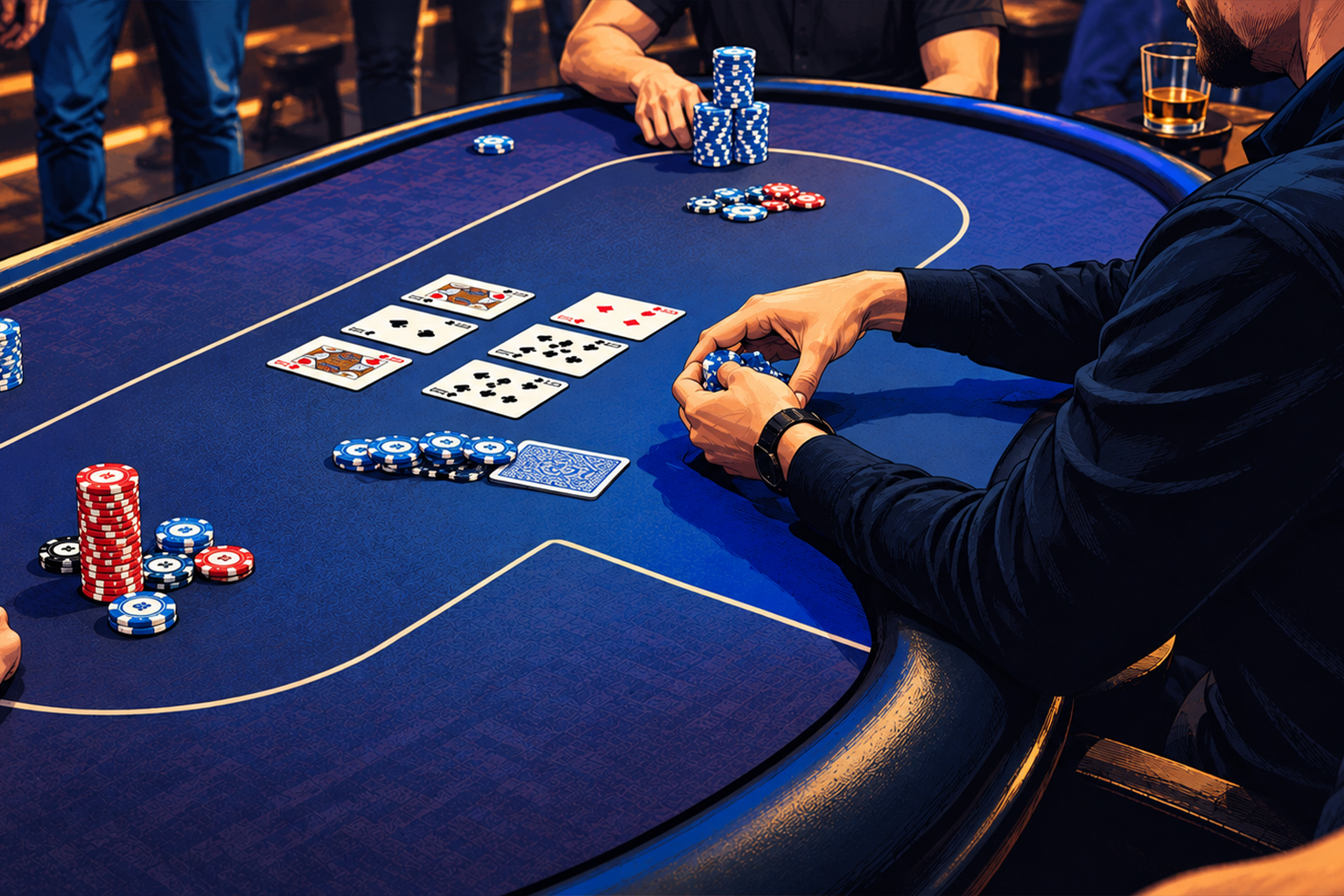
What I’m Actually Watching For
Speed and Sizing
An aggressive chip leader on a genuine heater plays about the same pace he always does. One who’s running on emotion speeds up — snap raises, bigger sizing than the situation calls for, more talking at the table than usual. That shift in tempo tells me more than any single hand does.
Who He’s Picking On
Guys like this usually go after whoever just showed weakness — the player who folded fast, or the one who visibly winced at a bad beat. If I’ve been playing solid and quiet, I’m often not the first target. That buys me time to just watch instead of react.
When I Actually Get Involved
I’m not looking to be a hero and snap him off with a marginal hand just to make a point. I wait for one of two things: a hand strong enough that I don’t care what he has, or enough of a read built from watching him that I’m comfortable making a bigger call than the cards alone would justify.
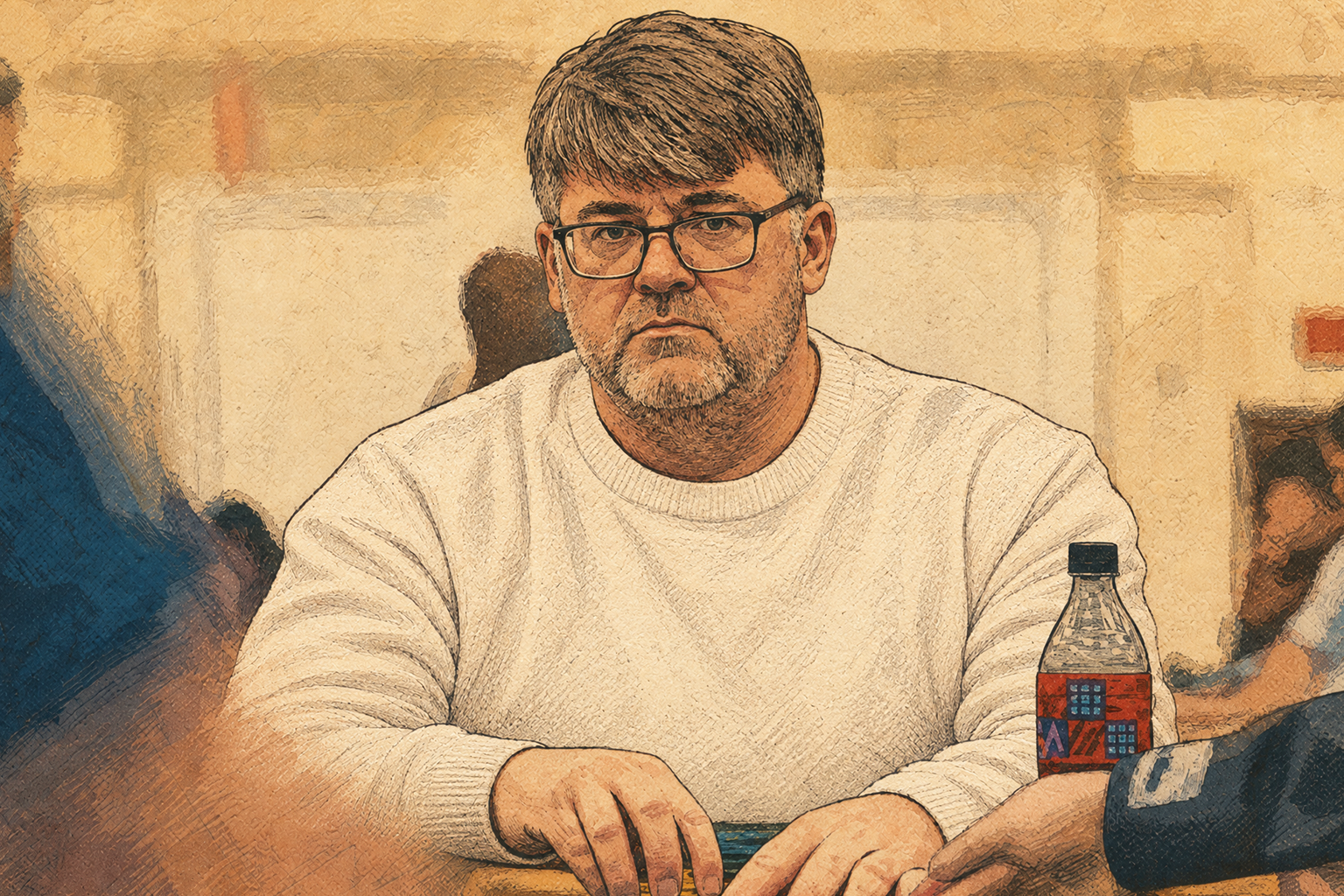
Staying the One Person at the Table Who Isn’t Reacting
The real advantage against an ultra-aggressive chip leader isn’t a specific hand or a specific read. It’s that he’s playing emotionally and I’m not. Poker is about controlling your emotions and how those emotions affect your decisions, and a guy on tilt has already lost that fight before the flop even comes out.
“More than anything else: patience. Not getting too emotional. Not reacting to situations.”
Most players get baited into either folding too much out of fear or fighting back too hard out of pride. Both of those are just other ways of reacting emotionally. Neither one is a plan.
How I’d Actually Play It
Early On
I tighten up, not because I’m scared, but because I don’t need information yet. I let a few hands play out where I’m not involved and just watch how he’s betting, what he’s showing down, and who he’s targeting.
Once I Have a Read
Once I’ve got a shape for what he’s playing, I look for the spot where my hand is ahead of that, not ahead of some imaginary premium hand he’s representing. That’s usually a lower bar than people expect, because what he’s actually playing against the table is wider than his bet sizing suggests. I’d rather take one well-timed shot with a real hand than fight him ten times with marginal ones. He’ll give me the spot eventually. Tilt doesn’t fix itself in the middle of a session.
Tilt-Driven Aggression vs. Genuine Strength
Not every aggressive chip leader is on tilt. Here’s how I tell the difference at the table.
| Factor | Tilt-Driven Aggression | Genuine Strength |
|---|---|---|
| Bet sizing | Inconsistent, oversized | Consistent with his normal game |
| Speed of decisions | Snap-fast, no hesitation | Same pace as always |
| Talking at the table | More chatter, complaints | Quiet, focused |
| Who gets targeted | Whoever just showed weakness | Whoever’s actually in the hand |
| Best response | Wait him out, let him spend it | Respect it, look for a real spot |
One of those two guys is giving chips away. The other one isn’t. Mixing them up is how you lose a stack to the wrong read.
Hellmuth eventually settled back down that day — he always does, eventually. By the time he did, a few of us had already picked up pots off him that we wouldn’t have gotten near an hour earlier. Nobody outplayed him. We just waited for the version of him that wasn’t playing anymore, and let him hand it to us.