

It was 4am. I’d been playing ten-handed for about four hours straight when the hand against Phil Ivey happened. Nobody talks about the four hours before that hand. They talk about the flop, the turn, the river. Nobody talks about how your eyes feel at 4am on Day 5 of a tournament you can’t afford to lose focus in.
People ask about the bluffs. They ask about the bad beats, the big pots, the moment everything changed. Almost nobody asks about the part that actually defines a long tournament run: you’re exhausted, and you still have to make the best decision of your life in twenty seconds.
The Clock Doesn’t Care How Tired You Are
A tournament like the Main Event doesn’t stop because you’re gassed. Levels run two hours at a time. Hands keep coming. Somewhere around hour ten of a long day, the cards don’t get easier to read — you just get worse at reading them. That’s the part nobody warns you about. It’s not that the competition gets tougher. It’s that you get weaker, and the competition stays exactly the same.
By the time the Ivey hand happened, I’d already been at the table for hours past what felt normal. I had 1.5 million chips, he had 500,000. In a fresher mind, maybe I think about that hand differently. At 4am, you’re just trying to hold the thread. The decision itself came down to instinct built up over days, because there wasn’t much left for anything more deliberate.
What I Actually Do to Survive the Grind
Meditating at the Table
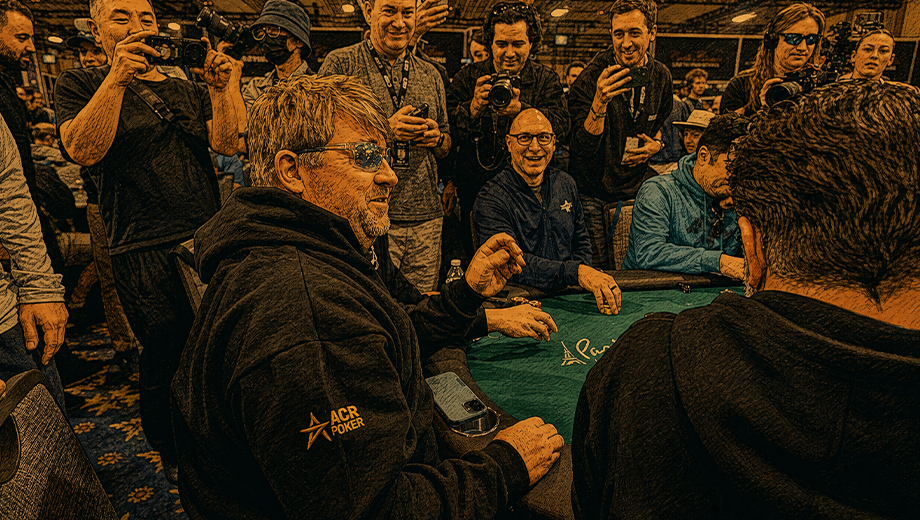
Between hands, I use the downtime to check out for a second. Some people call it visualization. I call it meditating at the table. We all know what it is. It’s closing your eyes for thirty seconds and pretending you’re somewhere that isn’t a casino under fluorescent lights.
The iPad Trick
On long days, I’ll play on my iPad or watch something between hands just to give my brain a break from the table. It sounds small. It’s not. The alternative is staring at nine other exhausted people for six hours straight, which is its own kind of tiring.
Day 1 Boredom, Day 2 Ignition
Day 1 has never interested me. Too many amateurs, too much dead time, not enough real information to work with. The exhaustion that actually matters starts on Day 2 and stacks every day after — the kind where you’re reading people well after your body wants to stop reading anything.
The Physical Toll Doesn’t Match the TV Version
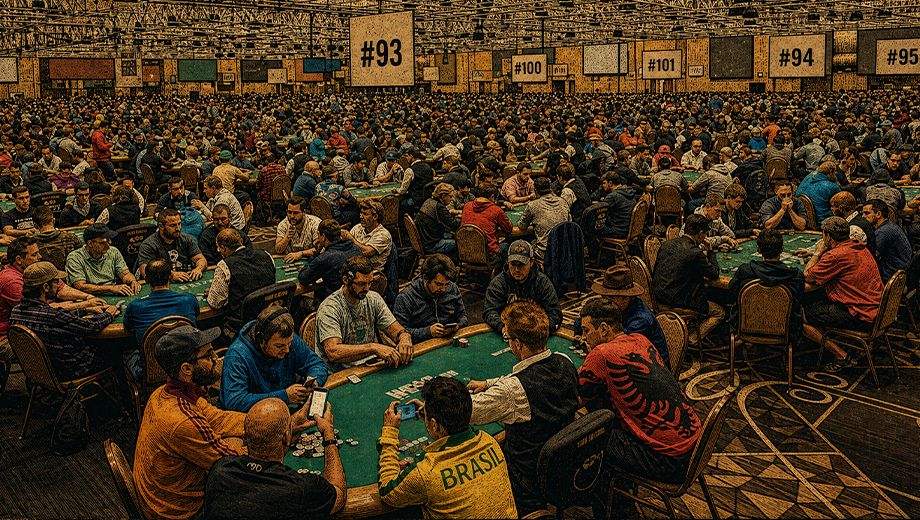
Poker on television looks like guys in sunglasses making cool decisions under studio lights. What actually happens is a room full of people who haven’t slept properly in days, running on adrenaline and vending machine food, trying to hold a poker face while their legs have gone numb from sitting. The TV cuts are three minutes. The actual hand took forty-five, and everyone at that table had been sitting there since noon.
I’ve never gotten nervous at a poker table. Never has been my problem. We’re playing cards. Have fun. But nervousness and exhaustion are different animals — you can be completely calm and still running on fumes. That’s the state most of the field is actually in by Day 4 or 5, whether they admit it or not.
Old Grind vs. New Grind
The physical demands haven’t disappeared with better structures and shorter clocks in some events. But the way players manage the exhaustion has changed a lot since 2003, mostly because there’s simply more known about it now.
| Factor | 2003 Approach | Modern Approach |
|---|---|---|
| Rest strategy | Push through — nobody really talked about it | Deliberate sleep schedules built around Day 2+ |
| Between-hand recovery | Whatever got you through — cigarettes, coffee, nothing | Meditation, screens, structured breaks |
| Fitness awareness | Barely a topic in tournament poker | Gym time built into the schedule for many pros |
| Talking about fatigue | Treated as a weakness to hide | Openly discussed as part of the game |
Nobody in 2003 was going to admit they were tired. Now it’s just part of the conversation, which honestly makes more sense.
Why This Part Matters More Than People Think
The famous hands get remembered because they’re dramatic. The exhaustion doesn’t get remembered because there’s nothing to show for it — no chip stack, no bracelet, just a guy who made it through another day without falling apart. But that’s most of what a deep tournament run actually is. Not the bluff. The stretch of hours before the bluff, when you’re just trying to stay sharp enough to have one left in you.
If you’re planning a run at a Main Event yourself, it’s worth building your schedule around the WSOP Schedule well ahead of time — knowing exactly how long each day runs helps you plan for the part nobody warns you about.
People ask what I’d tell a first-timer heading into Day 1. Sleep now. You won’t get the chance later.
Frequently Asked Questions
What time did the famous Phil Ivey hand happen at the 2003 WSOP?
The hand happened around 4am, after Chris Moneymaker had already been playing ten-handed for about four hours straight.
How does Chris Moneymaker cope with fatigue during long tournament days?
He uses downtime between hands to mentally check out, describing it as meditating at the table, and will use an iPad or watch something to give his brain a break from the table.
Why does Chris Moneymaker find Day 1 of a tournament boring?
He says Day 1 has never interested him much. The real engagement starts on Day 2 and beyond, when there’s enough information at the table to actually read opponents and accumulate chips meaningfully.
Does Chris Moneymaker get nervous playing poker?
No. He says he’s never gotten nervous playing poker, describing it simply as playing cards and having fun. Exhaustion, though, is a separate challenge from nervousness.
What were the chip stacks during the Phil Ivey hand at the 2003 WSOP?
Chris Moneymaker had roughly 1.5 million chips going into the hand, while Phil Ivey had about 500,000.