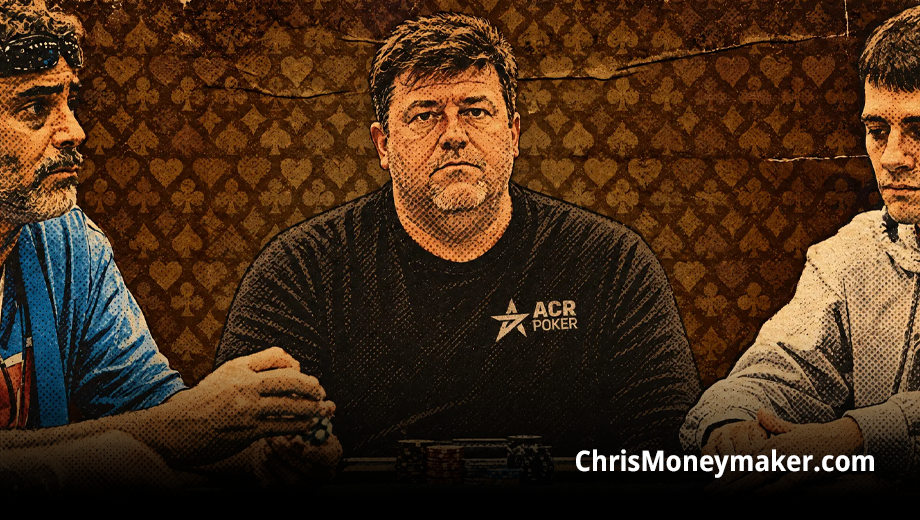

It’s 4:00 in the morning. We’ve been ten-handed for about four hours. One more elimination and we have a final table. I have 1.5 million chips. Phil Ivey has 500,000. I’m holding Ace-Queen, and the flop comes Queen-Queen-Six.
People ask me about the bluff on Sammy Farha all the time. That hand ended the tournament. But the most intense stretch I’ve ever played at the WSOP wasn’t heads-up. It was that level, one table away from the final table, at an hour when normal people are asleep and I was trying very hard not to do anything stupid.
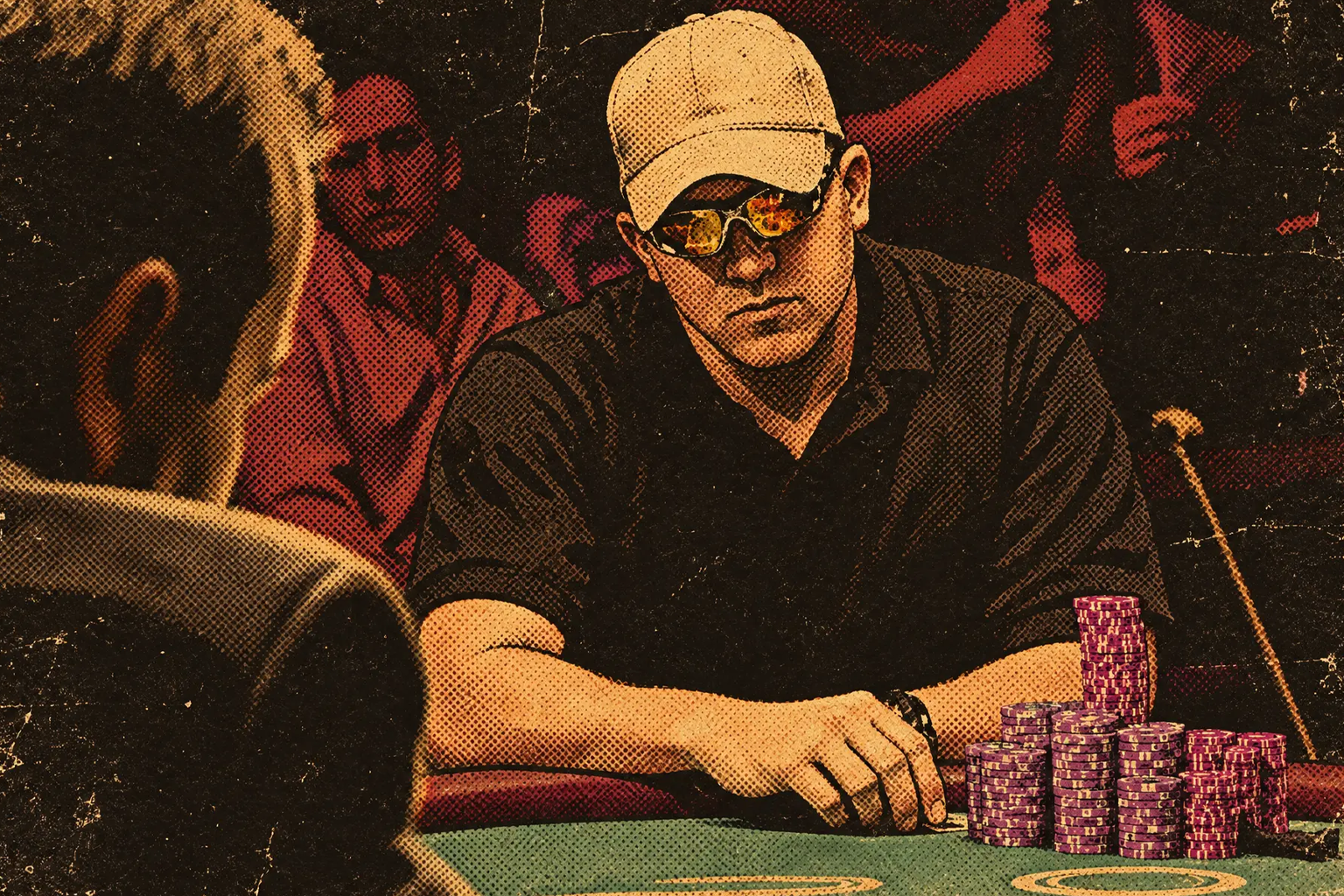
Ten-Handed at Four in the Morning
The 2003 Main Event had 839 players. I got in through an $86 online satellite I entered by accident, and I came in knowing I was the least experienced player in the room. “I was the worst one in the field. I knew that going in.”
The levels were two hours long, and my pattern through the tournament was simple: almost every level, my stack went up. I bagged 60,000 chips on Day 1 from a 10,000 starting stack. By the time we got down to ten players, I was one of the big stacks.
Ten-handed is a strange spot. Nine players make the final table. Everybody at that table knows it, and nobody wants to be the tenth. So the play gets tight, the hours get long, and every pot feels bigger than it is. We sat there for roughly four hours waiting for somebody to go. I had made one decision before any of it started, and I wasn’t changing it. “I had already told myself: I am not busting before the final table. Zero percent chance.”
I meant that literally. If I had to fold every hand until somebody else busted, I’d fold every hand. Then Ace-Queen showed up.

The Hand With Phil Ivey
The Action
Ivey had pocket nines. Jason Lester folded tens in the same hand. The flop came Queen-Queen-Six, which gave me trip queens. I bet 75,000. Ivey called. The turn was a nine, which gave him a full house. I didn’t know that. I bet 200,000, about half of what he had left. He moved all-in. It was only 200,000 more for me to call, so I called.
When the cards went on their backs, I had about 17% equity. The river came, and I won the hand. Phil Ivey was out in tenth, and we had our final table.
What I Didn’t Know
Going into that tournament I knew three names: Phil Hellmuth, Doyle Brunson, and Johnny Chan. Dan Goldman from PokerStars used to give me a daily rundown of players to watch out for. Ivey was on the list. I didn’t really register what that meant. I found out later he was generally considered the best player in the world. At the time he was a guy with fewer chips than me.
He didn’t shake my hand right away. He was in a zone, and I understood that. We talked it out later. No hard feelings. Being clueless was probably the best thing I had going for me that night.
Why That Level Was Harder Than Heads-Up
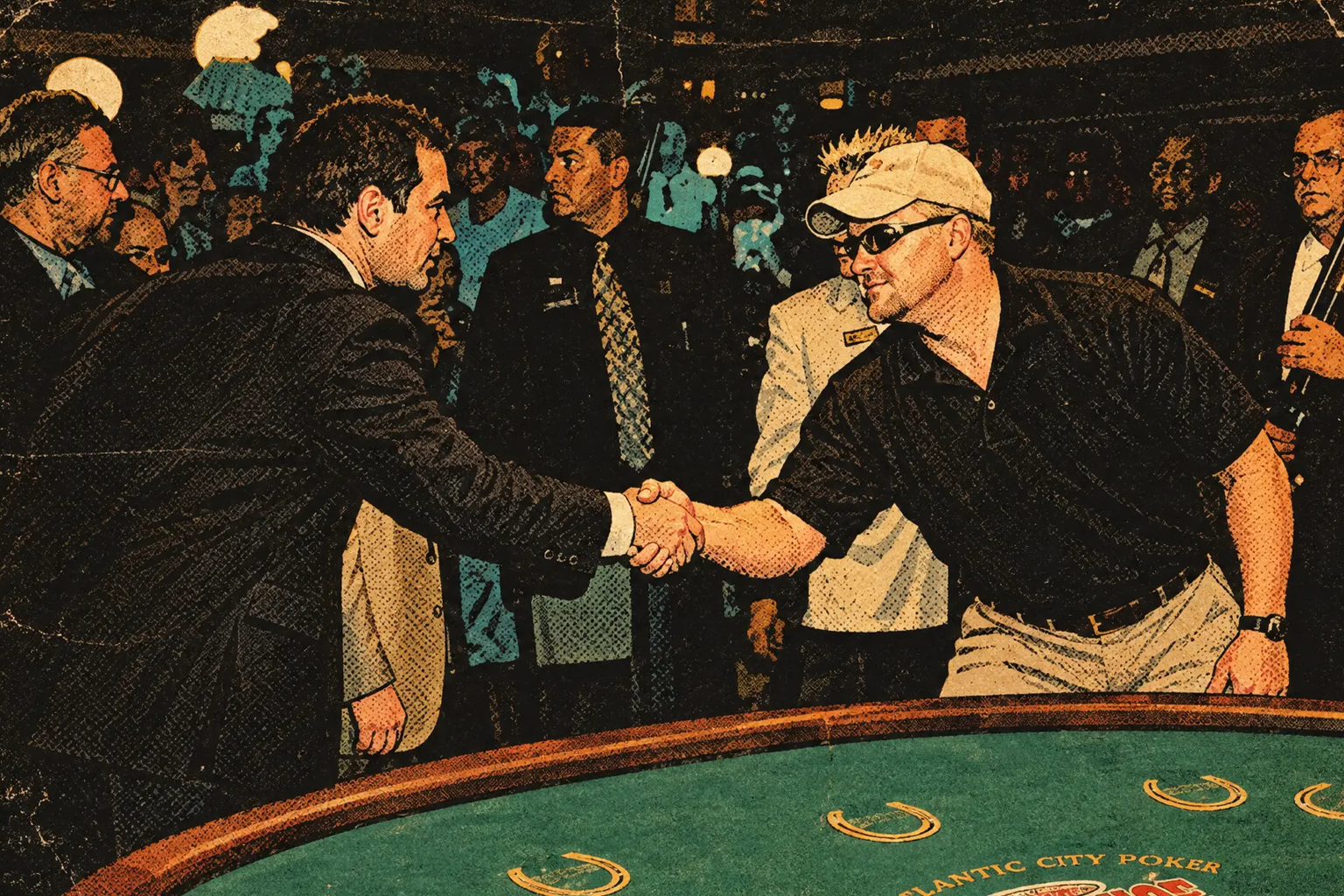
Heads-up against Sammy Farha, I had roughly a 2-to-1 chip lead and a clear read on what he wanted to do. He wanted to use his experience to grind me down and avoid big pots. That’s a puzzle. Puzzles I can handle.
Ten-handed at 4am is different. There’s no puzzle. There’s just time, fatigue, nine other people, and a final table sitting right there. The risk isn’t that somebody outplays you. The risk is that you get tired or impatient and talk yourself into a hand you’d never play at noon. Most of the work in that level was doing nothing, on purpose, for hours, while staying awake enough to recognize the one spot that mattered.
I also knew how fragile I could be, because I’d already seen it earlier in the event. If you want the full run from the $86 satellite to the last hand, the 2003 WSOP Main Event story on this site goes through it start to finish.
What That Level Taught Me About Pressure
The pressure at the WSOP isn’t the cards. It’s what you do with how you feel about the cards.
The Day 2 Hand That Almost Broke Me
On Day 2 I had Ace-something on a ten-high board and got a lot of chips in against Kings. I walked outside depressed. I figured it was over. Then I came back, and the very next hand I was dealt Aces and almost doubled up. If I’d run bad there, I might have blown up. I was that close to the edge, and I know it. That’s the only level all week where my stack went the wrong way.
Decide Before It Gets Hard
What got me through the Ivey level was that the decision was already made before the pressure showed up. I wasn’t figuring out my plan at 4am. I’d figured it out hours earlier. “Poker is about controlling your emotions and how those emotions affect your decisions.” When I’m tired, I don’t trust my emotions. I trust the decision I made when I wasn’t tired.
The rest is just patience. “More than anything else: patience. Not getting too emotional. Not reacting to situations.” It sounds boring. Boring is underrated at four in the morning.
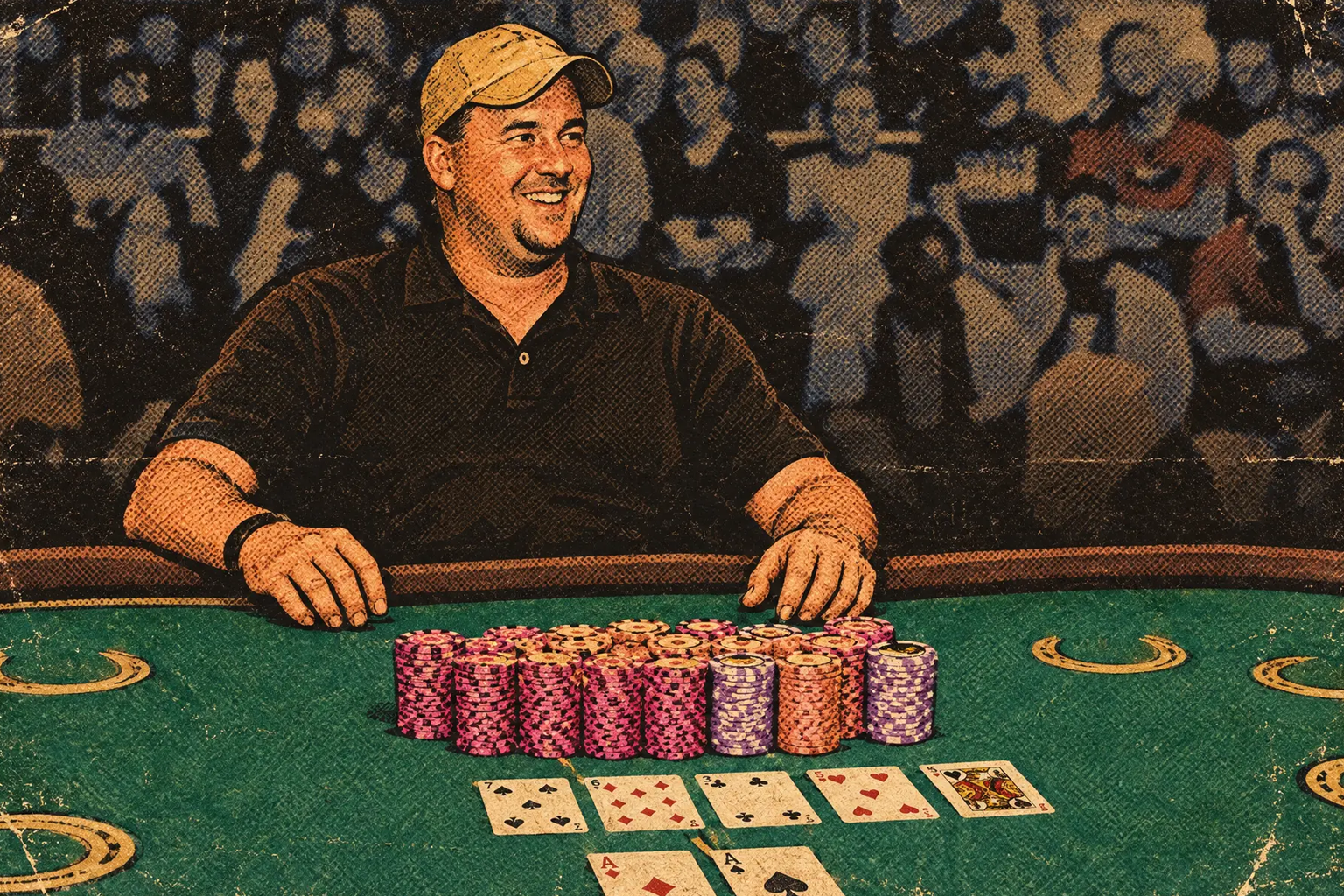
That hand set the final table. The rest of it went the way people have seen on television: Dan Harrington, Sammy Farha, the bluff, the bracelet. I won, flew home Saturday, and was back at work Monday morning. The broadcast didn’t air until August, so most people had no idea what had happened. I still think about that ten-handed stretch more than the final hand. Nobody filmed me folding for four hours. It was the best poker I played all week.
Frequently Asked Questions