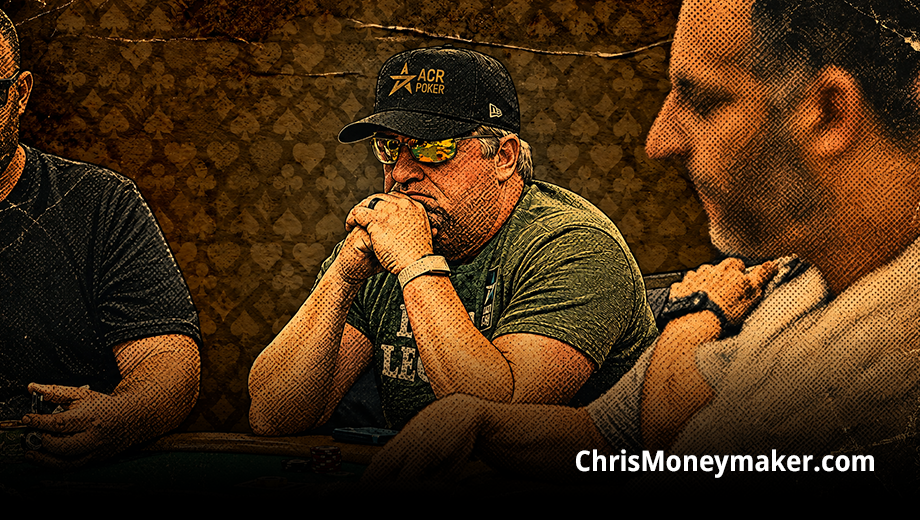

Day 2 of the 2003 Main Event, I got a lot of chips in with Ace-something on a ten-high board. The other guy had Kings. I got up and walked outside, and I was depressed. I figured my tournament was over. Then I sat back down, and the very next hand I was dealt Aces and almost doubled up.
I think about that walk outside more than I think about the Aces. It was an unscheduled break, and it saved me. The dinner break is the same thing, except everybody gets one at the same time and most people waste it. Here’s how I’d handle the hands before it, the time away from the table, and the first orbit back.
The Last Few Hands Before Dinner
The clock does strange things to people. With a few minutes left before the break, some players start looking for a reason to get something done. Others mentally check out and fold anything because they’re already thinking about food. Both are mistakes, and they’re the same mistake: letting the clock make the decision instead of the cards.
My rule is simple. A hand five minutes before dinner is worth exactly what it’s worth at any other time. If it’s a good spot, I play it. If it isn’t, I fold it. The break doesn’t change the math. It only changes how people feel, and how people feel is something I can use.
The other thing I do before I stand up is look at my stack and know where I am. Not roughly. Know how many big blinds I’ll have when the next level starts, because that number decides what kind of poker I’m playing after dinner. You don’t want to figure that out with a plate in front of you, and you definitely don’t want to figure it out when the first hand is already being dealt.
What I Actually Do on the Break
Leave the Last Hand at the Table
If I took a bad beat before dinner, the break is where I get rid of it. Step away, calm down, regroup, come back with a short memory. That’s the whole process. The Kings hand in 2003 is the proof I needed. I was mentally fragile at that point. If I’d kept running bad, I might have blown up. Getting away from the table for a minute is what kept me from carrying that hand into the next one.
“Poker is about controlling your emotions and how those emotions affect your decisions.” You can’t do much about the cards on a dinner break. You can do a lot about the emotions.
Think About the Table, Not the Food
The other thing I do is go through what I’ve seen. When I fold a hand, I watch the rest of it and try to guess what everybody has. When the cards get shown, I check whether I was right. “It’s not rocket science. It’s simple observation.” By dinner on Day 2, I have a couple of hours of that stored up. Who’s scared of their stack. Who’s playing too many hands. Who goes quiet when they have it. The break is when I sort it out, so I come back with a plan for each seat instead of a general feeling.
Why the Break Matters More When You’re Short
A big stack can get away with walking back in and seeing what happens. A short stack can’t. When you’re short, every orbit costs you a bigger piece of what you have, and the first level after dinner is usually not the place to wait around for a perfect hand.
That’s why I make the decision on the break, not at the table. Before the final table in 2003, I’d already decided I wasn’t busting before we got there. “I had already told myself: I am not busting before the final table. Zero percent chance.” Same idea, different situation. Decide what you’re doing while you’re calm, then go do it.
Short stacks aren’t hopeless, either. In the Triton event I won, I was down to one big blind on the money bubble. That’s about as short as it gets. If you’re planning your summer, check the WSOP Schedule and look at the structure of each event before you register. It tells you how much room you’ll have when the stack gets short.
The First Orbit After Dinner
Coming back from dinner, the table is a little different than the one you left. People ate, some of them had a drink, some of them spent the whole break replaying a hand they lost. That’s information.
Watch Before You Commit
For the first orbit, I pay close attention to who came back the same and who didn’t. Somebody who was patient before dinner and starts opening every pot afterward is telling you something. So is the guy who was aggressive and now sits there folding. Day 1 can feel boring to me. Day 2 onward is where I get interested: building chips, setting traps, figuring out who’s scared. After dinner is a good time to find out.
The Mistake I See Most
Players bring the pre-dinner hand back with them. They lost a big pot right before the break, ate dinner angry, and spend the next level trying to win it back. That’s not a strategy. “More than anything else: patience. Not getting too emotional. Not reacting to situations.” The break gives you a clean start. Plenty of people don’t take it.
Big Stack vs. Short Stack Going Into Dinner
The break means something different depending on what’s in front of you. Here’s how I’d think about it from each side.
| Factor | Big Stack | Short Stack |
|---|---|---|
| Last hands before the break | Play normally — pressure players who are already thinking about dinner | Play normally — don’t force a hand because the clock is running |
| What to do on the break | Review reads on the players who can hurt you | Count big blinds and decide your plan for the next level |
| First orbit back | Watch who changed; pick on the ones who tightened up | Look for the first good spot instead of waiting for a perfect one |
| Biggest risk | Getting careless because the stack feels safe | Bringing a bad beat from before dinner back to the table |
| Mindset | Patient and selective | Decisive, with the decision already made |
Either way, the break is the one time in a tournament day when you get to think without the clock running. Use it.
The dinner break isn’t really about the food. It’s the one time all day you get to stand up, look at the whole picture, and leave the last bad hand somewhere other than the table. In 2003 I took that walk outside without planning to, and I came back to Aces. I can’t promise anybody Aces. I can promise the walk helps.
Frequently Asked Questions