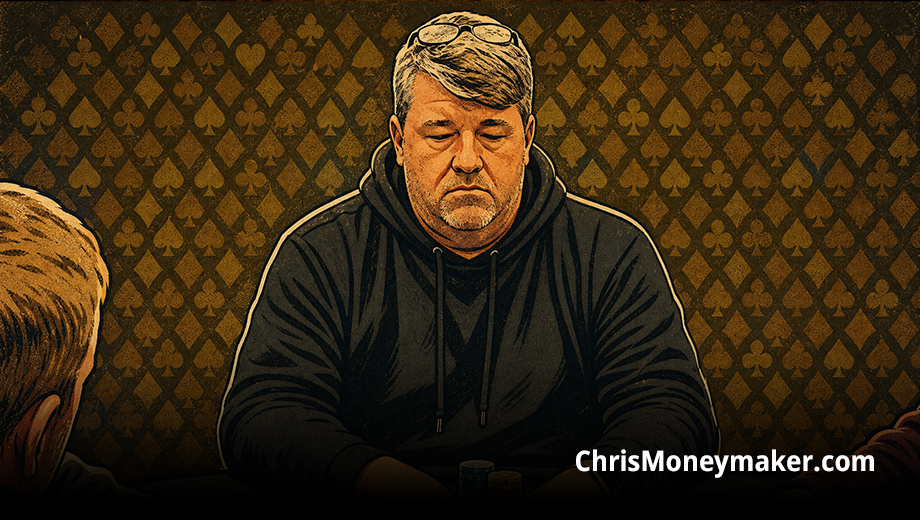

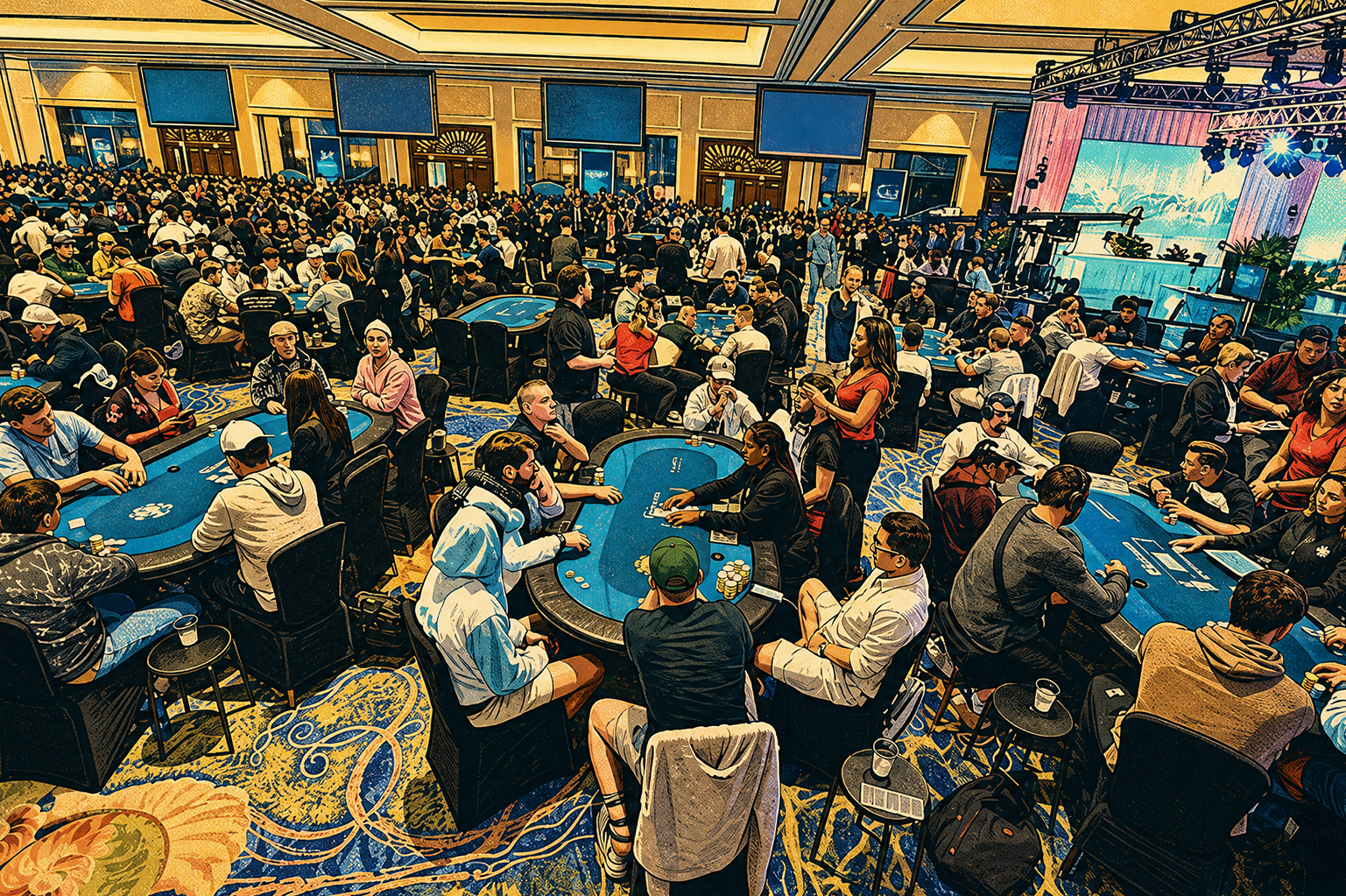
On Day 1 of the 2003 Main Event, I was one of 839 players spread across a room so packed you couldn’t tell who was good and who’d wandered in off the satellite circuit. I bagged up 60,000 chips that night off a 10,000 starting stack and went back to my room without anyone noticing. By the time it was down to two tables, that same anonymity was gone completely. Everybody at those two tables had heard of everybody else. That’s the part nobody explains about a tournament like this — it isn’t one event. It’s four or five different games stacked on top of each other, and the rules of engagement change every time the field cuts in half.
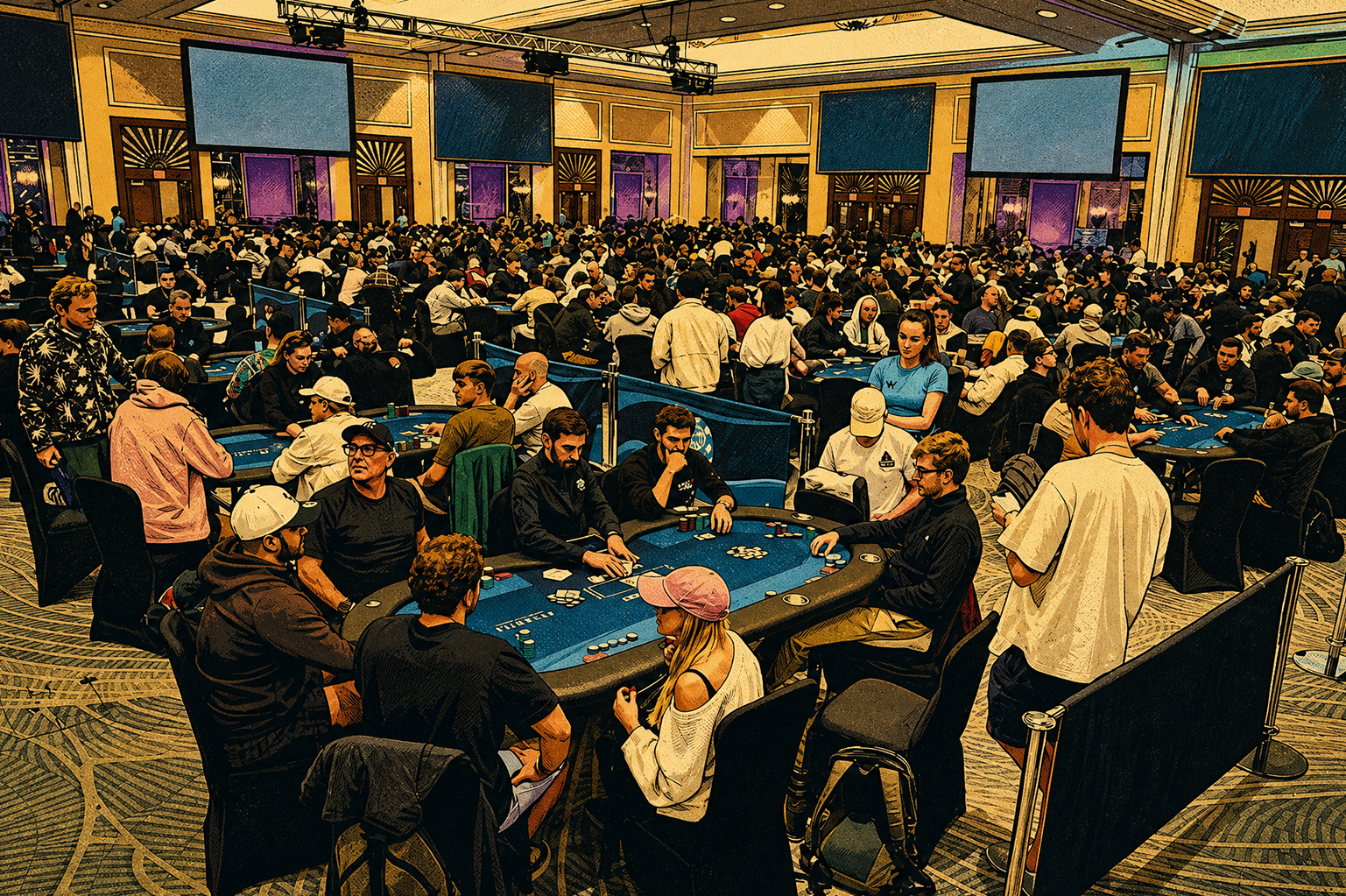
The Room Doesn’t Feel Like a Poker Room Early On
Early in a field that size, you’re basically invisible. Nobody’s watching your table specifically, because there are a hundred other tables just like it. That works in your favor if you know what you’re doing, because you can make mistakes without anyone filing them away for later. I folded a lot those first two days and just watched. When hands got to showdown, I’d check what people had against what I guessed they had. Right or wrong, I learned something. By Day 2 I knew more about my table than most of the players sitting at it.
“It’s not rocket science. It’s simple observation.” That’s the whole method in the early levels. Nobody’s playing a complicated game against you yet, because nobody’s paying enough attention to play a complicated game. You’re just gathering information nobody else bothered to collect.
The other thing about the early field: the money doesn’t feel real yet. Blinds are small relative to stacks, and busting on Day 1 costs you nothing but a bad story. That changes fast.
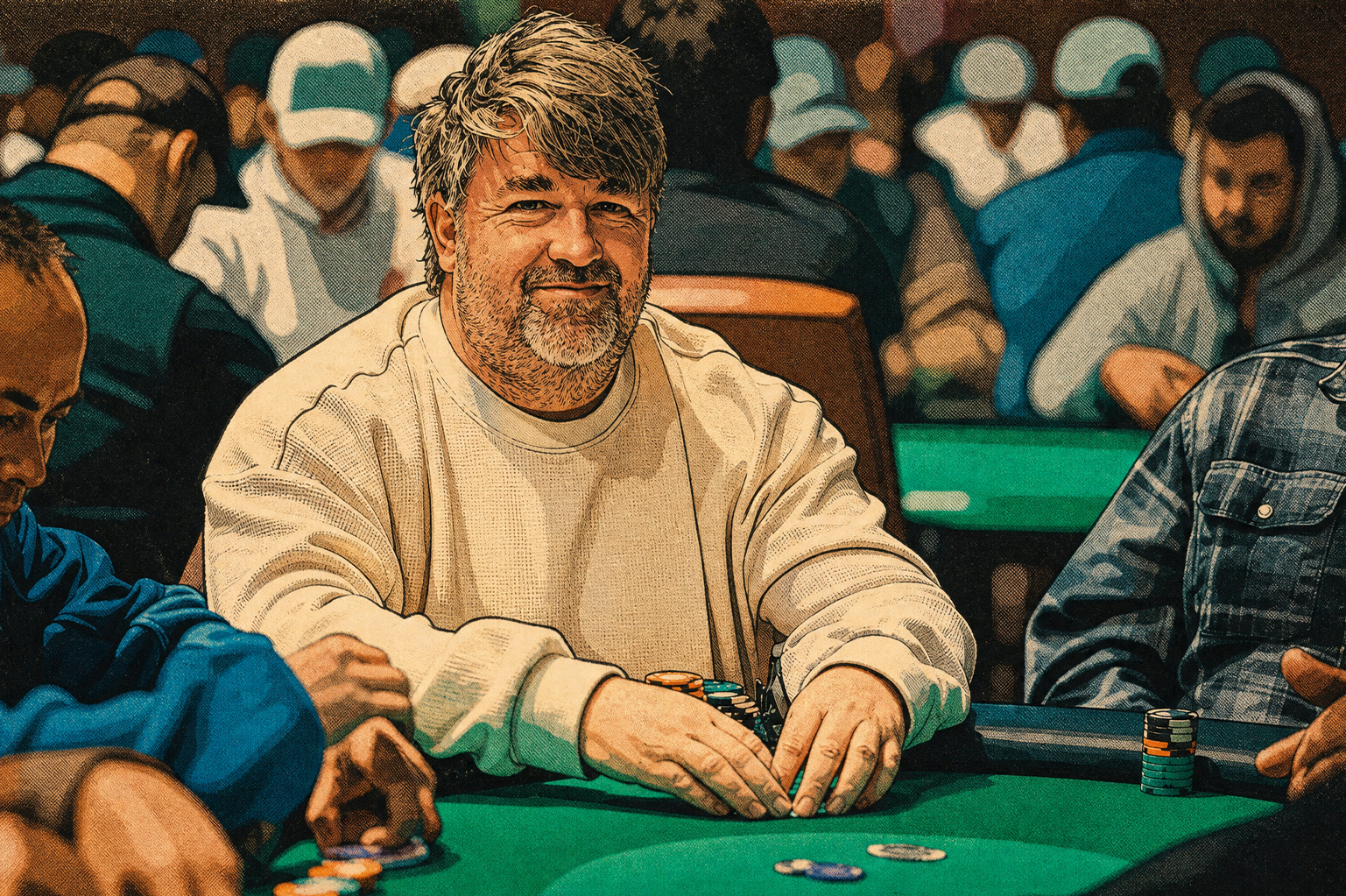
Something Changes Around Day Three
The Field Thins, the Attention Doesn’t
By the time you’re down to a few tables, the invisibility is gone. People know your stack size, your table image, and whether you’ve shown down any hands. The Phil Ivey pot happened at four in the morning after we’d been playing ten-handed for hours — I had Ace-Queen, flopped trip queens, he had pocket nines and hit a full house on the turn, and I called anyway and won. I didn’t know at the time that Ivey was already considered one of the best players alive. If I had, I’m not sure I make that call the same way. Not knowing was an advantage. That advantage disappears once the field is small enough that everyone’s done their homework on everyone else.
The Money Jumps Get Bigger
Every table cut means the min-cash climbs and the decisions get heavier. A shove that meant nothing on Day 1 can end someone’s tournament and change their family’s year on Day 4. You feel that shift in how people play — tighter, slower, more careful with their chips. Which, if you’re willing to keep applying pressure, works in your favor. Most of the field tightens up right when they should be doing the opposite.
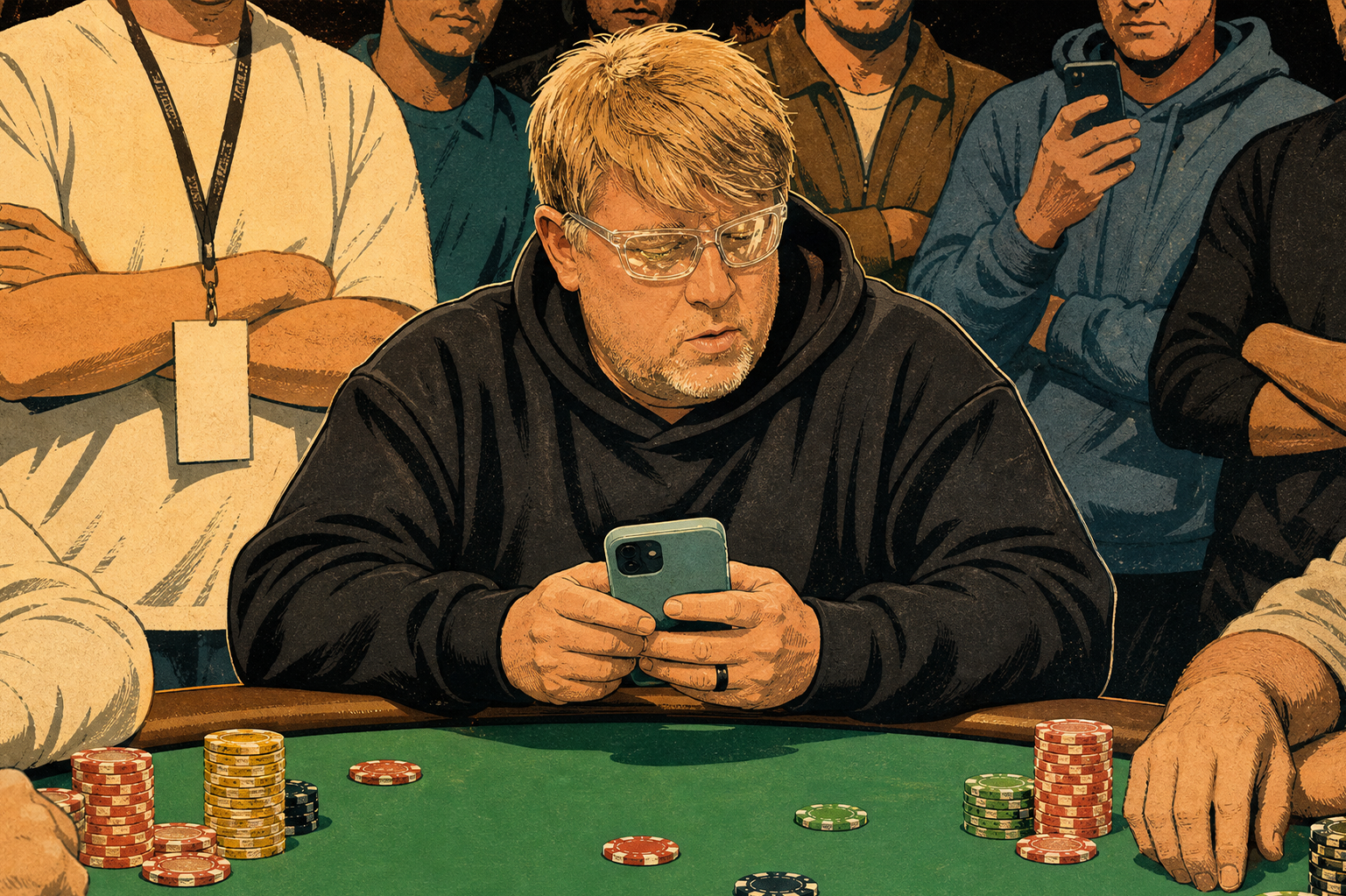
By the Final Table, It’s a Different Game Entirely
Nine players left, and every single one of them has a name, a stack, and a story the broadcast is already telling. “I had already told myself: I am not busting before the final table. Zero percent chance.” That kind of certainty sounds arrogant written down, but at that stage it’s closer to necessary. You can’t play scared with that few players left and expect to have chips when it matters.
The Farha hand is the one people remember — I had 5-4, the board was Jack-5-4, and I moved all-in with a hand that could have easily been behind. He folded a Jack face-up. That read only works because by that point in the tournament I’d watched him for hours and knew exactly what kind of hand he’d actually play that way. Early in the tournament I wouldn’t have had enough information to make that read. Late, it was the only read available.
How His Approach Changed Table by Table
Early on, the job is collecting information nobody else is bothering to collect. Mid-tournament, the job is patience — waiting out the players who are tightening up under pressure instead of matching their fear. At the final table, the job is applying everything you’ve gathered without letting the stage get to you.
What Stayed the Same
“Poker is about controlling your emotions and how those emotions affect your decisions.” That part didn’t change from Day 1 to heads-up. What changed was how much it cost to get it wrong.
What Doesn’t Transfer
Heads-up is its own animal entirely, and I want to be honest that I wasn’t the strongest heads-up player at that final table — I was better at reading a nine-handed field than I was one-on-one. “More than anything else: patience. Not getting too emotional. Not reacting to situations.” That’s what got me through the parts of the day where my technical edge wasn’t the biggest thing in the room.
Early Field Poker vs. Final Table Poker
Same tournament, same buy-in, completely different game by the time it’s down to one table. Here’s what actually changes.
| Factor | Early / Mid Field | Final Table |
|---|---|---|
| Anonymity | High — nobody’s watching your table specifically | None — every hand is tracked and discussed |
| Information on opponents | Thin — you’re still building reads | Deep — hours of history to draw on |
| Cost of a mistake | Low — busting Day 1 is just a bad story | Extremely high — every pay jump is real money |
| Player tendencies | Loose, careless, inconsistent | Tight, cautious, protective of their stack |
| Pressure per decision | Minimal | Constant |
The skills don’t change much between the two. The stakes attached to using them correctly change completely.
I still think about that final table more than any other day I’ve played. Not because of the money — because it’s the only day where every single decision actually mattered, and you knew it while you were making it. Most poker isn’t like that. That one day was.