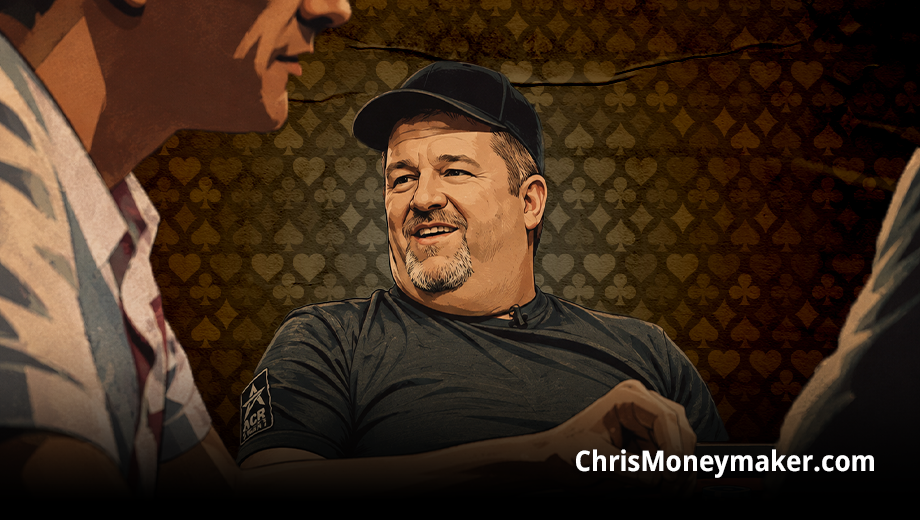

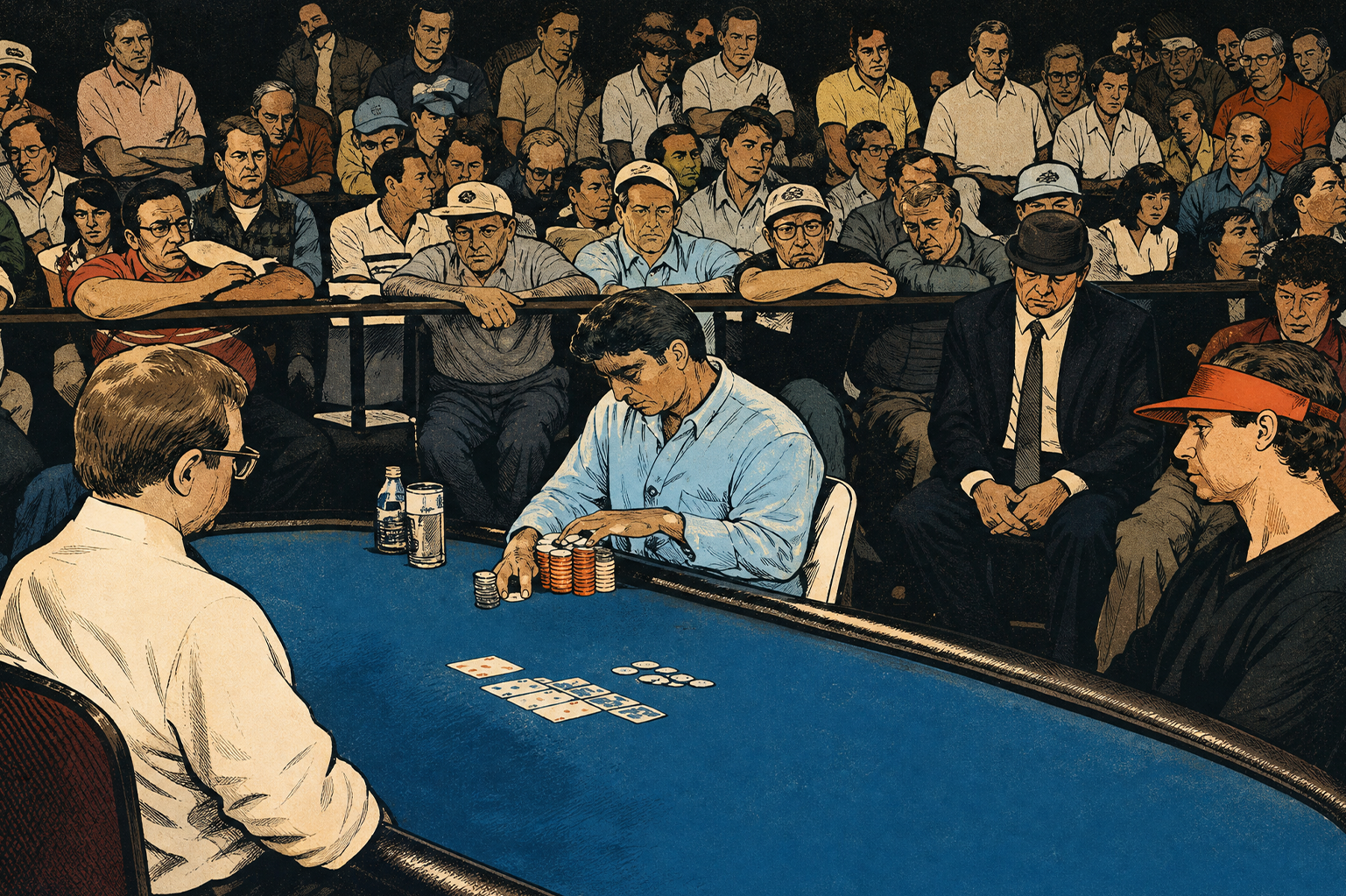
The ceilings at Binion’s felt about six feet tall. They’d pulled the slot machines out of a corner of the casino floor and dropped in a room full of card tables instead. No stage, no rope line, no security checking badges. Just felt tables, a whiteboard with a name on it, and however many players could fit before somebody said stop.
That’s the version of the World Series of Poker I miss. Not because it was better — in a lot of ways it wasn’t — but because it was small enough to actually be inside of. You could stand at the rail and watch Doyle Brunson play a hand from four feet away. Nobody was going to stop you.
The Room Above the Casino
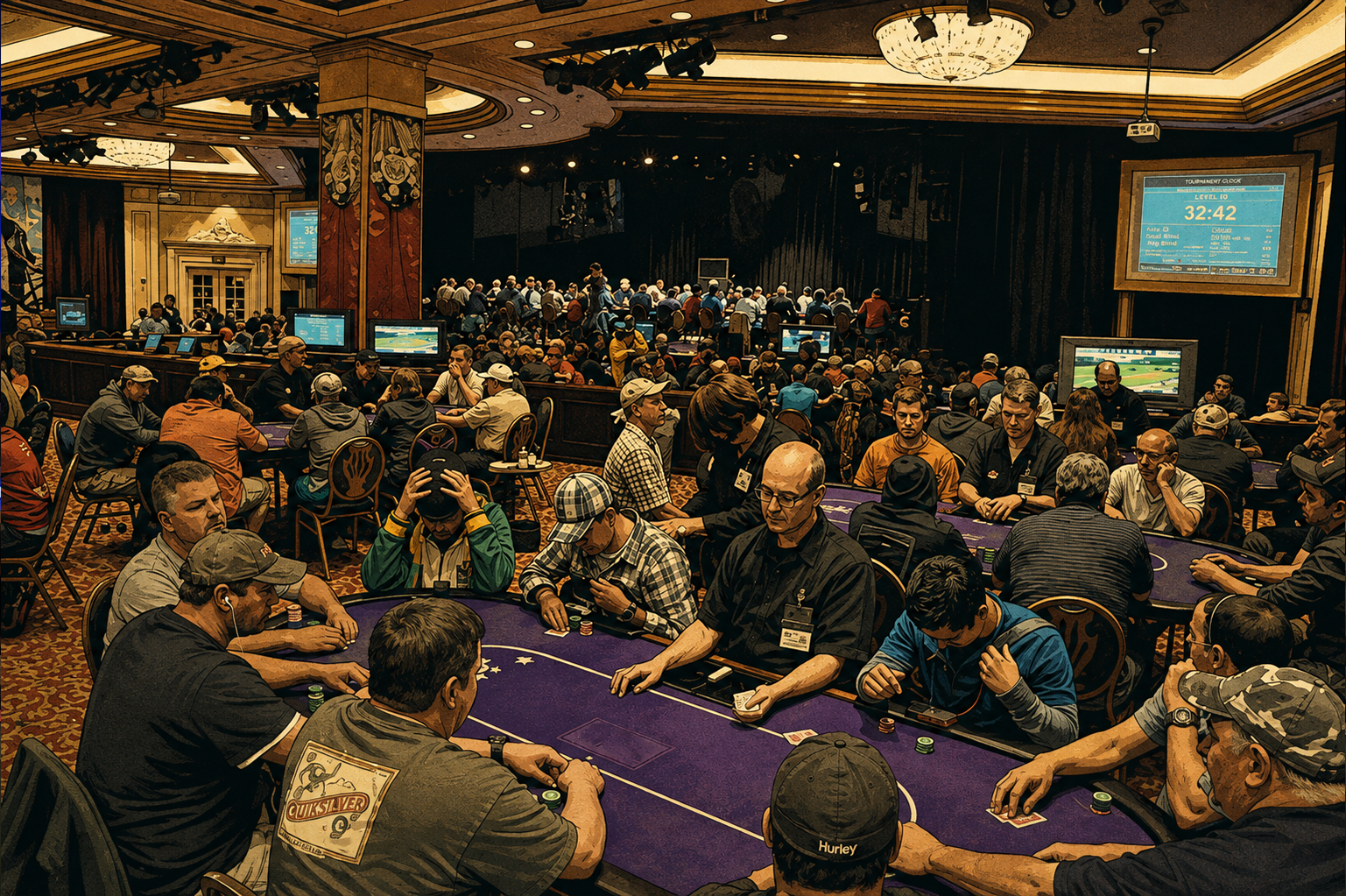
In 2003 the Main Event drew 839 players. That sounds like a lot until you compare it to what the tournament looks like now — 10,000-plus most years since 2023. Back then, 839 people fit into one room at Binion’s Horseshoe, with a hand-written whiteboard tracking chip counts because there wasn’t software built for it yet. A guy with a marker walked around asking players how many chips they had and wrote the number down. That was the leaderboard.
There was cigarette smoke thick enough that you ducked below it to breathe on your way to the bathroom. The tables were close together. The rail was close to the tables. ESPN had a few cameras and a skeleton crew, and the broadcast didn’t even air until three or four months after it happened — so for most of that summer, almost nobody outside the room had any idea what had gone on inside it.
I won on a Friday, flew home Saturday, and was back at my accounting job in Tennessee on Monday morning. Nobody at the office knew. That’s how contained the whole thing was.
You Could Just Walk Up to Anybody
Three Names I Knew
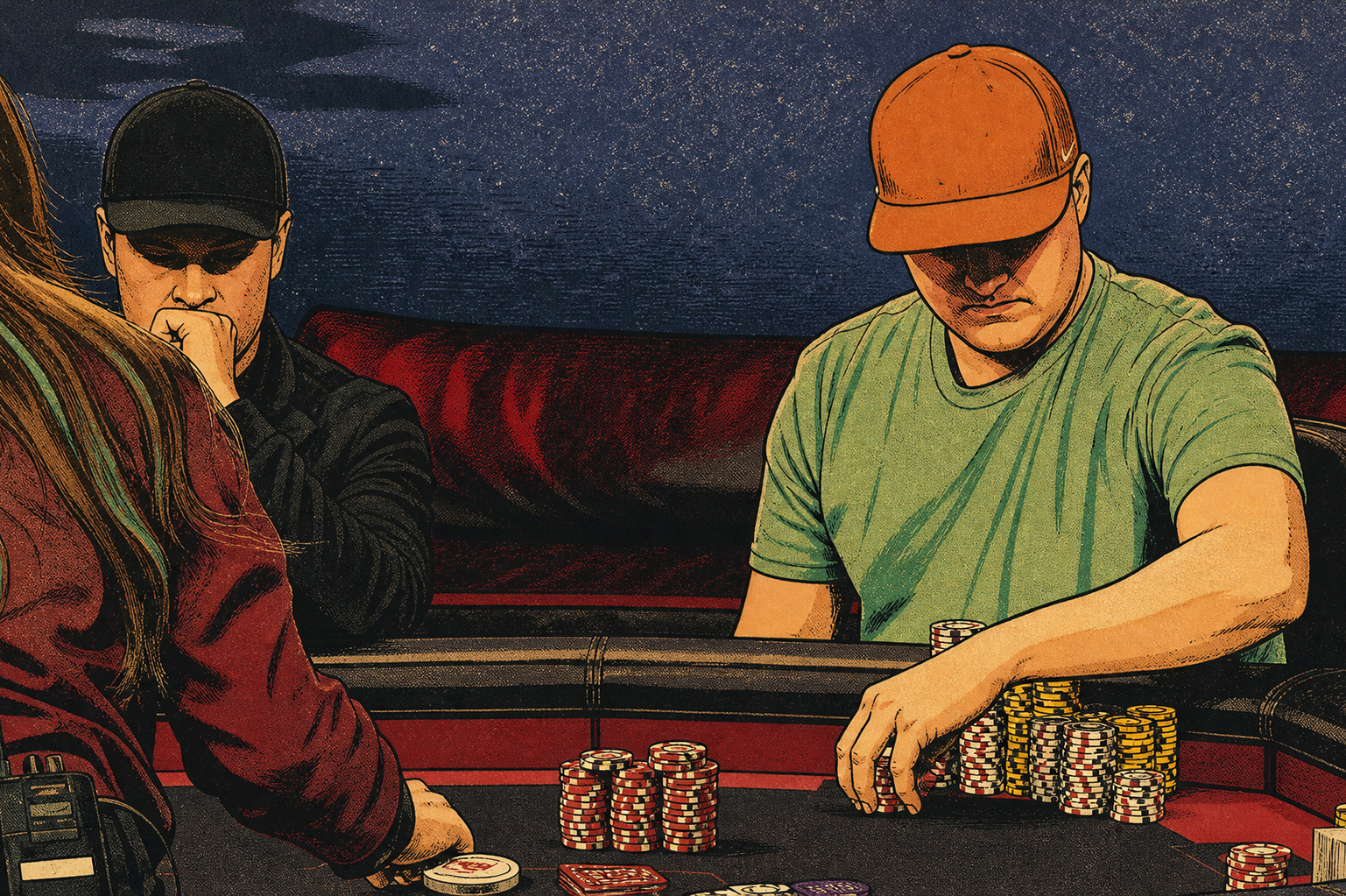
Walking into that room, I knew exactly three names: Phil Hellmuth, Doyle Brunson, and Johnny Chan. That was it. Everyone else was just a face with a stack of chips in front of them. “I only knew three players: Phil Hellmuth, Doyle Brunson, and Johnny Chan. When I saw Phil Ivey, I saw a young Black kid with chips. He didn’t scare me.” I found out afterward that Ivey was already considered one of the best players alive. Would’ve been useful information at the time. I didn’t have it, and it didn’t matter.
No Distance Between Anybody
There was no VIP section separating the field from the legends. Dan Harrington sat two seats to my right on Day 1, and I found that out by checking the wall of champions, not by somebody’s handler pointing him out. You could talk to anybody at that final table between hands. Nobody had a team, an entourage, or a reason to keep the amateurs at arm’s length. That part is basically gone now, and I get why — the money and the crowds require it — but it changed what the room felt like to sit in.
What Got Lost When It Got Big
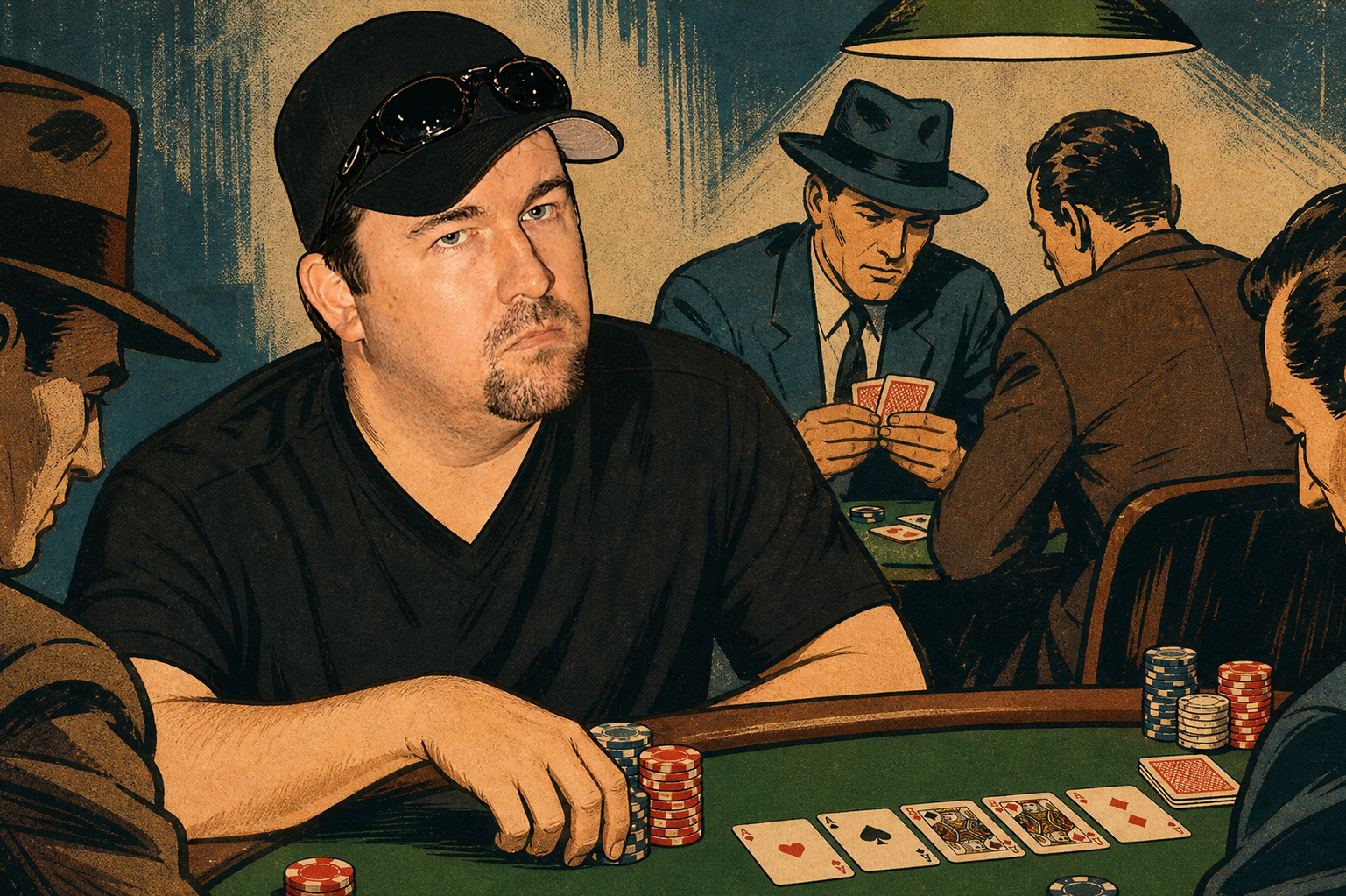
“Before I won, these tournaments didn’t exist. There was nowhere to play poker.” That’s not an exaggeration for effect — it’s close to literal. Seven months after I won $2.5 million, I had to drive to Bay 101 in California just to find a tournament worth entering. Now there’s a stop somewhere in the world every week of the year, and the WSOP Schedule alone runs for weeks straight every summer.
What that growth bought the game is obvious — more prize money, more legitimacy, more players who can actually make a living at it. What it cost is harder to put a number on. The whiteboard is gone. The intimacy is gone. You’re not going to bump into the eventual champion at the coffee stand anymore, because there isn’t a coffee stand — there’s a resort with its own zip code.
“Unless you’re my age and played before me, you have no clue how different this sport was.” I don’t say that to sound like an old man yelling about the good old days. I say it because it’s just true, and most of the people playing now have no way of knowing it.
The Game Itself Was Simpler to Read
It wasn’t just the room that was different. The game inside it was a different animal.
Narrow Ranges, Easy Reads
In 2003, a preflop 3-bet meant Jacks or better, or Ace-King. A 4-bet meant Kings or Aces. That was close to the entire menu. You didn’t need a solver to figure out what somebody was holding — you needed to watch them for a few hours and pay attention. Reading people was mechanical in a way it just isn’t anymore.
Nobody Had Done the Work Yet
“An 18-year-old kid today can have more experience than Doyle Brunson got in his entire life — in six months.” Online play changed how fast people could rack up hands, and it changed how deep the study of the game could go. In 2003 almost nobody had access to that kind of repetition. The players who were good were good because they’d sat at a table longer than everybody else, not because they’d run a few hundred thousand simulations. I’m not saying it was a better game. I’m saying it rewarded a different set of muscles, and those muscles don’t get used much anymore.
How Much the Field Actually Grew
The numbers make the point better than I can. Here’s what happened to the Main Event field and the top prize in the years right around my win.
| Year | Main Event Entries | First Place Prize |
|---|---|---|
| 2001 | 613 | $1,500,000 |
| 2002 | 631 | $2,000,000 |
| 2003 | 839 | $2,500,000 |
| 2004 | 2,576 | $5,000,000 |
| 2005 | 5,619 | $7,500,000 |
| 2006 | 8,773 | $12,000,000 |
Three years. 839 players to 8,773. The whiteboard didn’t stand a chance.
I still play the Main Event most years. The room is unrecognizable now — the size of it, the production, the security. “Honestly, I almost never think about it. Only when I go to the WSOP and it’s right in your face.” And it is right in your face there, every summer, in a way it wasn’t in 2003. I don’t wish it back the way it was. I just notice, every time I walk in, that the version of the room I learned the game in doesn’t exist anywhere anymore except in my head.