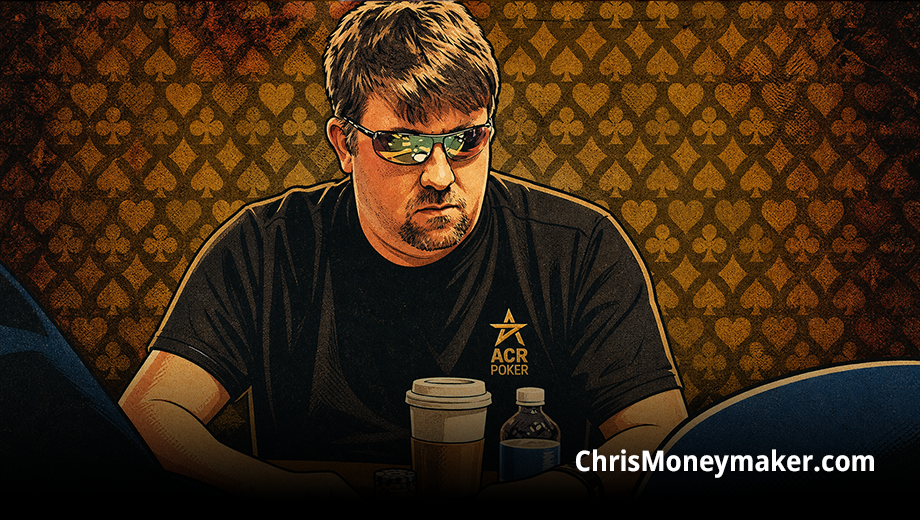

Level two of a tournament, somebody at my table shoves 40 big blinds with pocket eights into a field that hasn’t even lost half its players yet. I had ace-king. Good spot on paper. I folded. Not because the math was wrong — it’s close to a coinflip — but because I didn’t need to find out. There were nine hours of poker left and a hundred easier ways to pick up that same amount of chips without putting my whole tournament on a coin.

Why He Passes on the Coinflip
People assume building a big stack means winning big pots. It doesn’t. It means staying alive long enough that the big pots eventually find you on better terms. A coinflip for half your stack is a 50-50 bet to either double up or go home, and I’ve never liked those odds compared to the alternative, which is just waiting for a spot where I’m not flipping a coin at all.
“I’m smart enough to know that’s not sustainable. I ran really good.” That’s me talking about my run in 2003, not a general strategy. You can win a tournament running into flips and getting there. You can’t build a repeatable approach around needing to. If I’m building a stack for the long run of a tournament, I want as few of my chips as possible depending on a coin landing right.

Where the Chips Actually Come From
Small Pots, Repeated Often
Most of a stack gets built in pots nobody remembers — a raise that takes down the blinds, a continuation bet that gets a fold, a hand that wins three big blinds instead of thirty. None of those show up on a highlight reel. All of them add up faster than people think, and none of them require winning a flip.
Picking the Right Opponent, Not the Right Cards
“It’s not rocket science. It’s simple observation.” Building chips without big risk is mostly about who you’re doing it against. There’s always a player at the table who’s playing too many hands or folding too much to pressure. That player is where the chips come from — not the superstar three seats down who’s been playing longer than I’ve been alive. Pick on the weak spot in the field, not the strongest, and you rarely need to gamble to get there.
What’s Actually Being Traded Away
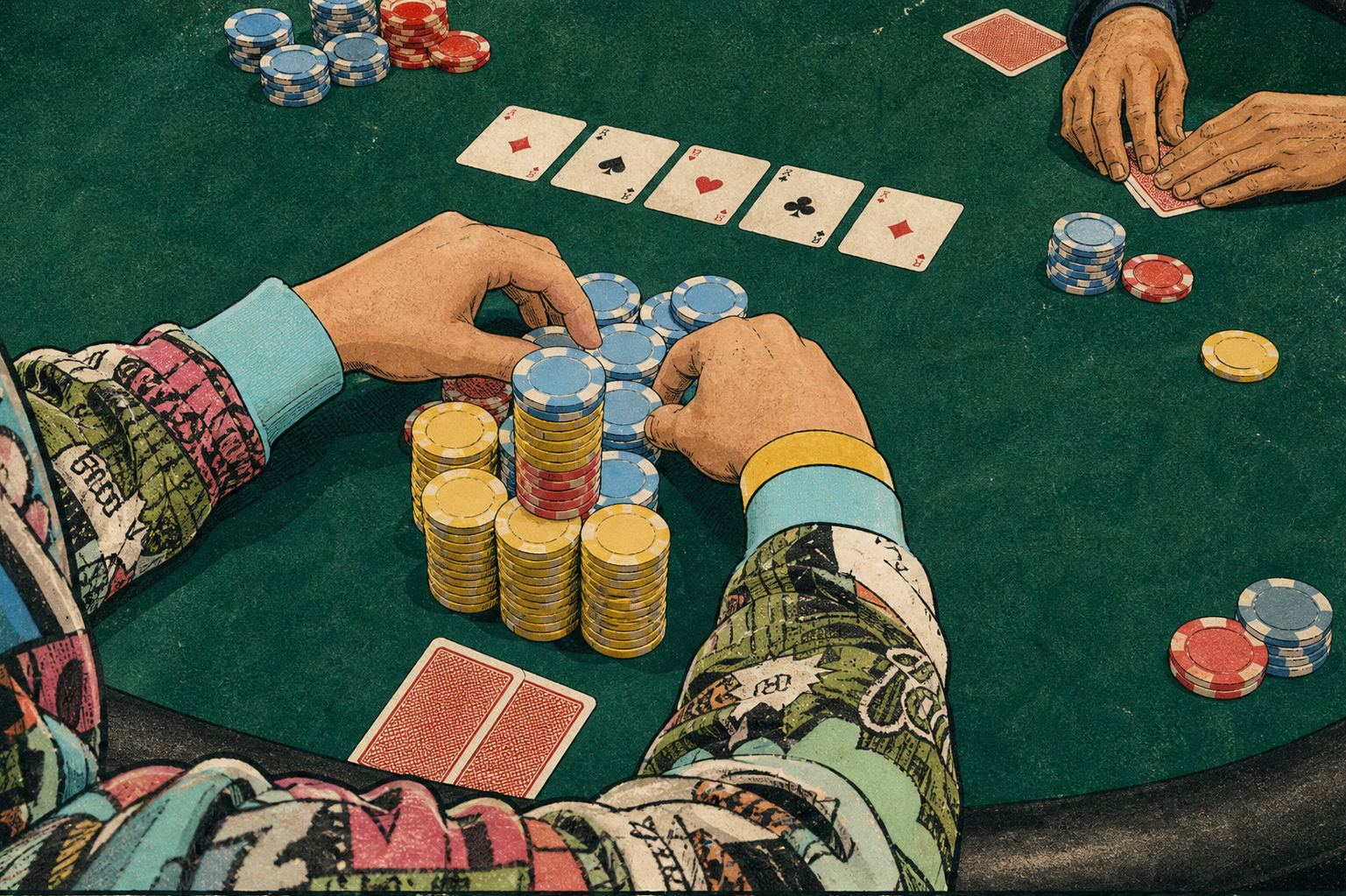
I’ll be straight about the downside: this approach is slower. You’re not going to triple up on Day 1 playing this way, and there will be tournaments where somebody who gambled harder than you ends up with more chips by dinner. That’s fine. Chips you have on Day 3 are worth more than chips you might have had on Day 1 if a coin had landed your way. I’d rather have a stack I built than a stack I got lucky into, because the stack I built came with information about the table that the lucky stack didn’t.
“Poker is about controlling your emotions and how those emotions affect your decisions.” Passing on a flip when everyone else at the table is taking it requires being fine with looking passive for a while. Most players can’t sit with that feeling. I can, mostly because I’ve been the guy who got outdrawn plenty of times and know the tilt that follows isn’t worth whatever chips the coinflip might have won me.
The Actual Mechanics of It
None of this is complicated. It’s a handful of habits repeated for ten hours a day.
Raise Sizes That Don’t Commit You
I’d rather make a smaller raise that lets me get away from a hand cheaply than a bigger one that pot-commits me into a decision I don’t want to be making. Keeping bets proportional to what I’m willing to lose is the single biggest reason I’m rarely forced into a flip I didn’t choose.
Position Over Cards
A mediocre hand in late position is worth more than a decent hand out of position. I’ll play more hands from the button than anywhere else at the table, not because the cards are better, but because the information is.
Folding Is a Skill, Not a Failure
Every fold that saves me from a coinflip is a chip I still have. Nobody remembers the hands you didn’t play. Your stack does.
Building a Stack: High-Variance vs. Low-Risk Lines
Both approaches can win a tournament. They get there very differently.
| Factor | High-Variance Lines | Low-Risk Lines |
|---|---|---|
| Typical spot | Coinflips, big all-ins, marginal calls | Small raises, position plays, folding equity away |
| Stack growth | Fast when it works, gone when it doesn’t | Slow, steady, rarely at risk of elimination |
| Information needed | Minimal — mostly about the cards | High — depends on knowing your opponent |
| Emotional cost | High swings, harder to stay even-keeled | Low swings, easier to keep a clear head |
| Best used against | Anyone, since it’s about the cards | Weaker or overly tight players specifically |
Neither line is wrong. I just know which one I can sustain for four days in a row without wanting to burn my chips down in frustration.
I’ve won plenty of chips the slow way and lost a few just as slowly, watching them get chipped away by a table that adjusted to me before I adjusted back. That’s the trade you make. You give up the ceiling of the big score for a floor that keeps you playing long enough to see one anyway.