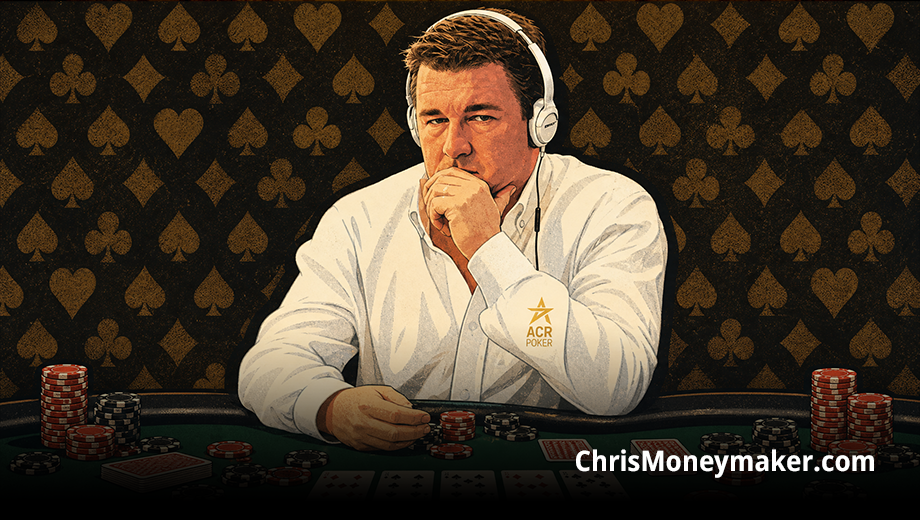

I bagged 60,000 chips at the end of Day 1 of the 2003 Main Event. Started that morning with 10,000. It took the better part of twelve hours at the table to turn one stack into the other, and that was just one day out of what ended up eating the better part of a week. People ask me all the time how long a WSOP tournament actually runs. There’s no single answer. A cheap turbo back at Binion’s could be over before dinner. The Main Event ate my whole summer in a way — satellites, then the tournament itself, then flying home and going straight back to my accounting job on Monday morning. Length depends on the buy-in, the starting stack, how slow the clock moves, and how many people show up to play with you.
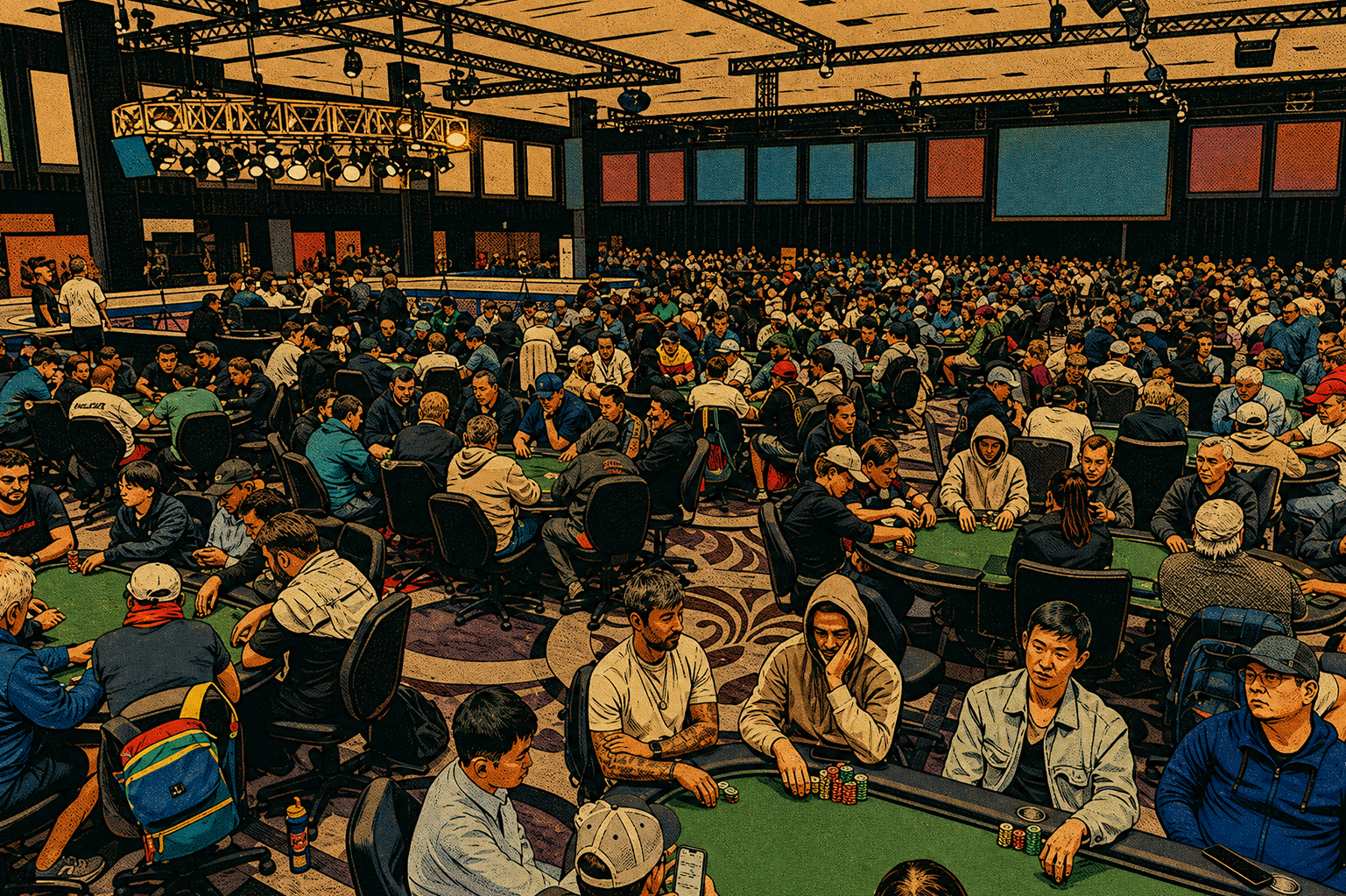
Why the Main Event Takes So Long
The Main Event isn’t one long sitting — it’s built that way on purpose. With thousands of players entering every summer, the tournament runs multiple starting days just to fit everyone in the room. Players who register for the same event can start their clocks on completely different days, then get merged onto the same felt once the smaller fields consolidate into one.
Add in a starting stack deep enough to survive real mistakes, and levels long enough that one bad beat doesn’t end your week, and you get a tournament that can stretch out over more than a week from the first shuffle to the final table. That’s not padding. It’s what happens when you take a field the size of a small town and give everyone room to actually play poker instead of just shoving and hoping.
In 2003, none of that existed yet. We had 839 players, one starting day, and one clock for the whole field. Nobody needed three letters after “Day 1.” That single-flight setup is basically gone at the top level now — the fields simply got too big for one room to hold in one day.

What Actually Decides How Long You’re Playing
Buy-In and Structure
Cheap tournaments move fast because the buy-in doesn’t justify a slow structure. Bigger buy-ins get slower clocks and deeper starting stacks on purpose — organizers want players making real decisions, not just shoving and hoping in the first level.
Field Size and Format
A field of sixty players wraps up in an evening. A field of ten thousand doesn’t. Multi-day formats, dinner breaks, unofficial and official final tables — all of it adds hours a small local tournament never has to deal with. Re-entry events run longer too, since players can bust and buy back in instead of the field shrinking on schedule.
What a Level Actually Buys You
Longer levels mean more hands before the blinds force a decision. That’s the whole point of a big buy-in structure — you’re paying for time at the table, not just a seat in the room.
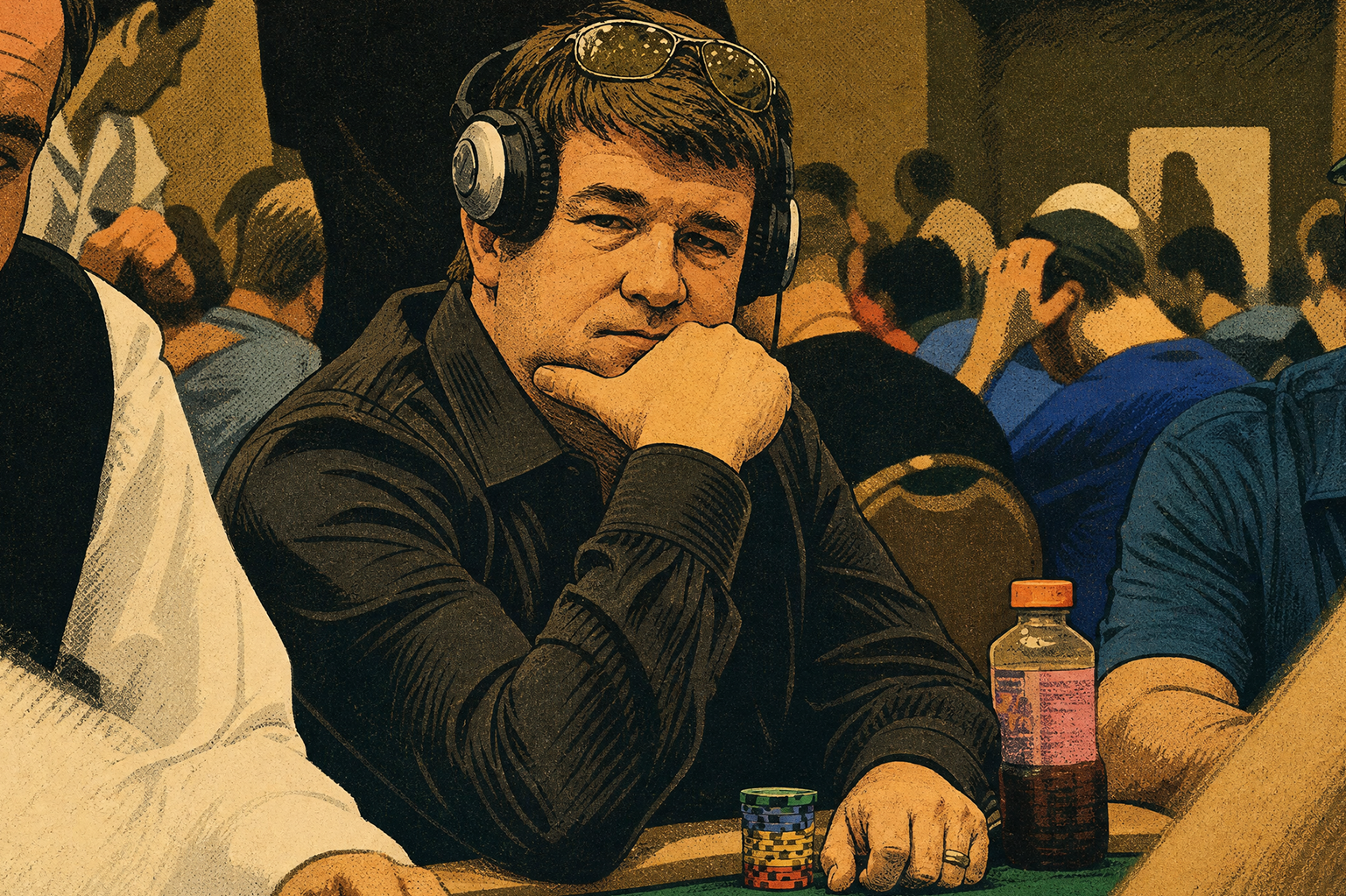
What It’s Like Living Inside a Multi-Day Event
Multi-day tournaments mean you’re not going home when it’s over at midnight. You’re back at the same table at noon the next day, still stacked the way you left it, still thinking about the hand you folded the night before. That’s a different kind of tired than a one-day event gives you. It’s not physical. It’s the kind where you’ve been running the same fifteen hands through your head since you woke up.
“The fun part of life is not knowing what tomorrow brings.” That’s true at the table too — you don’t know if tomorrow’s session is four levels or fourteen. I check the official WSOP Schedule every summer before I plan anything else, because the length of the event I’m playing decides how long I’m away from my family, not the other way around.
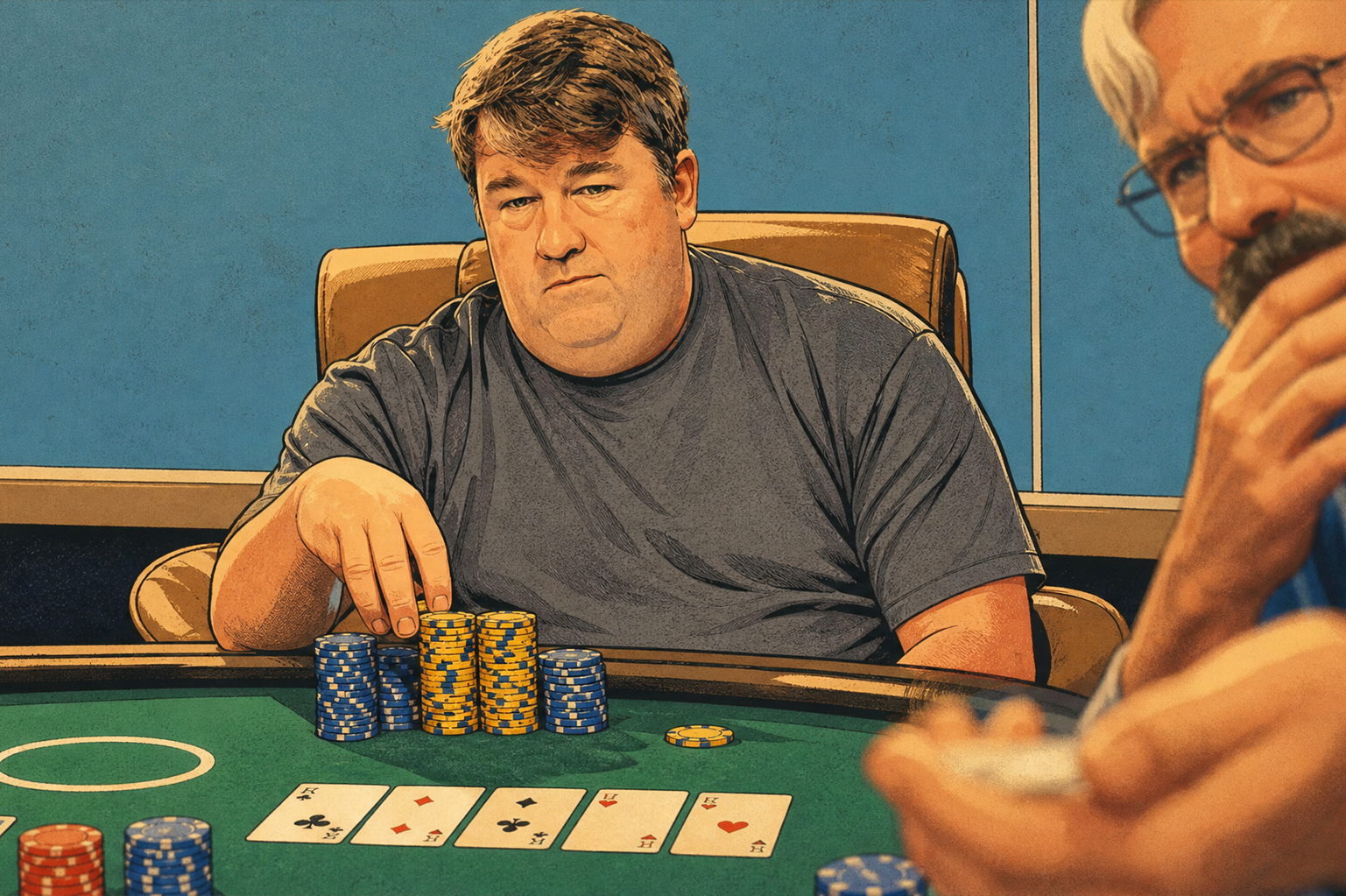
How to Read a Structure Before You Register
Starting Stack Relative to the Blinds
If your starting stack is only fifty or sixty big blinds, expect a short day. Structures that hand out 150-plus big blinds to start are built to run deep, which usually means more days on the schedule, not fewer.
How Many Day 1s Are Listed
One Day 1 means a smaller field and a shorter overall tournament. Multiple Day 1s — 1A, 1B, sometimes 1C — mean the organizers are expecting a big field, which almost always adds a day or two to the total length once everyone’s merged.
None of this is complicated. It’s just math — bigger stacks and slower clocks add hours, bigger fields add days. Read the structure sheet the same way you’d read a hand: for information, not for hope.
How Bigger Fields Made the Main Event Longer
The clearest way to see why the Main Event got longer is to look at how much bigger the field got after 2003. More players meant more starting flights, more unofficial final tables, and more total days on the calendar just to get everyone through the field.
| Year | Main Event Entries | First Place Prize |
|---|---|---|
| 2000 | 512 | $1,500,000 |
| 2001 | 613 | $1,500,000 |
| 2002 | 631 | $2,000,000 |
| 2003 | 839 | $2,500,000 |
| 2004 | 2,576 | $5,000,000 |
| 2005 | 5,619 | $7,500,000 |
| 2006 | 8,773 | $12,000,000 |
From 512 entries in 2000 to 8,773 in 2006. The tournament didn’t get longer because anyone wanted a longer show. It got longer because that many people don’t fit through one room in one day.
People assume I miss the grind of a ten-day tournament. Mostly, I don’t. I miss the version of me that didn’t know how long anything was supposed to take — who just sat down and played until someone told him to stop. These days I look at a structure sheet before I register, same as anyone else planning a trip. Some events I’m home in three days. Some I’m not. Either way, I still show up every summer, because that one week in 2003 is still the one nobody can talk me out of playing.