
Every summer, somewhere between the Rio and the airport, somebody taps me on the shoulder. Doesn’t matter if it’s a dealer, a rail bird, or a guy who just busted out of a $60 satellite an hour ago. They want to talk about the same thing they always want to talk about: 2003. Not last year’s Main Event winner. Not whoever just took down a bracelet that morning. More than twenty years later, it’s still the $86 satellite, the hand against Sammy Farha, the accountant who wasn’t supposed to be there. That’s the story that never stops making the rounds. I’ve stopped being surprised by it.
The Story That Keeps Coming Back
Here’s the short version, since it apparently needs repeating every few months. I had $200 in an online account. I saw a satellite for $86 with only a couple of seats left and jumped in thinking it was a cash sit-and-go. It wasn’t. It was a satellite to a satellite to the World Series of Poker Main Event. I got through that one, then through a $615 qualifier where 69 players were fighting over three seats, and ended up with a $10,000 buy-in I never actually paid for, sitting in a field of 839 players at Binion’s.
“It was a mistake to register the satellite. It was not something I was doing on purpose” — and that part is exactly true. If seats had been transferable that year, there’s a real chance I sell mine, take the cash, and fly home. Instead I played, and somewhere deep in the tournament, the hand people still ask about happened: Sammy Farha and I got into a pot with the board reading jack-five-four. I had five-four myself, for two pair. I moved all-in. Farha folded a jack face-up on national television. That single moment is probably eighty percent of why anyone still stops me at an airport.
The Part Everyone Skips
Bruce’s Stake That Wasn’t
My friend Bruce Peary had offered $5,000 for half my action once I made it into the Main Event. Good friend, bad timing — he blew that $5,000 at a casino in Tunica the week before I needed it. So instead I sold 20% to my dad for $2,000 and another 20% to a different friend, and tried to sell more. Nobody wanted a piece of an amateur nobody had heard of. I ended up keeping 60% of myself by accident, which worked out better than anyone could have planned.
Back at the Office Monday
I won on a Friday into Saturday. Flew home Saturday, had one day off, and was back at my desk Monday morning. The ESPN broadcast didn’t air until August — three or four months later — so for a while I went back to a normal life where maybe thirty people actually knew what had happened. No parade. No sponsors calling yet. Just a guy who’d won $2.5 million walking back into a regular Monday.
Why This Is Still the Story
“Before I won, these tournaments didn’t exist. There was nowhere to play poker” — and I mean that literally, not in some poetic sense. Seven months after winning, I had to drive to Bay 101 in California just to find a tournament worth entering. Now there’s a stop somewhere in the world basically every week of the year. I understand my name gets attached to that shift. Honestly, I almost never think about it. Only when I go to the WSOP and it’s right in your face.
What people actually respond to isn’t the money. It’s that none of this was supposed to happen to someone like me — an accountant who’d never played a live tournament that size, who only recognized three names in the whole field. “It had to be miracle after miracle after miracle for me to even get into the Main Event, not to mention all the run good I had once I entered.” That’s not humility talking. That’s just what the bracket looked like.
What Actually Made the Bluff Work
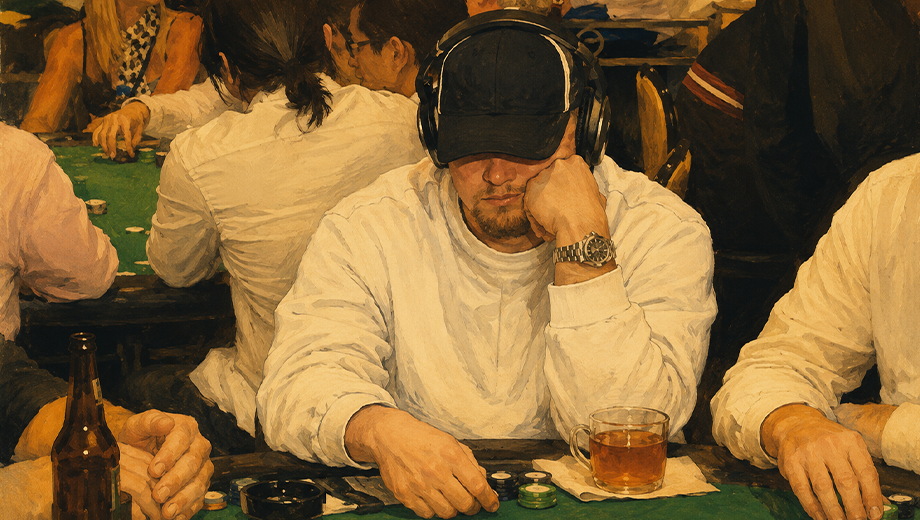
People replay the Farha hand like it was some calculated masterstroke. It wasn’t. I only knew three players walking into that Main Event: Phil Hellmuth, Doyle Brunson, and Johnny Chan. Everyone else, including Phil Ivey at my table, was just a stack of chips attached to a face I didn’t recognize. “I only knew three players: Phil Hellmuth, Doyle Brunson, and Johnny Chan. When I saw Phil Ivey, I saw a young Black kid with chips. He didn’t scare me.” Earlier in that same tournament I had A-Q against Ivey’s pocket nines on a board of queen-queen-six, a nine hit on the turn, and by the river I was still the one holding the winning hand. That’s not a system. That’s variance being polite to me for one week in May.
Reading a Table Nobody Knew Yet
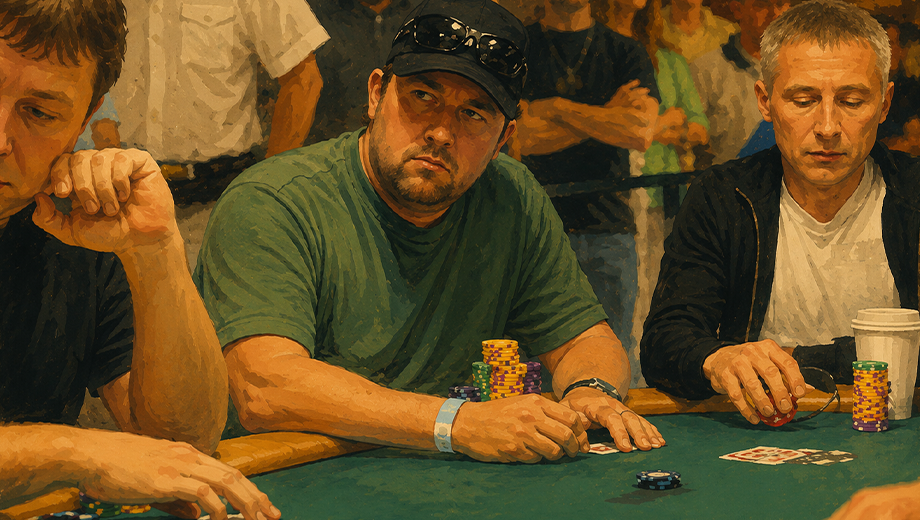
The one real edge I had: nobody at that table had any read on me, because nobody had ever seen me play. I folded a lot, watched everything, and guessed at what people held when hands got to showdown. Right or wrong, I learned something each time. By the final table I’d seen enough hands to trust my gut on Farha, even against a board that could easily have had him beat.
Why the Story Never Really Fades
Part of why this one keeps resurfacing every WSOP season instead of getting replaced by whatever happened last summer: the Main Event never went back to what it was before 2003. The field size tells that story better than I can.
| Year | Main Event Entries | First Place Prize |
|---|---|---|
| 2001 | 613 | $1,500,000 |
| 2002 | 631 | $2,000,000 |
| 2003 | 839 | $2,500,000 |
| 2004 | 2,576 | $5,000,000 |
| 2005 | 5,619 | $7,500,000 |
| 2006 | 8,773 | $12,000,000 |
From 839 players to 8,773 in three years. Every one of those new players is a reason somebody’s still telling this story at a final table today.
I still play the Main Event every summer. Have since 2003. It’s the one event where the whole thing is right in front of me again — the ESPN reruns on the rail monitors, somebody asking about the bluff before I’ve even found my seat. The rest of the year I mostly forget about it. There’s usually another tournament somewhere and a flight to catch in the morning. Funny thing about being the answer to “which WSOP story does everyone bring up” — you don’t get to pick. It just keeps being that one.
Frequently Asked Questions
What is the Chris Moneymaker WSOP story that people still talk about?
It’s his 2003 WSOP Main Event win. Chris Moneymaker turned an $86 satellite into a $10,000 Main Event seat and beat 839 players for the $2.5 million top prize, including a famous bluff against Sammy Farha. More than twenty years later, it’s still the story fans and players bring up most.
How did Chris Moneymaker qualify for the 2003 WSOP Main Event?
He entered an $86 online satellite by accident, thinking it was a cash sit-and-go. That satellite led to a $615 qualifier with 69 players competing for three seats, which he won, earning a $10,000 seat in the Main Event without paying the buy-in himself.
What happened in the famous bluff against Sammy Farha?
On a board of jack-five-four, Moneymaker held five-four for two pair and moved all-in against Farha. Farha folded a jack face-up on national television, in one of the most replayed hands in WSOP history.
How much did Chris Moneymaker win at the 2003 WSOP Main Event?
Moneymaker won $2,500,000 for first place out of a field of 839 players, with a total prize pool of $7,987,860. He beat Sammy Farha heads-up for the title.
What is the Moneymaker Effect?
The Moneymaker Effect refers to the surge in poker’s popularity after his 2003 win. WSOP Main Event entries jumped from 839 in 2003 to 2,576 in 2004, then to 8,773 by 2006, as online qualifiers proved anyone could win the biggest tournament in the game.
Does Chris Moneymaker still play the WSOP Main Event?
Yes. He has played the Main Event every year since his 2003 win and remains active on the tournament circuit, including multiple final tables and titles on the Triton Poker Series in recent years.