

The ceilings at Binion’s felt six feet tall. That’s not literally true, but it’s the truest way I can describe walking into my first World Series of Poker back in 2003. They’d pulled the slot machines out and dropped folding tables where they used to sit. Names were tracked on a whiteboard with a magic marker. I didn’t know it yet, but that room was about to hand me the first of what’s now more than twenty summers of memories. Some of those are the ones everybody already knows. A lot of them aren’t. People ask me constantly what winning felt like. Almost nobody asks what actually stuck with me the summer after, or the one a decade later. So here’s the real list.
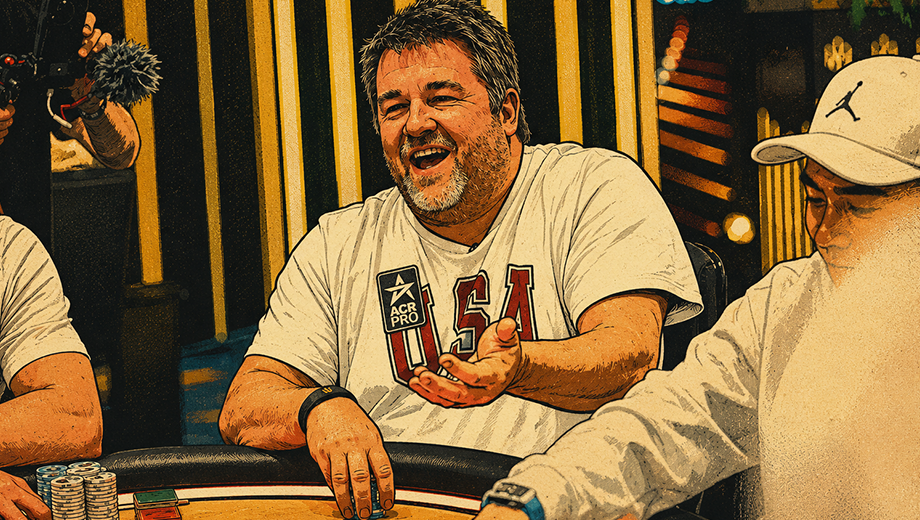
2003: The Summer Everyone Remembers, Told the Way I Actually Remember It
I knew three names walking in: Phil Hellmuth, because of the bracelet count, and Doyle Brunson and Johnny Chan, because I’d seen them in Rounders. Everyone else at that table was just a face attached to a stack of chips. That included Phil Ivey. “I only knew three players: Phil Hellmuth, Doyle Brunson, and Johnny Chan. When I saw Phil Ivey, I saw a young Black kid with chips. He didn’t scare me.” He had pocket nines against my Ace-Queen. The flop came Queen-Queen-6. He hit his full house on the turn. I called anyway and won. I had no idea at the time that most of the room already considered him the best player alive. Probably better that I didn’t.
The hand everyone brings up came later, heads-up against Sammy Farha. I had 5-4 on a board of Jack-5-4. Nothing. I moved all-in anyway. He folded a Jack face-up. That single moment ended up defining how people saw me for the next twenty years, and it’s still the first thing strangers mention. But it’s not actually my favorite memory from that summer. It’s just the one that made the highlight reel.
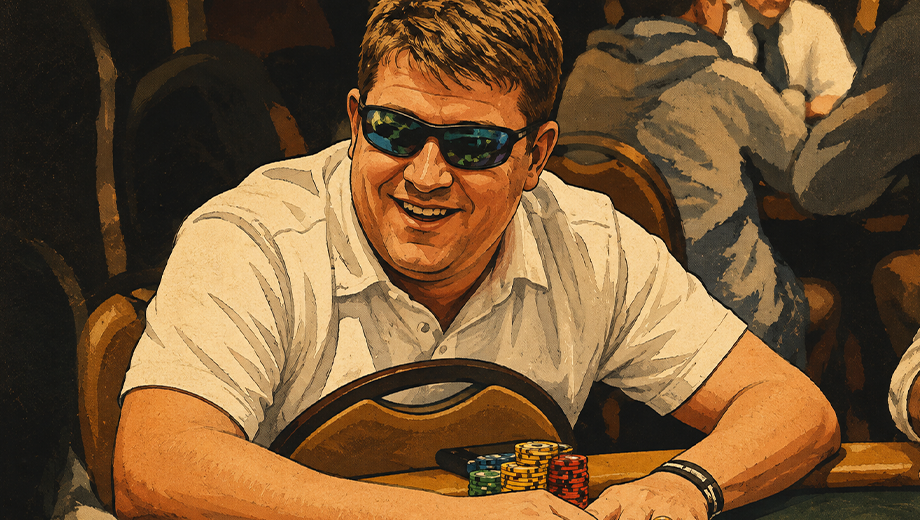
The Part Nobody Asks About
I Was the Worst Player at the Table, and I Knew It
“I was the worst one in the field. I knew that going in.” Before it even started, I’d told myself one thing: “I had already told myself: I am not busting before the final table. Zero percent chance.” Somehow that held. Along the way I sold off pieces of my action — 20% to my dad for $2,000, another 20% to a friend — because nobody thought an unknown amateur was worth much more than that. Keeping 60% of my own action turned out fine.
Monday Morning
I won on a Friday. Flew home Saturday. Went back to my accounting job Monday morning. The broadcast didn’t air until August, three or four months later, so for most of that summer maybe thirty people on the planet knew what had actually happened in that room. No parade. No fanfare. Just a guy back at his desk who’d quietly won two and a half million dollars over the weekend.

The Summers After, Watching the Room Get Bigger
“Before I won, these tournaments didn’t exist. There was nowhere to play poker.” Seven months after that win, I had to drive all the way to Bay 101 in California just to find a tournament to enter. People forget that detail when they talk about “the Moneymaker Effect” like it happened overnight. It didn’t. It happened over the next several summers, one WSOP at a time, and I got to watch it happen from inside the room.
Walking into that same tournament each July and watching it get physically bigger, year over year, is its own memory — separate from anything that ever happened at a table. Card rooms I’d never heard of before 2003 suddenly had lines out the door. The whiteboard-and-marker era didn’t last long after that.

What the Room Actually Looked Like, Summer by Summer
Numbers tell this part better than I can. Here’s the Main Event field in the years right before and right after 2003.
| Year | Main Event Entries | First Place Prize |
|---|---|---|
| 2001 | 613 | $1,500,000 |
| 2002 | 631 | $2,000,000 |
| 2003 | 839 | $2,500,000 |
| 2004 | 2,576 | $5,000,000 |
| 2005 | 5,619 | $7,500,000 |
| 2006 | 8,773 | $12,000,000 |
From 839 players to 8,773 in three summers. I didn’t just hear about that growth. I sat in the middle of it every year.

2019: The Steak Dinner Summer
The Poker Hall of Fame induction came in 2019. People expect that to feel like a coronation. It doesn’t. “I was like, so I get a steak dinner. That’s pretty much the benefit of being in the Hall of Fame.” That’s the whole story. A plaque, a dinner, and back to the tournament floor the next morning. Nobody handed me a different life. I just kept showing up.
How Different the Room Looks Now
“An 18-year-old kid today can have more experience than Doyle Brunson got in his entire life — in six months.” That’s not an exaggeration, it’s just math. Solvers, hand-history databases, online volume — a serious teenager grinding today has seen more hands by his nineteenth birthday than most of the guys I played against in 2003 saw across their whole careers. “Unless you’re my age and played before me, you have no clue how different this sport was.” I mean that as fact, not complaint.
The last few years, I’ve gone back to studying the game seriously myself, after about a decade of not opening a single hand history. Different room. Different game. Same tournament.
He still plays the Main Event every year. Has since 2003. Most of the year I don’t think about any of it. “Honestly, I almost never think about it. Only when I go to the WSOP and it’s right in your face.” Every summer I walk back into that building — wherever it happens to be that year — and it’s all there again: the ESPN clips looping on a monitor somewhere, someone asking about the Farha hand, a kid half my age who’s read more solver output than I ever will. I still play the Main Event every summer. There’s usually a game somewhere after it, and a flight to catch.
Frequently Asked Questions
When did Chris Moneymaker win the WSOP Main Event?
Chris Moneymaker won the 2003 WSOP Main Event at Binion’s Horseshoe in Las Vegas. He beat a field of 839 players for a first-place prize of $2,500,000, after qualifying through an $86 online satellite on PokerStars.
What did Chris Moneymaker do for a living before he won the WSOP?
Before his 2003 win, Chris Moneymaker worked as an accountant. He went back to that job the Monday morning after winning the Main Event and kept working for months before the ESPN broadcast even aired that August.
What is the Moneymaker Effect?
The Moneymaker Effect refers to the surge in poker’s popularity after Chris Moneymaker’s 2003 win, driven largely by his online qualification path. WSOP Main Event entries grew from 839 in 2003 to over 8,700 by 2006, as online satellites opened the door to everyday players.
When was Chris Moneymaker inducted into the Poker Hall of Fame?
Chris Moneymaker was inducted into the Poker Hall of Fame in 2019, recognizing his impact on the game’s growth since his 2003 WSOP Main Event win.
Does Chris Moneymaker still play the WSOP Main Event?
Yes. Chris Moneymaker has played the WSOP Main Event every year since his 2003 win and continues to return to it as part of his ongoing career and ambassador role in the game.
Who did Chris Moneymaker beat heads-up to win the 2003 Main Event?
Chris Moneymaker beat Sammy Farha heads-up. The decisive moment came when Moneymaker moved all-in on a Jack-5-4 board holding only 5-4, and Farha folded a Jack face-up — a bluff that became the defining image of his win.