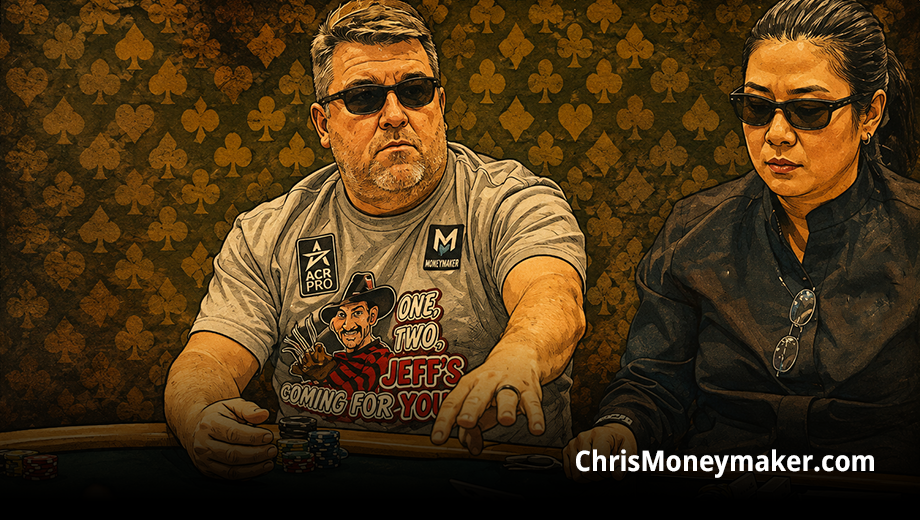

The lights are hot. Nobody warns you about that. Cameras need light, and TV cameras need a lot of it, so the feature table at the WSOP sits under enough wattage to make you sweat through a golf shirt in an air-conditioned room. That’s the first thing I remember from 2003 — not the money, not the crowd, just how much hotter it was under those lights than anywhere else in the room. Everybody assumes the hard part is the cards. The actual hard part is doing normal math while a camera points at your hands and a producer somewhere is deciding whether your face is interesting enough to keep on screen.
The Table That Looks Nothing Like the Room Around It
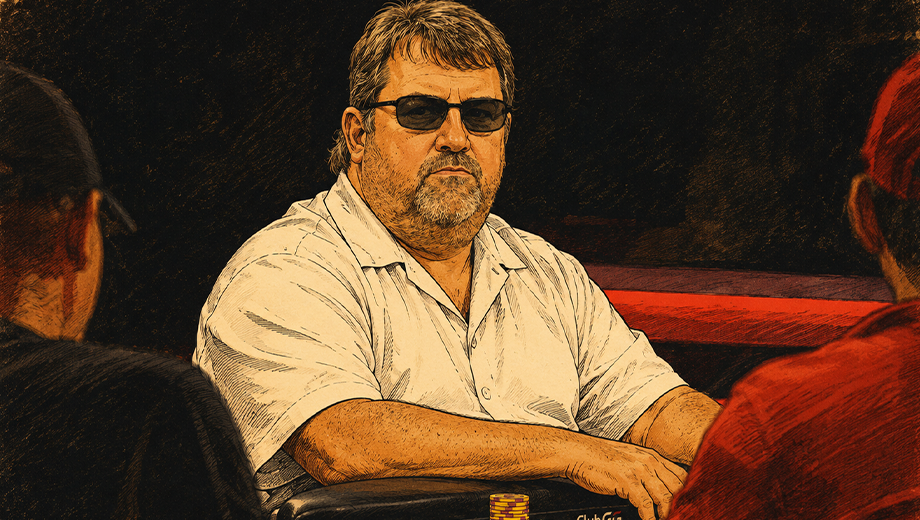
Every other table in the room that week was just a table. Folding legs, felt, a dealer, a chip rack. The feature table had a rail three deep, a ring of cameras, and enough production crew to make it feel like a different tournament entirely. By the time I got there in 2003, on the run toward the final table, I’d mostly stopped noticing the rail. What I never stopped noticing was the heat.
The Phil Ivey hand happened at four in the morning, after we’d been ten-handed for hours. I had a million and a half in chips, he had five hundred thousand. Ace-Queen against pocket nines. Queen-Queen-6 on the flop, a nine on the turn. Cameras were rolling the entire time, and none of it registered. “I had already told myself: I am not busting before the final table. Zero percent chance.” That thought was louder than any camera in the room.
The Part Nobody Asks About
The Broadcast Nobody Had Seen Yet
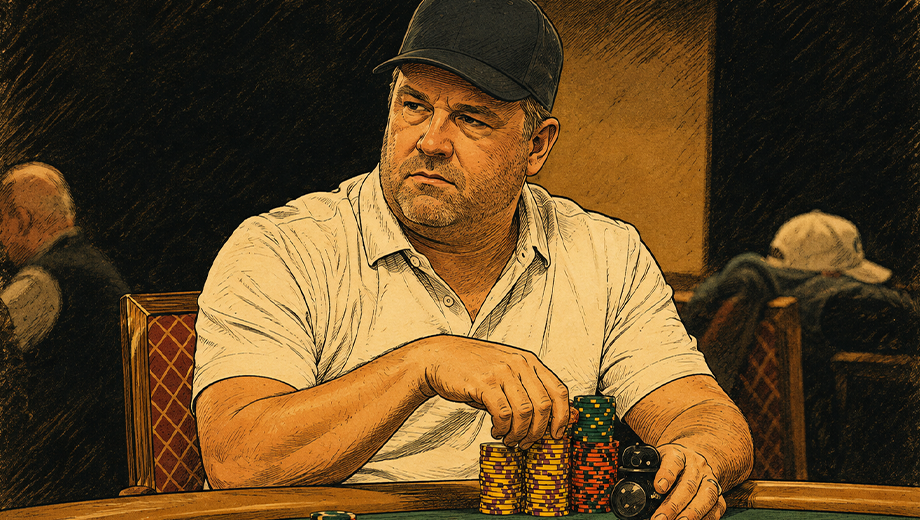
Here’s the strange part: none of what happened at that feature table aired for months. ESPN didn’t run the broadcast until August, three or four months after I’d already won. So every camera pointed at me during that final table was capturing something the rest of the world wouldn’t see until summer was basically over. I went back to my accounting job Monday morning and sat at a desk for months while a version of me was still sitting under those lights, unaired, waiting.
What the Cameras Actually Do to You
“I’ve never really gotten nervous playing poker. I wrestled, I boxed, I did contact sports — that’s where you get nervous. We’re playing cards. Have fun.” That’s true, and it’s also not the whole story. Cameras don’t make you nervous the way a punch to the face does. They make you self-conscious in a different way — aware that every twitch is footage now, that somebody behind the lights is going to decide which of your reactions matters.
Reading a Room That’s Also Reading You
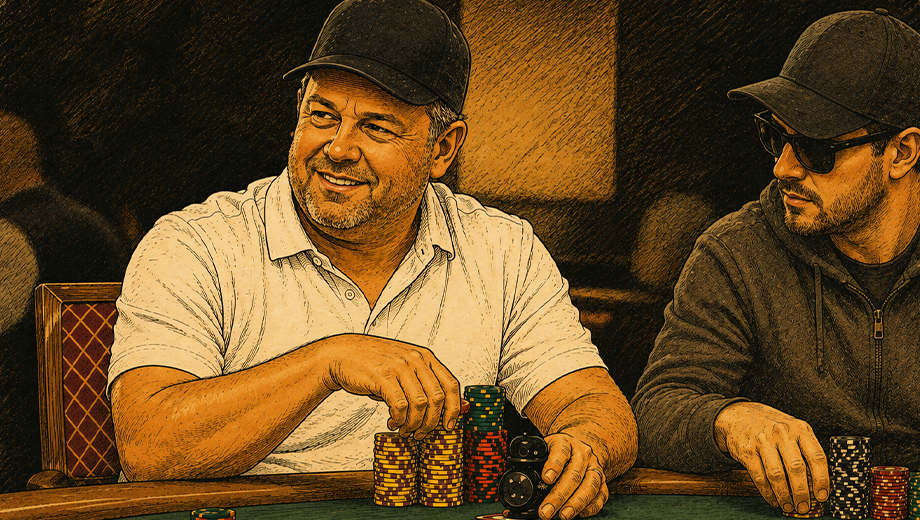
“It’s not rocket science, it’s simple observation.” That’s how I’ve always approached the table, feature or not — watch who’s scared to risk their chips, who’s in survival mode, who’s performing for the cameras instead of playing the hand in front of them. On a feature table, more people are performing than usual. That’s useful information. A guy who starts talking more once the cameras turn on is telling you something about how he handles pressure, and it’s rarely good.
The pressure cuts both ways. You’re reading them. Somewhere behind the lights, a producer’s reading you.
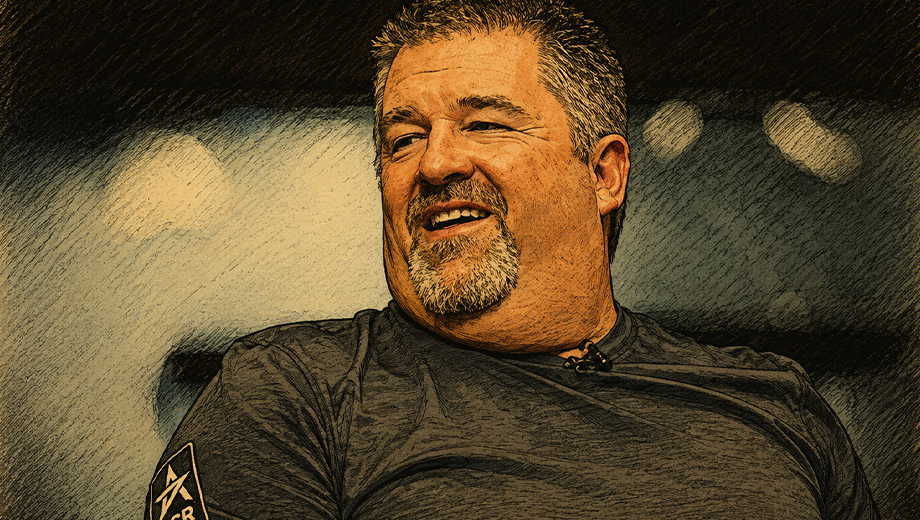
The Feature Table Nobody Saw
The Secret Final Table
The strangest version of this happened in 2020, during the pandemic, on a feature table nobody could talk about. I final tabled a major online tournament on ACR while I was still an ambassador for a different site, so the whole thing had to stay quiet. No cameras this time, but the same kind of white-glove treatment — someone walking me through every step, money showing up fast once it was over. It was the closest I’ve felt to a real feature table experience with zero audience. Turns out the audience was never really the point. The pressure was internal the entire time, whether anyone was watching or not.
Triton’s Different Kind of Spotlight
Triton events run fast — short levels, quick eliminations — which changes the feature table completely. There’s no ten-hour grind to get comfortable under the lights. You’re just suddenly in it. That fast structure is built to give recreational players and businessmen a real shot against the pros, and it means the feature table spotlight hits earlier and ends quicker than it did back in 2003.
People ask what it’s like to play on television. The honest answer is that you stop thinking about the cameras about ten minutes in, the same way you stop noticing a loud air conditioner. What stays with you isn’t the lens. It’s the heat, the room, and whichever hand ends up mattering enough that somebody, months later, decides to air it.
Frequently Asked Questions
What is the feature table at the WSOP?
The feature table is the specially lit, camera-surrounded table used to broadcast key hands from the WSOP Main Event, including the final table. It’s set apart from the rest of the tournament floor by production lighting, hole-card cameras, and a viewing rail.
Did Chris Moneymaker get nervous playing on camera?
Chris Moneymaker has said he’s never gotten nervous playing poker, comparing it to contact sports like wrestling and boxing where real physical nerves apply. Cameras created self-consciousness rather than nervousness, in his account of the experience.
When did the 2003 WSOP Main Event final table air on TV?
The 2003 WSOP Main Event was won in May 2003, but the ESPN broadcast didn’t air until August of that year — three to four months after the tournament actually concluded.
What happened between Chris Moneymaker and Phil Ivey at the feature table?
In the early morning hours of the 2003 final table, Moneymaker held Ace-Queen against Phil Ivey’s pocket nines. The flop came Queen-Queen-6, giving Moneymaker trip queens; Ivey hit a full house on the turn. Moneymaker won the hand and eliminated Ivey.
Has Chris Moneymaker played on a feature table since 2003?
Yes. Beyond his annual WSOP Main Event appearances, Chris Moneymaker has final-tabled multiple Triton Poker Series events and, during the pandemic in 2020, secretly final tabled a major ACR online tournament while still under contract with another site.