

The first time I walked into the WSOP, I knew the names of exactly three poker players. I’d never played live at that level. I qualified online for $86 and thought my actual goal was to finish fourth in the satellite and collect $8,000 cash. None of that went according to plan.
What I didn’t have was anyone telling me what to expect. This is that guide.
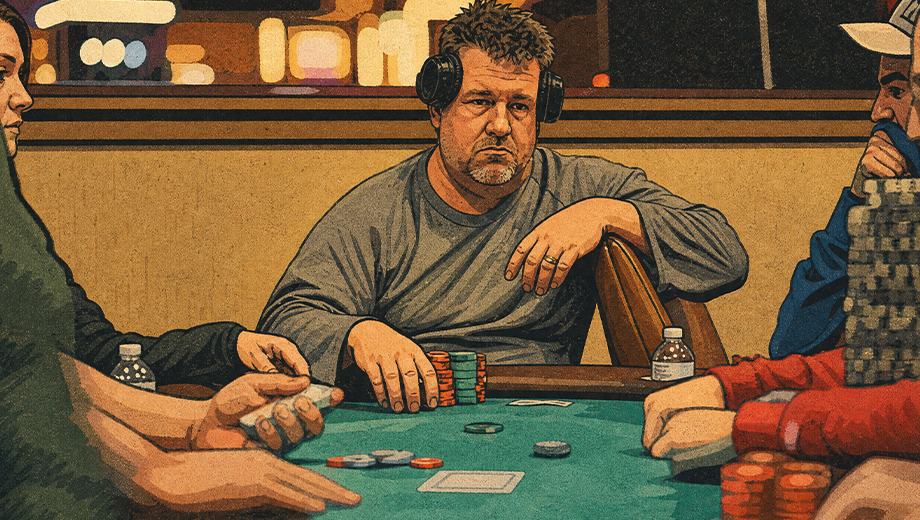
What the WSOP Actually Is
The World Series of Poker is the longest-running and most recognized poker tournament series in the world. It runs every summer in Las Vegas — for decades at Binion’s Horseshoe in downtown Las Vegas, and now at a larger venue that reflects how much the game has grown.
The series runs for several weeks and includes dozens of individual events at various buy-in levels, from a few hundred dollars all the way up to tens of thousands. The flagship event — the one that matters most to most people — is the Main Event. It’s a $10,000 No-Limit Texas Hold’em tournament. You don’t need to win the whole series to play it. You just need to buy in or qualify.
In 2003, 839 players entered the Main Event. By 2006, that number had grown to 8,773. One win by an unknown amateur qualified online changed the game’s entire trajectory. That’s what the WSOP can do.

How to Qualify Without Paying $10,000
The full $10,000 buy-in is real, and most recreational players don’t just write that check. The way most people get in — the way I got in — is through satellites.
A satellite is a smaller tournament where the prize is a seat in a bigger one. You can satellite your way into the Main Event starting from very small buy-ins. PokerStars ran the satellite I entered in 2003 for $86. The online poker ecosystem still runs thousands of these every year leading up to the WSOP. ACR runs them too.
The process usually looks like this: small online satellite → bigger online satellite → Main Event seat. Each step up costs more but gives you a chance to win your way into the next level without risking the full buy-in at once. It’s the same path I took, and it remains the most accessible route for most players.
Live satellites also run at the Rio and other Las Vegas casinos in the weeks before and during the WSOP. If you’re already in Vegas, those are worth looking at too.
What to Expect When You Arrive
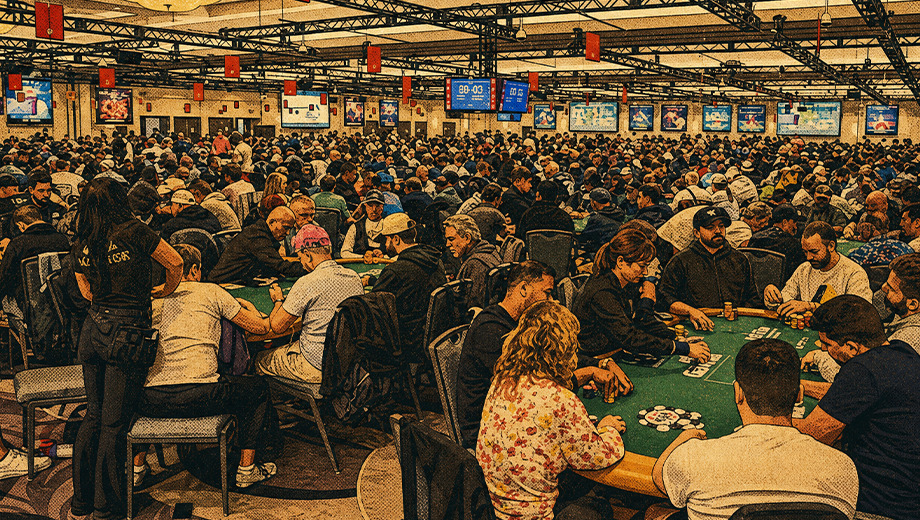
If you’ve never been to the WSOP, the scale of it takes a moment to process. Hundreds of tables. Thousands of players. Multiple tournaments running simultaneously. Staff moving through the room with chips and cards. It’s organized, but it doesn’t look like anything you’ve seen on television.
A few things worth knowing before you sit down:
Registration happens early. Arrive with time to spare on Day 1. Lines can get long, and the last thing you want is to miss levels because you were stuck in line.
The room is loud and the lights are constant. Bring earbuds if you need to block out noise between hands. There’s no shame in putting in headphones and zoning out when you fold — most players do it.
The structure for the Main Event is designed to give you real poker. The starting stack is deep relative to the blinds, and the levels are long enough that you have time to play. Day 1 is about surviving and not making big mistakes. The tournament doesn’t really start until Day 2.
“Before I won, these tournaments didn’t exist. There was nowhere to play poker.”
What the Main Event Structure Looks Like
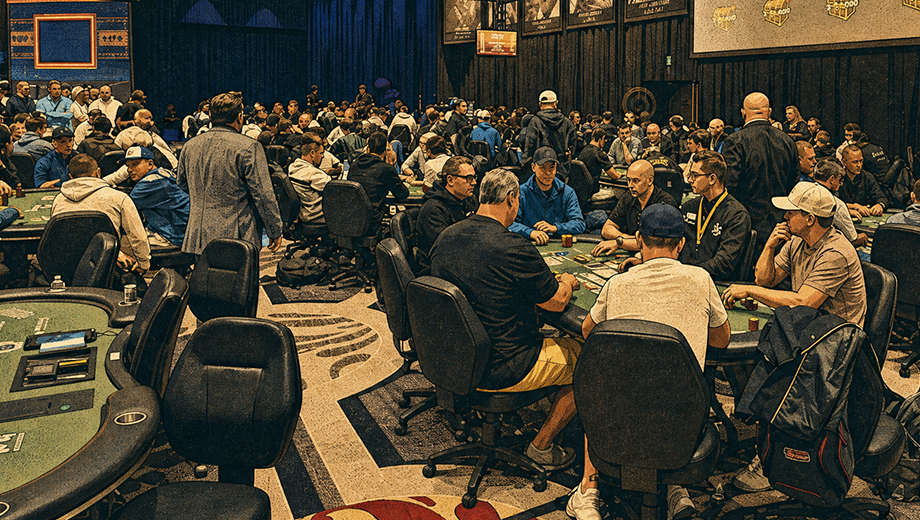
The WSOP Main Event plays across multiple days. Day 1 options let you choose which starting day fits your schedule — there are usually two or three Day 1 flights. You play for roughly 10 to 12 hours, bag your chips at the end, and come back the next day if you’re still alive.
Starting stack is typically 60,000 chips. Blinds start small and increase every two hours. The goal on Day 1 is simple: don’t bust. Get to Day 2 with enough chips to have options.
Day 2 is where the real tournament begins — the field has thinned, the dynamics shift, and you start to see who’s actually playing to win versus who’s just trying to survive to the next pay jump.
Places paid is roughly the top 15% of the field. In a field of 10,000, that’s about 1,500 players getting paid. Min-cash won’t make you rich, but it covers your buy-in. Deep runs are where the real money is.

What to Do in Las Vegas Between Sessions
Las Vegas is designed to keep you awake, spending money, and making bad decisions. That’s fine if you’re on vacation. It’s a problem if you’re trying to play good poker for 10 hours the next day.
The players who fall apart at the WSOP usually don’t lose it at the table. They lose it in the hours around the table — late nights, bad decisions, showing up the next day not quite right. The game doesn’t care. The cards keep coming.
Practical advice: eat actual food, not just what’s available at the poker table. Get some sleep — even if the schedule is unusual. Move around between sessions; the gym helps more than most people expect. And keep the nights from turning into something that costs you the next afternoon.
You don’t have to be a monk. But treating Las Vegas like a poker trip rather than a Vegas trip makes a real difference over the course of a week.

The Right Mindset for a First-Timer
Most first-timers at the WSOP go in with one of two approaches: either terrified of the field, or convinced they’re going to win. Neither is useful.
The field is large and the variance is real. Most Main Event entries don’t cash. That’s just math. What you control is how you play, how you manage your energy, and how you handle the inevitable bad spots.
I walked in not knowing anyone. I didn’t know who the dangerous players were. In some ways that helped — I wasn’t scared of the right people, which meant I wasn’t scared of anyone. The player who intimidates you most is often not the one who actually beats you.
Watch the hands you’re not in. Figure out who’s playing to survive and who’s playing to win. Make decisions based on what you see, not on reputation. And when something goes wrong — and something will go wrong — have a short memory.
“More than anything else: patience. Not getting too emotional. Not reacting to situations.”
One More Thing
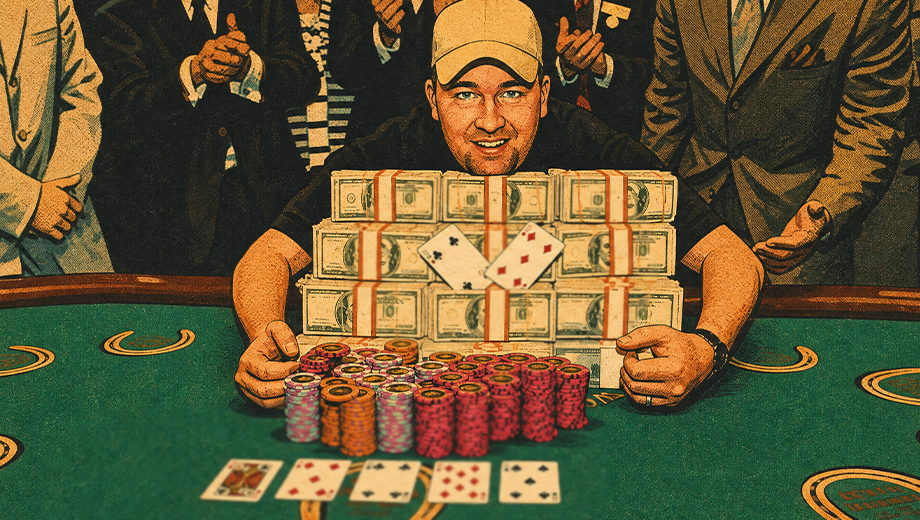
The 2003 Main Event had 839 players. I was one of them. I had $200 in my online account when I entered the satellite. I went back to work on Monday after winning.
None of that was the plan. Plans rarely survive contact with a poker tournament. What matters is showing up, staying focused, and giving yourself a legitimate shot. The rest is variance.
If you’re ready to make the trip, the WSOP Schedule has everything you need — dates, buy-ins, and event details. Start there.
Frequently Asked Questions
How much does it cost to enter the WSOP Main Event?
The WSOP Main Event buy-in is $10,000. Most players qualify through online or live satellites — smaller tournaments where the prize is a seat in a bigger one. Chris Moneymaker qualified in 2003 through an $86 online satellite on PokerStars, winning his way into the $10,000 event without paying the full buy-in.
How many days does the WSOP Main Event take to play?
The Main Event runs over multiple days. Day 1 typically has two or three starting flights, each running 10 to 12 hours. Players who survive bag their chips and return for Day 2. Deep runs can take a week or more. The final table is usually played separately from the rest of the field.
What percentage of the WSOP Main Event field gets paid?
Roughly the top 15% of the field receives a payout. In a field of 10,000 players, that’s approximately 1,500 places paid. The minimum cash typically covers the buy-in, while deep runs and final table finishes are where the significant prize money is concentrated.
What should a first-time WSOP player focus on during Day 1?
The primary goal on Day 1 is survival. The starting stack is deep relative to the blinds, so there’s no need to force action early. Focus on observing your table — watch hands you’re not in, identify which players are playing to survive versus playing to win, and avoid big mistakes. Day 2 is when the real tournament begins.
Where is the WSOP held now?
The WSOP was held for decades at Binion’s Horseshoe in downtown Las Vegas. It has since moved to larger venues to accommodate the growth in field sizes — from 839 players in the 2003 Main Event to over 10,000 in recent years. Current venue and schedule details are available on the official WSOP website.
Can a complete amateur realistically compete at the WSOP Main Event?
Yes. The Main Event field includes recreational players at every level. Chris Moneymaker had never played live poker at this level when he entered in 2003 and won. The structure — deep stacks, long levels — is designed to give players room to play real poker, which levels the field more than short, fast structures would. Patience, observation, and emotional control matter as much as technical skill.