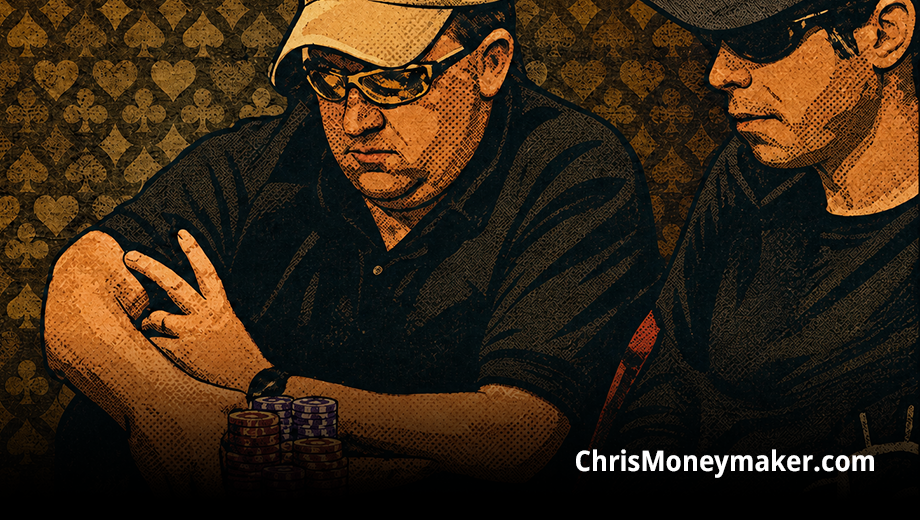

At the 2003 WSOP Main Event, I was down to one big blind on the money bubble at a Triton event years later. One big blind. Not ten, not five — one. I shoved, doubled up, and eventually won the tournament. That’s not a strategy tip. That’s just what happened. But it shaped how I think about short stacks in a way that no book ever could.
Being short-stacked late in a major tournament isn’t fun. But it’s also not over. The players who think it’s over are the ones it’s actually over for.
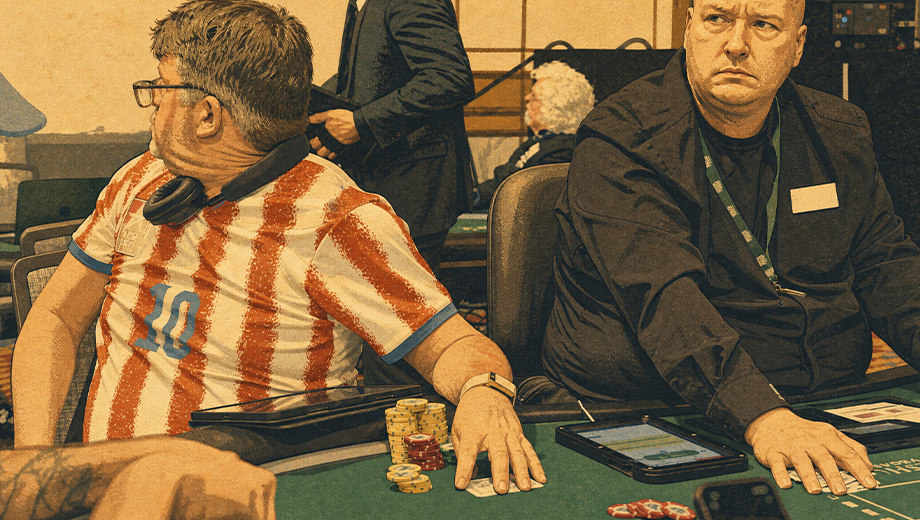
First: What Short Actually Means
There’s a difference between being short and being critically short. Ten big blinds late in the WSOP Main Event is uncomfortable but workable. Five big blinds with the right spot is still a live tournament. Two big blinds means you’re picking the next hand you play and hoping.
The mistake most players make is treating all of these the same way — going into pure survival mode the moment their stack dips below average. Survival mode when you have ten big blinds is just slow death. You’re bleeding antes, folding into oblivion, and waiting for a hand that might not come before you’re forced in anyway.
The mental shift that matters: once you’re short, chips become less about preservation and more about multiplication. You need to double. That’s the job. Everything else is secondary.
The Spot You’re Actually Looking For
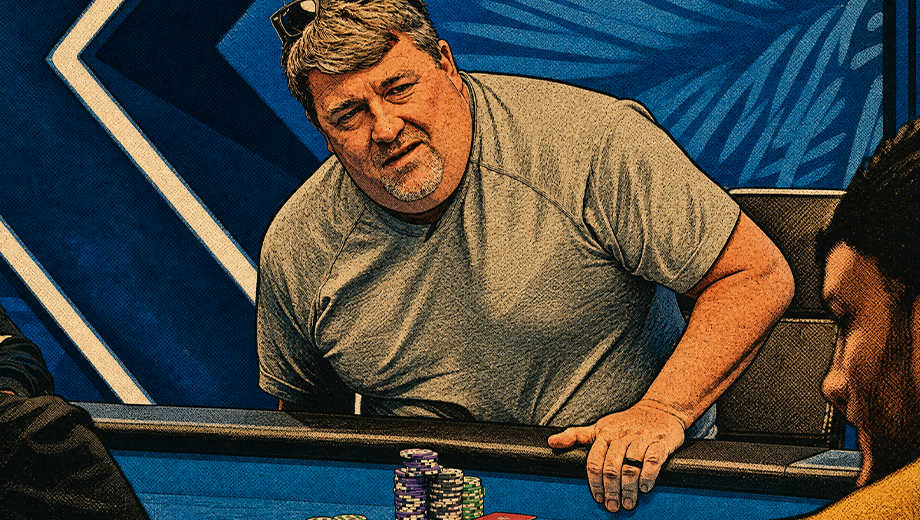
With eight to twelve big blinds, you’re not looking for the nuts. You’re looking for the best hand you’re likely to see in the next few orbits — and you’re going in with it before the blinds eat you down to a point where your shove has no fold equity.
Fold equity is the key word. When you have ten big blinds and shove, some players will fold. Maybe not many, but some. When you have three big blinds and shove, almost nobody folds — they’re getting too good a price. That window where your all-in still applies real pressure is the window you want to use.
What I’m looking for when short: any ace, any two broadway cards, any pocket pair. That’s the range. I’m not waiting for aces. I’m looking for something that has a decent chance of being live against a random hand, and I’m picking a spot where the player in the big blind or the player most likely to call is someone I’ve seen play scared.
Position Still Matters — More Than Most People Think
Even with a short stack, position doesn’t stop mattering. It changes how you use it, but it doesn’t disappear.
Shoving from early position with ten big blinds is a different move than shoving from the cutoff or button. From early position, you’re asking everyone at the table to fold or call. From the button or cutoff, you’ve already watched most of the table decline to enter the pot — and you’re applying pressure to just the blinds.
Late position shoves with a marginal hand are almost always better than early position shoves with the same hand. The hand doesn’t change. The situation does. I’d rather shove K-9 from the button than A-7 from under the gun in most cases — because the fold equity is real and the exposure is smaller.
“I had already told myself: I am not busting before the final table. Zero percent chance.”
Reading the Table When You’re Short
Being short actually gives you an advantage in one specific way: nobody’s scared of you anymore. That means people stop paying attention to you. They’re focused on each other — the big stacks, the medium stacks, the players at their own level. You’ve become background noise.
Use that. Watch the hands you’re not in. Figure out who at the table wants to survive to the next pay jump and who is playing to win. The player who’s been folding everything for two hours to ladder up is not calling your shove unless they wake up with a real hand. Target them when you have something reasonable.
The player who’s been three-betting light and splashing chips around? Leave them alone unless you have a real hand. They will call you with air and get lucky. That’s not the spot.
This is what I mean by simple observation. The table is giving you information constantly. Short stack or not, that information is still there.
The Mental Side Nobody Talks About
The hardest part of playing a short stack late in the Main Event isn’t the strategy. It’s the emotional management. You’ve been at the table for days. You’re tired. You’ve invested real money and real time. And now you’re looking at a stack that might not last another orbit without a miracle.
This is exactly when bad decisions happen. The desperation shove with a hand you know is weak. The fold that lets the blinds steal your last real fold equity. The call that you knew was wrong before you made it.
The reset I use: step back from thinking about the stack size and think about the next decision only. Not whether you’ll make the final table, not what your opponent might have — just this hand, this spot, this decision. Is this a good spot to go? Yes or no. Make the call and live with it.
“Poker is about controlling your emotions and how those emotions affect your decisions.”
What I Actually Do With Five Big Blinds or Fewer
At five big blinds or fewer, the strategic range tightens significantly. You’re not playing poker anymore — you’re picking a hand and a spot and committing. The only real decisions are which hand and when.
Any ace goes in. Any pair goes in. K-Q, K-J, Q-J in position — those go in. At this stack depth, I’m not folding broadway cards to take one more orbit of blinds and end up with three big blinds instead of five. That’s a bad trade.
What I don’t do: get cute. No limping, no min-raises, no trying to see a cheap flop. At five big blinds, every chip matters and deception is expensive. Shove or fold. That’s the game now.
The goal isn’t to play perfectly. The goal is to double up with a hand that has a chance, in a spot where the math is close to reasonable. Do that, survive, get back to ten big blinds, and you’re back in a tournament.
The WSOP Schedule is live if you’re thinking about putting yourself in that spot this year.
Frequently Asked Questions
What is fold equity and why does it matter when short-stacked?
Fold equity is the value you gain from the chance that your opponent folds to your bet. With ten big blinds, your all-in still pressures some players to fold. With two or three big blinds, almost no one folds because the pot odds are too good. Acting before your stack gets too small preserves that pressure.
What hands should you shove with when short-stacked late in a tournament?
Any ace, any pocket pair, and strong broadway combinations like K-Q or K-J are reasonable shove hands when short. You’re not waiting for aces — you’re looking for a hand that has a decent chance of being live against a caller. The tighter your stack, the wider that range needs to be to give yourself a real chance to double up.
Does position still matter when you’re short-stacked?
Yes. Shoving from the button or cutoff gives you more fold equity than shoving from early position, because most of the table has already passed. A marginal hand in late position can be a better shove than a stronger hand from early position, because the realistic number of players who can call you is smaller.
How do you identify the best players to shove against when short?
Target players who have been folding frequently and appear to be laddering up to the next pay jump — they’re less likely to call without a strong hand. Avoid players who have been aggressive and loose, as they’re more likely to call with a wide range and get lucky. Observation over the previous hours tells you which is which.
What is the biggest mental mistake short-stacked players make?
Letting desperation drive decisions. The emotional weight of being short late in a tournament — after days of play, real money on the line — causes players to either shove too light out of panic or fold too long hoping for a better spot that never comes. The reset is to focus only on the next decision: is this a good spot or not?
At what stack depth should you stop trying to be tricky and just shove or fold?
At five big blinds or fewer, the complexity of poker largely disappears. Limping, min-raising, or trying to see cheap flops wastes chips and signals weakness. The move is shove or fold — pick your spot, pick your hand, and commit. Getting back to ten big blinds after a double-up puts you back in a real tournament.