

The first thing I figured out about playing the WSOP is that where you sleep matters more than people think. Not because of comfort — though that helps — but because of decisions. Ten or twelve hours at the table takes something out of you. The walk back to your room, or the Uber across the Strip at 2am, takes a little more. Multiply that by a week and it adds up.
I’ve stayed at or near the WSOP venue enough times to have opinions. Here’s how I think about the hotel question — and what I’d actually tell someone booking for the first time.

The Case for Staying On-Property
The simplest answer is always: stay where the tournament is. When the WSOP was at the Rio, that meant the Rio. Now the series has moved, and the venue situation has evolved — check the official WSOP schedule each year for the current location before booking anything.
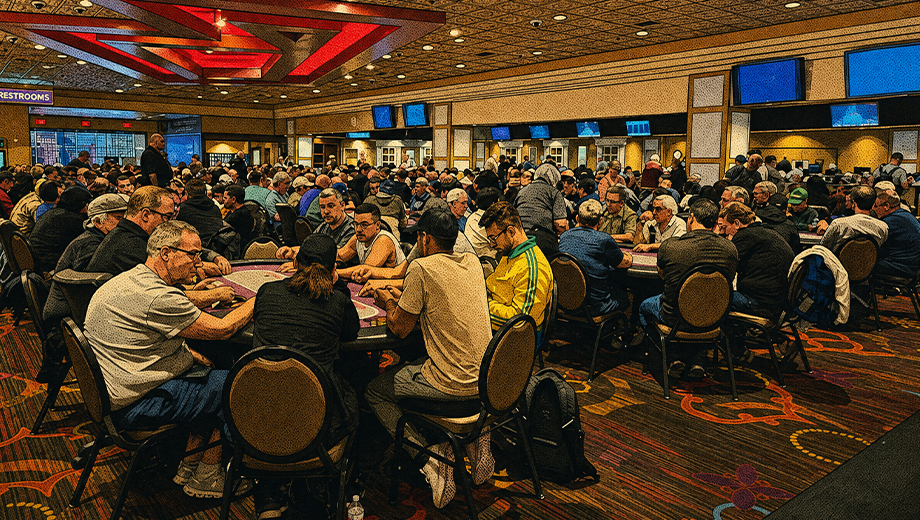
The on-property logic is straightforward. You roll out of bed, you’re at the tables. No commute. No traffic. No Uber surge pricing at midnight. When you bust a hand badly at level 8 and need ten minutes to reset, you can actually go to your room, sit down, and come back. That option disappears when your hotel is twenty minutes away.
The tradeoff is price and noise. Tournament venues during the WSOP are not quiet environments. The casino floor runs around the clock. If you need genuine silence to sleep, on-property isn’t always the answer. But for most players who are already living on poker hours, it’s the practical choice.

When It Makes Sense to Stay Off-Property
There’s a version of this where staying off-property is the right call. It comes down to three scenarios.
First: you’re playing a limited schedule. If you’re only in the Main Event and nothing else, you’re at the venue maybe two or three days before you bust or advance. An Airbnb or a cheaper Strip hotel makes more sense than paying premium rates for the full series.
Second: you need separation. Some players genuinely play better when they can get away from the casino environment entirely. Leave the venue, eat somewhere normal, sleep somewhere quiet, come back fresh. For those players, proximity is a liability, not an asset.
Third: you’re traveling with family. If your spouse or kids are with you — which more players do than people realize — a resort-style hotel on the Strip gives them something to do while you’re at the tables. The WSOP venue itself isn’t built around non-poker amenities.

Strip Hotels Worth Knowing
For players who want Strip access and don’t mind the commute, a few properties come up consistently.
The Venetian and Palazzo sit mid-Strip and are as comfortable as Vegas gets. Large rooms, multiple food options open late, and a poker room on-site if you want to play cash games between events. The commute to wherever the WSOP is running adds time, but Uber and rideshare have made that manageable.
Aria is another consistent option — central location, better-than-average food hall, and a poker room that runs deep into the night. Players who want to put in cash game volume between tournament sessions tend to gravitate toward properties with active poker rooms, and Aria qualifies.
Wynn and Encore sit at the north end of the Strip. Quieter than the mid-Strip properties, strong restaurant options, and the Wynn poker room has a reputation. For players who prioritize sleep quality and are willing to pay for it, the Wynn side of the Strip is worth considering.
For budget-conscious players: Paris, Bally’s, and Horseshoe (the original Horseshoe brand, now at a different address) offer Strip adjacency at lower price points. They’re not luxurious but they’re functional, and during the WSOP months the difference between a mid-range and high-end room matters less than proximity and logistics.
What Actually Matters When You Book
In rough order of importance for tournament players:
Distance to the venue. Under ten minutes door-to-door is the target. Anything more and you’ll feel it by Day 3.
Late checkout or flexible checkout. Tournament days don’t follow normal schedules. Ask specifically. Some properties will accommodate a 2pm or 3pm checkout for a fee; others won’t budge. Know before you book.
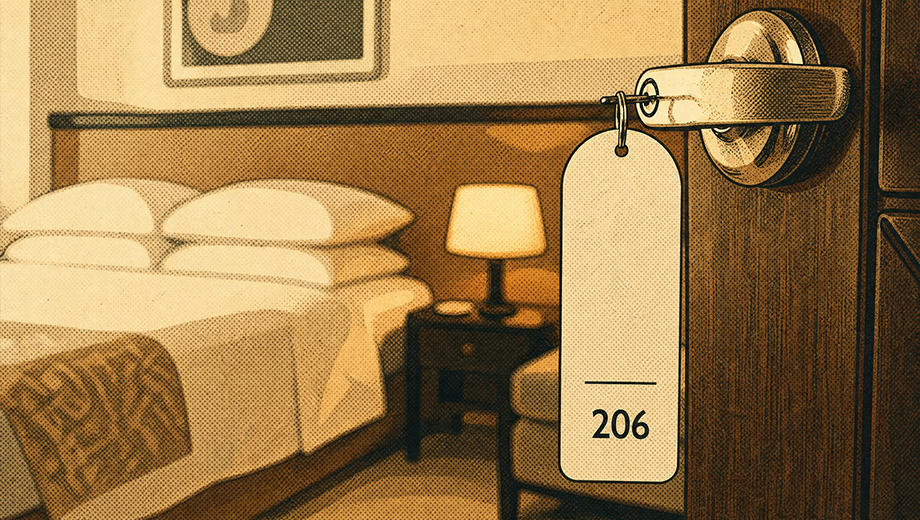
Blackout curtains and real quiet. Las Vegas hotel rooms vary wildly. Read reviews specifically about noise and light control, not just general ratings. A room facing the casino floor or a construction site will cost you sleep regardless of the star rating.
Food access at odd hours. You’re going to be hungry at midnight. You’re going to want breakfast at 2pm. Vegas is generally good at this, but not all hotels are equal. Know what’s available in your building before you’re standing in the lobby starving after a bad beat.
Parking or rideshare access. If you’re driving, check where the self-park is relative to your room. A fifteen-minute walk through a casino at 3am after a ten-hour session is not nothing.
The One Thing Most Players Get Wrong
They book based on price alone and end up somewhere inconvenient, then spend the week compensating for it. A hotel that costs $40 less per night but adds forty minutes of daily commuting and worse sleep is not a deal. It’s a leak.
The WSOP is already expensive — entry fees, food, travel. The hotel is not the place to cut corners if you can avoid it. Your decisions at the table are directly tied to how rested and comfortable you are away from it. That’s not a theory. That’s just what happens over a long tournament week.
I went back to work the Monday after winning in 2003. That week at Binion’s, I was staying somewhere basic. It worked out. But I also didn’t know enough at the time to optimize anything. Now I do — and the hotel question is one I take seriously every year.
For everything else you need to know about surviving a WSOP week in Vegas — eating, scheduling, managing the off-table hours — the WSOP Beginner’s Guide covers the full picture.
Frequently Asked Questions
Where is the WSOP held in Las Vegas?
The WSOP has moved venues over the years. It was held at Binion’s Horseshoe in downtown Las Vegas for decades, then moved to the Rio All-Suite Hotel and Casino, and has since moved again. Always check the official WSOP website for the current venue before booking hotels or making travel arrangements.
Is it worth staying at the WSOP venue hotel?
For most tournament players, yes. The convenience of zero commute — especially on long tournament days — outweighs the cost premium for most serious players. The ability to return to your room between sessions, reset after a bad hand, and avoid late-night rideshare costs adds up over a full week.
How long is the WSOP in Las Vegas?
The World Series of Poker runs for several weeks each summer, typically from late May through mid-July, with dozens of bracelet events alongside the Main Event. The Main Event itself spans multiple days. Most recreational players attending only the Main Event need to plan for at least a week in Las Vegas.
What Las Vegas Strip hotels are closest to the WSOP venue?
Proximity depends on where the WSOP is being held that year. Always verify the current venue first, then look for hotels within a ten-minute drive or rideshare. The Strip runs roughly four miles, so “Strip hotel” can mean very different commute times depending on which end and where the tournament is hosted.
What should poker players look for when booking a Las Vegas hotel?
Distance to the venue, blackout curtains and noise control, late food access, and flexible checkout times are the priorities. Price matters, but cutting corners on proximity or sleep quality tends to cost more in decision-making at the table than it saves on the nightly rate.
Do professional poker players stay at the WSOP venue?
It varies. Many pros prefer on-property for convenience, especially during deep runs in multiple events. Others — particularly those traveling with family — opt for Strip resorts that offer more amenities outside the tournament floor. Players playing a lighter schedule often go with budget-friendly options and manage the commute.