

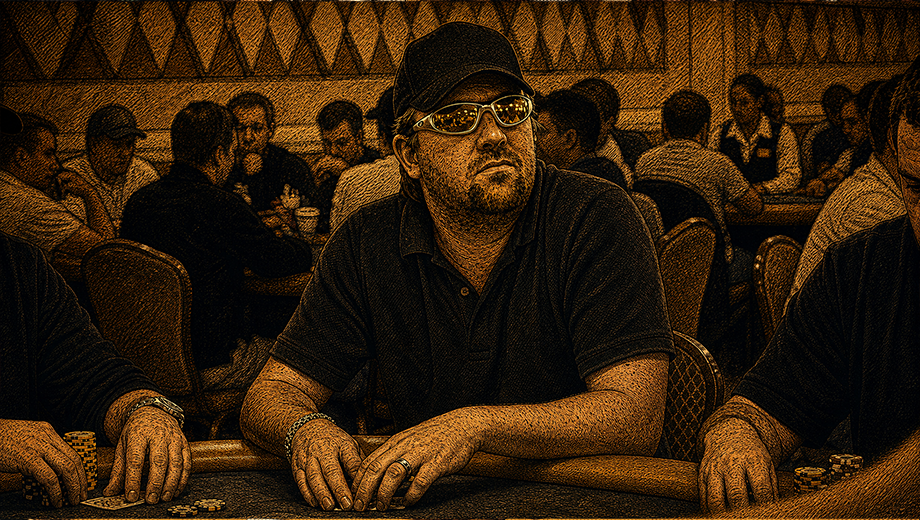
Monday morning, eight days after I’d won $2.5 million at Binion’s Horseshoe, I was back at my desk at Deloitte going through the same spreadsheets I’d been going through for years. Nobody said anything. Nobody threw a party. As far as the office knew, I’d taken a few days off in Vegas and come back. That’s the part people skip when they tell this story back to me — there was no moment where it clicked. Honestly, there still hasn’t been one.
I flew home Saturday. Partied Saturday night. Took Sunday off. Monday I was back at the office. The broadcast wouldn’t air on ESPN until August — three or four months later, because that’s just how long poker coverage took to get to air back then. So for most of that spring and summer, maybe thirty people around me actually knew what had happened in Las Vegas. The internet had it. Nobody’s phone did anything about it — we were all still carrying flip phones.
How I Even Got There
I entered the $86 satellite on PokerStars by accident. I thought I was jumping into a cash sit-and-go — eight of the nine seats were already filled, and those fill up fast, so I grabbed the last spot without reading it closely. It turned out to be a satellite into a satellite into the World Series of Poker Main Event. When I figured that out, I was annoyed, not excited. My actual plan, if the money had worked out differently, was to finish fourth in the qualifier and cash out. Four players from that bubble had been offered $8,000 in cash for their seats the year before.
Going in, I knew the names of exactly three players in the field of 839: Phil Hellmuth, Doyle Brunson, and Johnny Chan. When I saw Phil Ivey across the table for the first time, I had no idea he was already considered one of the best players alive. He just looked like a guy with a lot of chips. That ignorance probably helped me more than it hurt me. As I’ve said before, it had to be miracle after miracle after miracle for me to even get into the Main Event, not to mention all the run good I had once I entered. That’s not false modesty. That’s just an accurate description of the odds.
The Part Nobody Talks About
Selling Pieces of Myself for Gas Money
I sold 40% of my action before the Main Event started — 20% to my dad for $2,000, 20% to a friend for the same. A buddy of mine, Bruce, had wanted to stake half of me for $5,000, which would have been the better deal by a mile. He blew the money at a casino in Tunica the week before and couldn’t follow through. So I kept 60% of myself into a $10,000-buy-in tournament, which is either reckless or exactly right, depending on how the story ends. It ended fine.
A Secret Nobody Was Keeping On Purpose
The three or four months between winning and the broadcast airing weren’t dramatic. I wasn’t hiding anything. There just wasn’t anywhere for the story to travel yet. I’d walk into the office, sit down, and do accountant things while carrying around the fact that I’d just won the biggest poker tournament in the world. It’s a strange kind of ordinary. I worked eight more months as an accountant after that win before I finally quit.
What the Disconnect Actually Feels Like
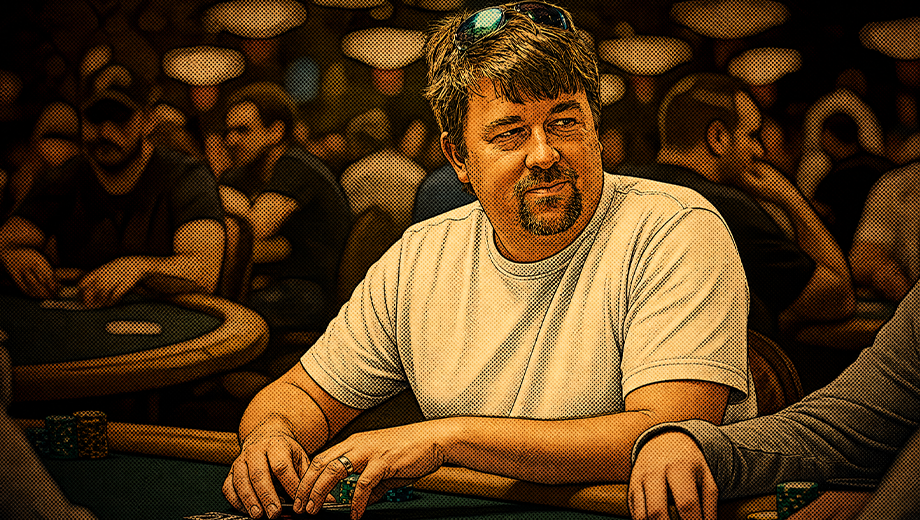
Here’s the contradiction I’ve never fully resolved: at the table, I told myself I was never gonna lose that tournament — that after everything I went through just to get there, I was supposed to win it. That’s not humility. That’s the opposite of humility, and I still believe it was true in the moment. But outside the table, in regular life, it never carried the same weight. Honestly, I almost never think about it. Only when I go to the WSOP and it’s right in your face — the ESPN clips playing on the monitors, people asking about the bluff — does any of it feel like it actually happened to me and not to some guy I read about.
I don’t think that’s unusual. I think most people who have one outsized thing happen to them live with some version of this gap. The event is real. The life around it stays exactly as ordinary as it was before.
How I Handle It Now
The Annual Reminder
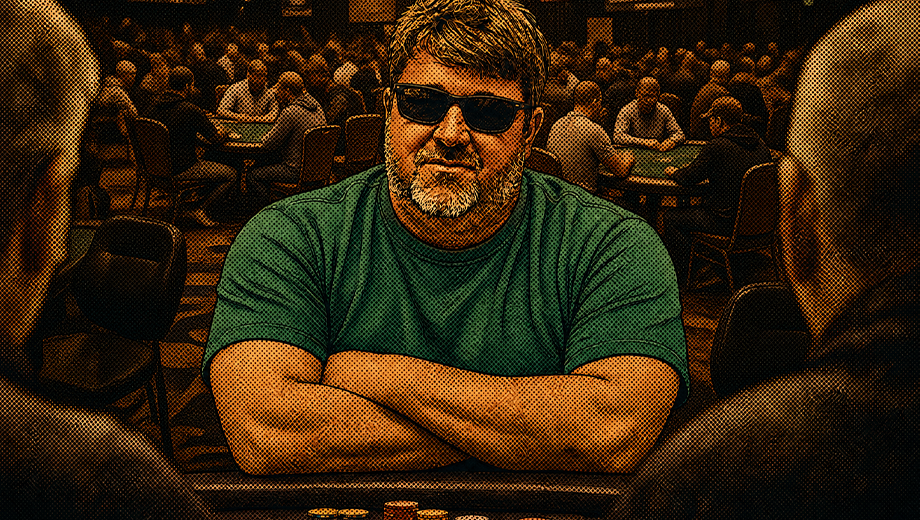
I still play the Main Event every year. Have since 2003. It’s the one week where the whole thing gets put back in front of me — on purpose, by other people, not by me. The rest of the year I don’t go looking for reminders. There’s usually a flight to catch and a game somewhere else to play.
What Fame Actually Requires
Early on, a woman showed up hours early to meet me at an appearance wearing a shirt she’d made with my face on it. She started shaking when she saw me. I thought it was a joke. I just played in a poker tournament. I don’t have fans. That’s not a thing. I’m just a normal guy. I’ve had to get more comfortable with that reaction existing without ever fully agreeing with the premise behind it.
I’ll say this much: unless you’re my age and you played before I did, you have no clue how different this sport was. The gap between what happened and how it felt isn’t something I’m trying to close. Some things just don’t fully arrive. They just sit there, true, next to a normal Monday.
People ask if I’d change anything. Not really. I’d have kept better track of the moment, maybe. Taken a picture or two. But I was an accountant on a Monday, and accountants don’t take a lot of pictures of themselves at their desks.
Frequently Asked Questions
Did Chris Moneymaker celebrate right after winning the 2003 WSOP Main Event?
He won on a Friday or Saturday, flew home Saturday, and had a small party that night. He took Sunday off and was back at his accounting job at Deloitte on Monday morning, with almost no one around him aware of what had happened in Las Vegas.
Why didn’t people know Chris Moneymaker had won the Main Event right away?
Poker tournament coverage wasn’t broadcast live in 2003. ESPN’s coverage of the Main Event didn’t air until August, roughly three to four months after the win, so only a small circle of people knew about it in real time.
How much did Chris Moneymaker win at the 2003 WSOP Main Event?
He won $2,500,000 for first place out of a field of 839 players, in a tournament with a total prize pool of $7,987,860. He’d qualified through an $86 online satellite on PokerStars.
Did Chris Moneymaker think he would win the tournament?
At the table, yes. He’s said he had convinced himself he was never going to lose that tournament, given everything he’d been through just to get into the field. That confidence existed at the table, separate from how ordinary his life felt outside of it.
Does Chris Moneymaker still think about winning the 2003 Main Event?
Not often, by his own account. He’s said he almost never thinks about it day to day, and that it mostly comes back into focus when he’s at the WSOP itself, where the history is unavoidable — old clips, questions about the famous bluff, and the general atmosphere.
What was the entry path that got Chris Moneymaker into the 2003 Main Event?
He entered an $86 satellite on PokerStars, thinking it was a cash game. It turned out to be a satellite into a $615 qualifier with 69 players and 3 seats, which then fed into the $10,000 Main Event — a full satellite chain most players never notice they’re on.