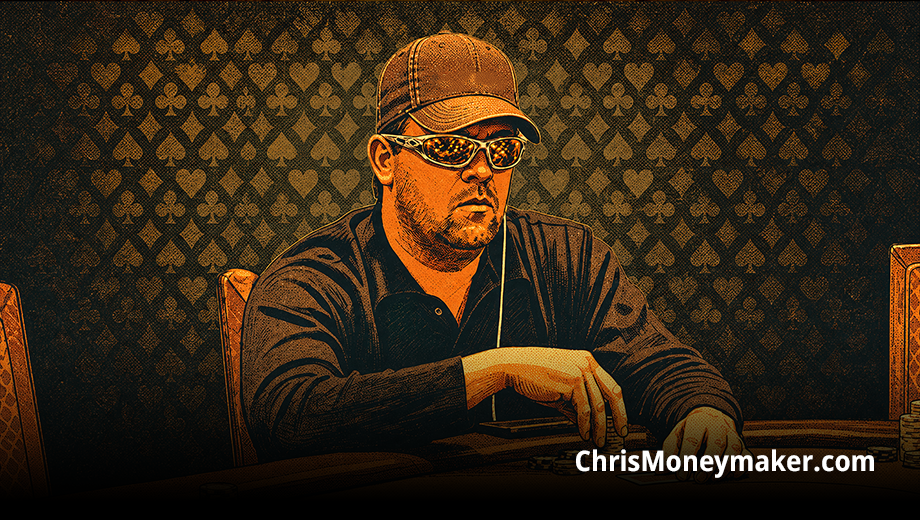

The ceilings at Binion’s felt six feet tall. They’d pulled out the slot machines and replaced them with poker tables, and upstairs in Benny’s Bullpen there were maybe 40 of them lined up in one room. Before you play a single hand of a tournament that size, you stand around for a while not knowing where you’re going to sit. That waiting is its own experience. Nobody talks about it much.

How Table Assignments Actually Worked
There was no app, no screen with your name on it. Players were tracked on a whiteboard with a magic marker. You’d find your name, find your table and seat number next to it, and go stand near that spot until the dealer told you to sit. In a field of 839 people, that whiteboard was the only thing telling you where your day was about to happen.
I checked it more than once. Partly to make sure I hadn’t misread it, partly because there wasn’t much else to do. Standing in a room full of strangers waiting for a number to mean something is a strange kind of stillness.
Finding Out Who’s Next to You
The Moment You Sit Down
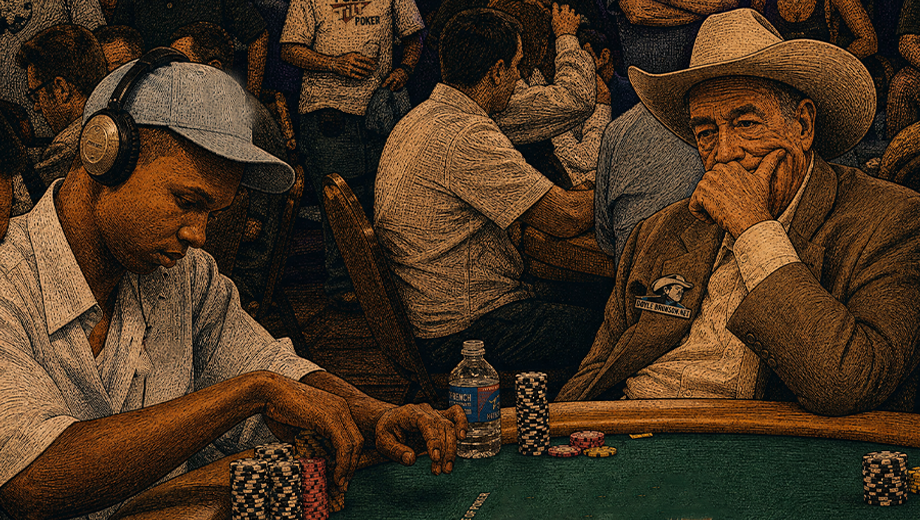
I sat down at my assigned seat and didn’t recognize a single face. That wasn’t unusual for me — I only knew three players’ names walking into that Main Event: Phil Hellmuth because of the bracelet count, and Doyle Brunson and Johnny Chan from watching Rounders. Everyone else was just a name on a whiteboard until they were a person in a chair.
Two Seats to My Right
Two seats to my right was a guy I didn’t recognize either — until I got curious enough on a break to walk over and check the wall of champions. Dan Harrington. He’d won it before. I had no clue sitting down. That’s what waiting for a table assignment gets you sometimes: you’re placed next to poker history and you find out by accident, on a bathroom break, staring at a wall.
What the Waiting Actually Feels Like
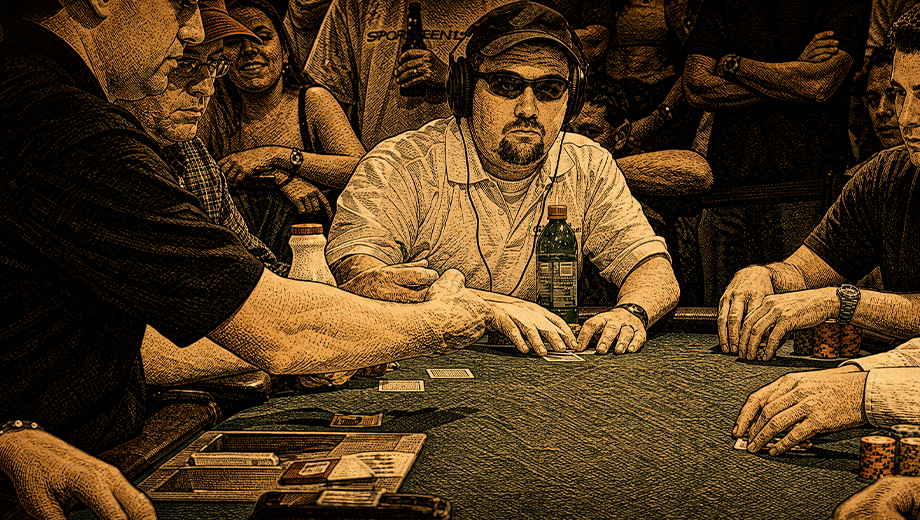
People assume nerves. I’ve never really gotten nervous playing poker. I wrestled, I boxed, I did contact sports — that’s where you get nervous. We’re playing cards. The waiting before a table assignment isn’t fear, it’s more like the feeling before a flight boards. You’re not scared of the plane. You’re just standing around with nothing to do but think, and thinking too much before a tournament starts is rarely useful.
Day 1 of a tournament has always bored me a little, if I’m honest. The real engagement kicks in on Day 2 and beyond, once you can actually accumulate chips and start reading who’s scared and who isn’t. But you have to get through the standing-around part first. Every player does. Nobody skips the whiteboard.

Why It Mattered That Year
In 2003, waiting for your table assignment wasn’t just downtime — it was the first real look at the size of the thing you’d entered. 839 players is a lot of names on a whiteboard. I’d come in through an $86 satellite that turned into a $615 qualifier with 69 players, which gave away three Main Event seats. Somewhere in that stretch of standing around at Binion’s, it started to sink in that I wasn’t playing in anything close to what I’d expected when I registered for what I thought was a cash sit-and-go.
You don’t feel the size of a tournament in the online lobby. You feel it standing in a room, waiting for a marker on a whiteboard to tell you where to sit.
If you’re heading into a big field yourself, the WSOP Schedule will at least tell you what you’re walking into before the whiteboard does.

What I’d Tell Someone Doing It for the First Time
Don’t read too much into who’s sitting near you before the cards are even out. I didn’t know Dan Harrington was a former champion until a break. It didn’t change how I played the hand in front of me. The name on the whiteboard matters for exactly one thing — finding your seat. Everything after that is just poker.
Frequently Asked Questions
How did WSOP table assignments work at the 2003 Main Event?
Players were tracked on a whiteboard with a magic marker rather than digital screens. Entrants found their name, table, and seat number listed there and waited near their assigned spot until the dealer began the round.
Who did Chris Moneymaker sit next to on Day 1 of the 2003 Main Event?
Dan Harrington was seated two seats to Moneymaker’s right. Moneymaker didn’t recognize him at first and only realized who he was after checking the wall of champions during a break.
How many players were in the 2003 WSOP Main Event?
There were 839 players in the 2003 WSOP Main Event, held at Binion’s Horseshoe in Las Vegas.
Does Chris Moneymaker get nervous before playing poker?
He has said he’s never really gotten nervous playing poker, drawing a contrast with contact sports like wrestling and boxing that he played growing up. His view is simple: it’s cards, not combat.
How did Chris Moneymaker qualify for the 2003 WSOP Main Event?
He entered an $86 satellite on PokerStars, which won him a seat in a $615 qualifier with 69 players that awarded three Main Event seats. He won one of those three seats.