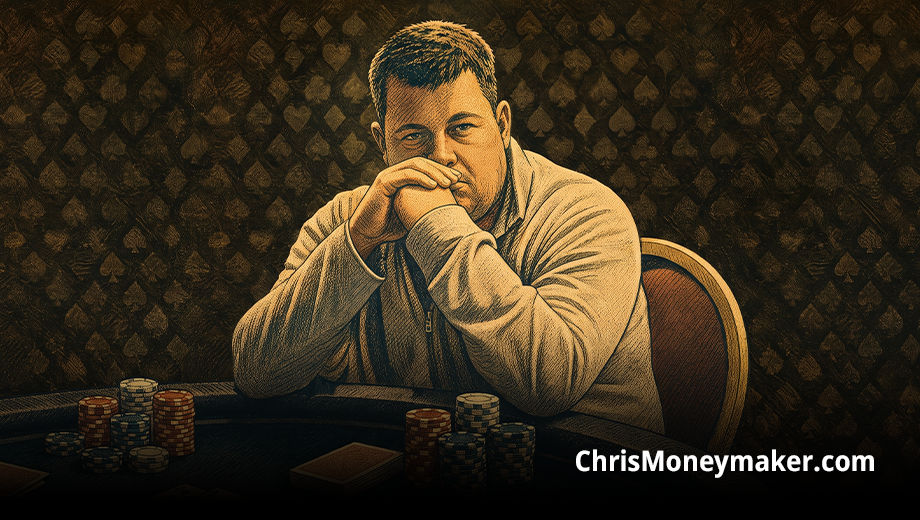

I sat down at my table on Day 1 of the 2003 WSOP Main Event and looked to my right. Dan Harrington. I didn’t recognize him. Had to check the wall of champions to figure out who he was. That’s how prepared I was walking into the biggest poker tournament of my life.
There were 839 players in the field. I knew three names going in: Phil Hellmuth, Doyle Brunson, and Johnny Chan. Everyone else was just a face with chips. That included Dan Harrington, who had won the thing before. It included Phil Ivey. It included most of the people who were supposed to be there. I was not supposed to be there. I’d entered by accident.
What Day 1 Actually Feels Like
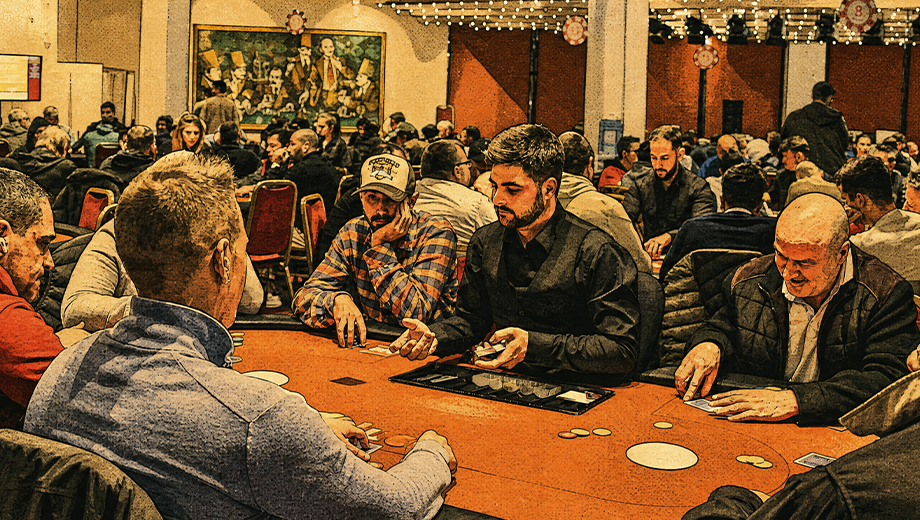
People romanticize Day 1. They picture the moment you sit down with 10,000 chips and think about what’s possible. The reality is more administrative than that. You’re trying to not do anything stupid. You’re trying to read a room full of strangers. You’re trying to figure out who actually knows what they’re doing and who’s just running hot.
At Binion’s Horseshoe in 2003, the setting didn’t help with the romance. They’d pulled the slot machines out and moved poker tables in. Players were tracked on a whiteboard with a marker. The ceilings felt low. It was cramped and loud and nothing like what the WSOP Schedule events look like today. But the pressure was exactly the same.
I’d never played at this level before. My plan walking in was simple: survive and observe. Fold a lot. Watch everything. Try to figure out who’s dangerous before I had to find out the expensive way.
The Table I Drew
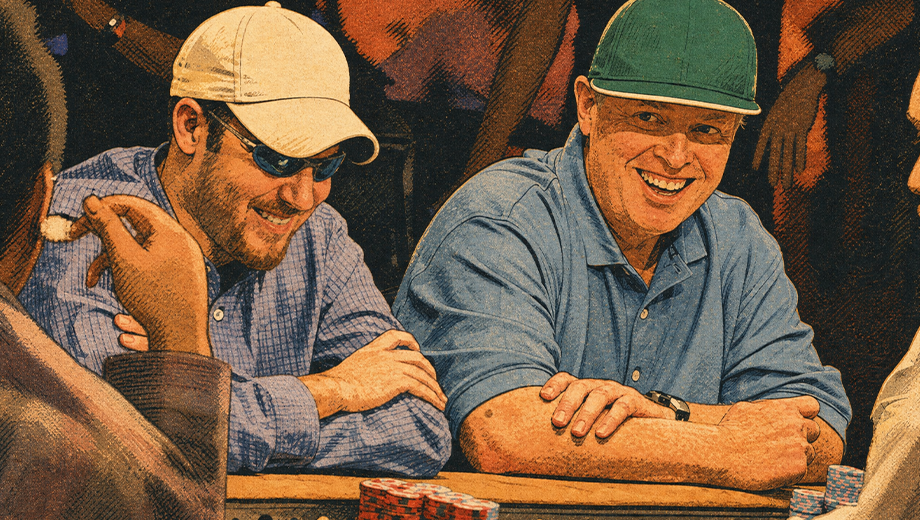
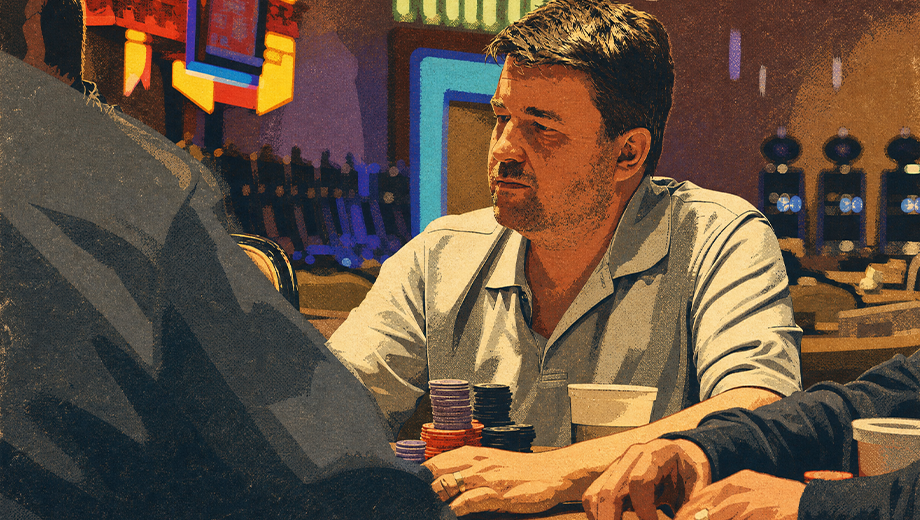
Dan Harrington two to my right was not ideal. Even without knowing exactly who he was, I could tell from the first few hands that he wasn’t giving anything away. I checked the wall. Former champion. Okay. That explained it.
I also had a player at the table wearing a Paradise Poker shirt who’d won his seat in a drawing — he’d been playing 50-cent/dollar limit poker. I made him my first target. Not in an aggressive way. I just decided he was the player I was going to build confidence against. Win a few small pots. Get comfortable. Stop thinking about the fact that I had no idea what I was doing at this level.
There was also a player named Jim Worth wearing a PokerStars patch who kept raising my big blind. He gave me more trouble than anyone else on Day 1. Not because he was doing anything complicated — he just kept applying pressure at the right time and I didn’t have great hands to fight back with. You run into that sometimes on Day 1. Someone picks a spot on you and you just have to wait them out.
How I Built My Stack
I folded a lot. When I folded a hand, I didn’t look at my phone or zone out. I watched the rest of the hand and tried to guess everyone’s cards. When there was a showdown, I checked whether I was right. I was right a lot of the time. That’s not a superpower. It’s just paying attention when most people aren’t.
The ranges in 2003 were narrow enough that it wasn’t complicated. A preflop 3-bet meant Jacks or better, or Ace-King. Nothing else. A 4-bet meant Kings or Aces, full stop. Once you understood that framework, reading hands was almost mechanical. You just had to stay patient and wait for spots where the math was clearly in your favor.
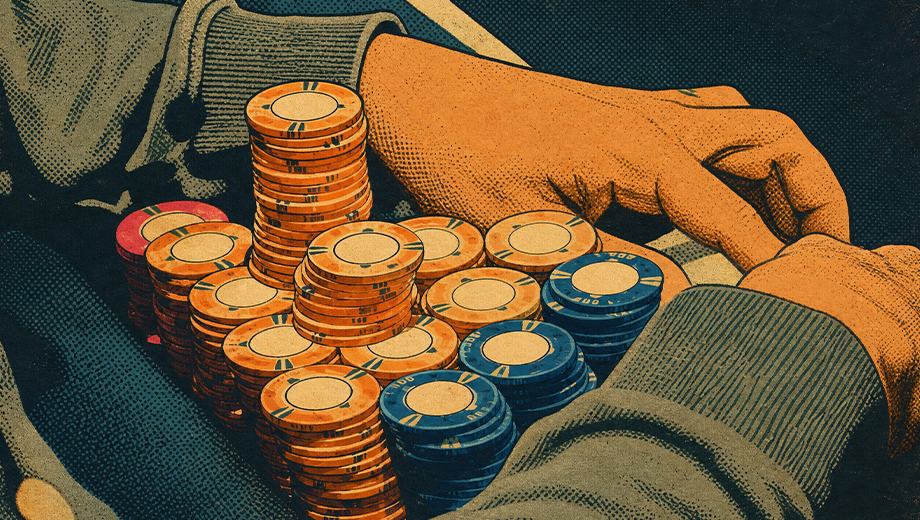
By the end of Day 1 I had 60,000 chips. I’d started with 10,000. Six times the starting stack. Every two-hour level I’d increased my count. That pattern held for most of the tournament — one bad level aside, I built steadily and didn’t go backwards.
The One Thing That Kept Me Grounded
I wasn’t nervous. That sounds wrong given the circumstances, but it’s accurate. I’d wrestled and boxed. I’d done contact sports where something physical was at risk. Sitting across from someone at a poker table, no matter how much money is involved, doesn’t produce the same feeling. We’re playing cards. The worst outcome is you go home. That perspective kept Day 1 from becoming something it didn’t need to be.
Day 1 of a tournament bores me, honestly. There’s too much dead time. Too many hands where nothing is happening. I’d fold and watch and take mental notes. Between hands I’d rest my eyes. Some people call it meditating at the table. We all know what it is. The point is that you can’t run at full intensity for ten hours straight. You have to manage your attention and save it for the moments that matter.
The moments that matter on Day 1 are rare. Most of the field is playing scared. Most people on Day 1 are just trying not to bust, which means they’re not putting real pressure on anyone. That’s actually the right instinct early — but it also means there are chips available for whoever is willing to apply controlled aggression at the right time.
What Surviving Day 1 Actually Means
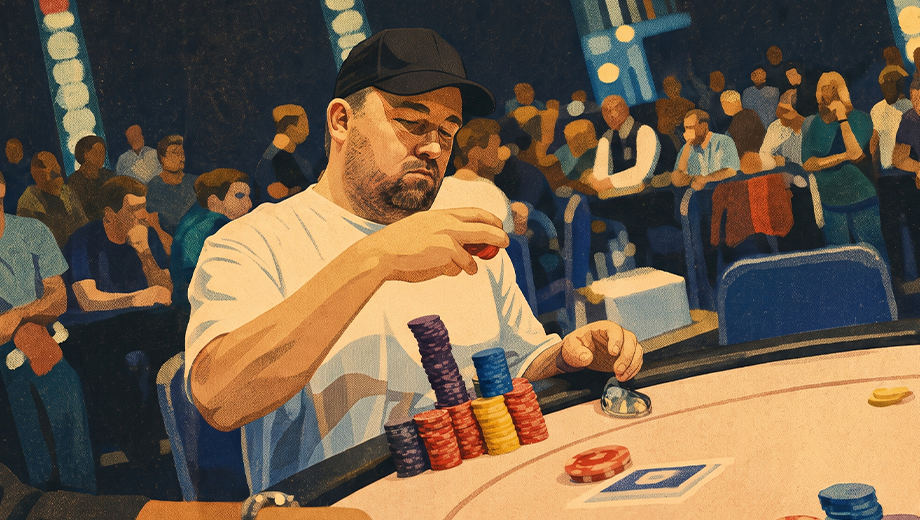
Bagging chips at the end of Day 1 doesn’t mean anything by itself. The field barely thins. You haven’t accomplished the hard part. But there’s a version of Day 1 survival that matters — ending the day with significantly more chips than you started with, having learned something about the players you’ll see again, and not having made any decisions you’ll regret.
I ended Day 1 in 2003 with 60,000 chips and a lot of information I hadn’t had when I sat down. I knew who the dangerous players were at my table. I knew where the chips were soft. I knew I could read the field well enough to compete. That was the real win on Day 1. Not the chip count. The information.
I’ve played the Main Event every year since. Day 1 always feels the same to me — necessary, slow, and mostly about not making mistakes. Day 2 is where it gets interesting. That’s when you start to see who actually knows how to play with a stack, who tightens up when the pressure increases, and where the real edges are. Day 1 just gets you there.
Frequently Asked Questions
What was Chris Moneymaker’s chip count at the end of Day 1 in 2003?
Moneymaker ended Day 1 of the 2003 WSOP Main Event with 60,000 chips, starting from a 10,000 chip stack. That’s six times the starting amount. He increased his stack every two-hour level throughout the day.
How many players were in the 2003 WSOP Main Event?
The 2003 WSOP Main Event had 839 players. The total prize pool was $7,987,860 and first place paid $2,500,000. Only 45 places were paid in total.
Who was at Chris Moneymaker’s table on Day 1 of the 2003 WSOP?
Dan Harrington sat two to Moneymaker’s right on Day 1 — a former Main Event champion Moneymaker didn’t initially recognize. He also had a PokerStars-patched player named Jim Worth who applied pressure on his big blind, and a Paradise Poker qualifier who had won his seat in a drawing from 50-cent/dollar limit poker.
How did Moneymaker approach reading opponents on Day 1?
When he folded a hand, he watched the rest of it and tried to guess each player’s hole cards. At showdown, he checked if he was right. Over time, this built an accurate picture of each player’s tendencies. In 2003, ranges were narrow enough that it was almost mechanical — 3-bets meant Jacks or better or Ace-King, 4-bets meant Kings or Aces.
How did Moneymaker qualify for the 2003 WSOP Main Event?
He entered an $86 satellite on PokerStars by accident, thinking it was a cash sit-and-go. He won into a $615 qualifier with 69 players that awarded three Main Event seats. He won a seat and played the $10,000 Main Event — his first time at this level of live poker.
What is the most important thing to accomplish on Day 1 of the WSOP Main Event?
According to Moneymaker, the real win on Day 1 isn’t the chip count — it’s the information. Knowing which players are dangerous, where the soft spots are, and confirming you can read the field well enough to compete. Ending with a healthy stack and no major mistakes is the goal, but the intelligence gathered matters just as much.