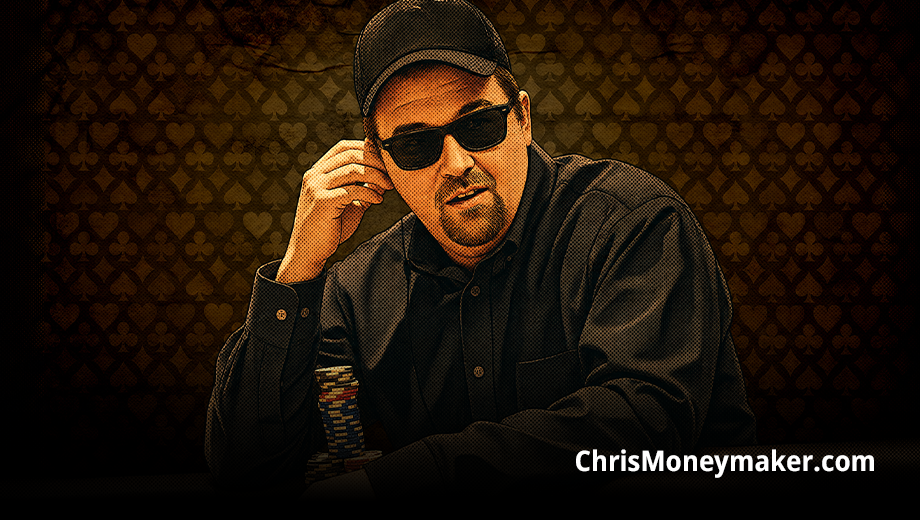

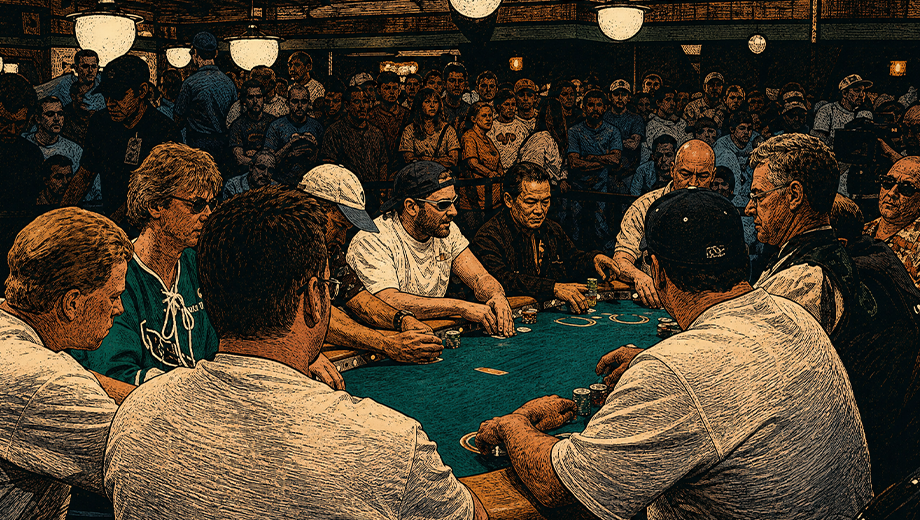
Ten minutes. That’s all a break at the World Series of Poker was in 2003 — ten minutes to stand up, walk into the hallway at Binion’s Horseshoe, and remember you had a body. I took my first one on Day 1 of the Main Event still trying to figure out where I’d landed. The ceilings in that room felt about six feet tall. They’d pulled the slot machines out and dropped in poker tables instead. It didn’t feel like a tournament. It felt like somebody’s idea of one, built fast, in a room that used to be for something else.
I stood in that hallway not knowing a single face around me, which, looking back, is probably the most honest way to describe my entire relationship with the 2003 Main Event.
What the Room Actually Looked Like
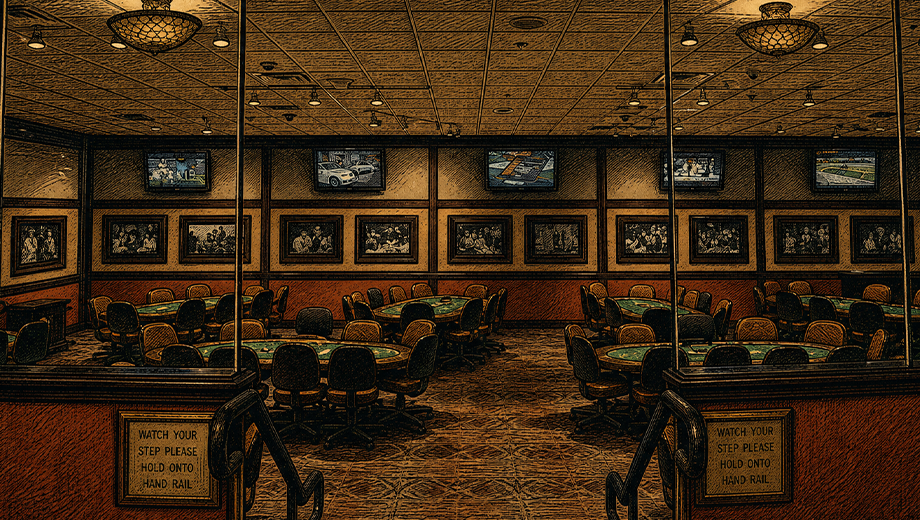
Binion’s wasn’t built for a tournament with 839 players. There was no live scoring app, no jumbotron, no rail ropes. Somebody tracked who was still alive on a whiteboard with a magic marker. Upstairs, in a room called Benny’s Bullpen, they crammed in roughly 40 tables just to fit everyone. In earlier years the room allowed smoking, and players used to say the haze got thick enough that you had to duck below it to breathe. By 2003 it had cleared up some, but the room still carried that history in the walls.
Only 63 players out of 839 were going to get paid — less than 8% of the field. Nobody told you that on a whiteboard. You just knew it, the way you know the ocean is cold before you get in.
The Part Nobody Talks About
Checking the Wall of Champions
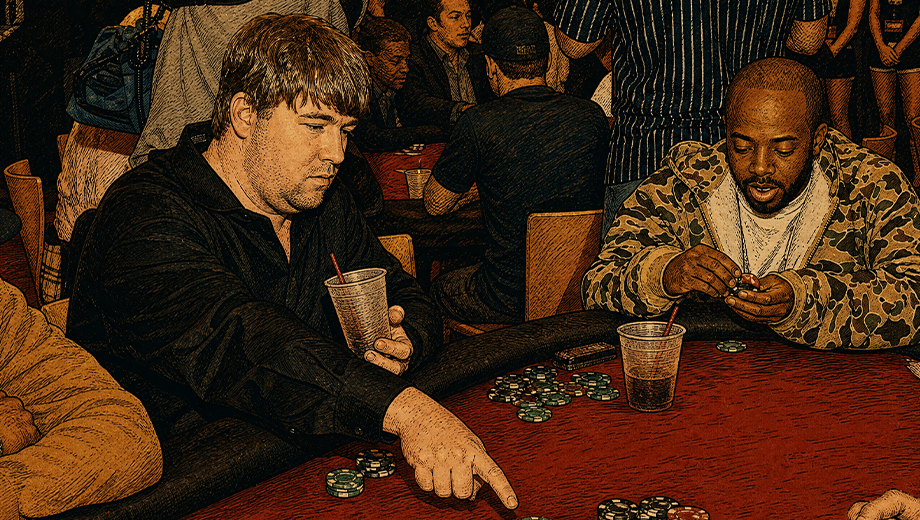
I sat down at my first table and didn’t recognize a single player — until I noticed the guy two seats to my right. Something about him looked familiar. I got up during that first break and checked the wall of champions hanging in the room. Dan Harrington. Okay. So that’s who I was sitting next to. I hadn’t planned on learning who my table was made of by matching faces to a wall like a lineup, but that’s exactly what I did.
Sizing Up the Table
Two players stood out for opposite reasons. One wore a PokerStars patch and kept raising my big blind over and over — he gave me more trouble in those first levels than almost anyone else at the table. The other was wearing a Paradise Poker shirt. I found out he’d won his seat in a random online drawing as a 50-cent/one-dollar limit player. I decided, somewhere in that first break, that he was who I needed to go after first. Not because I was cocky. Because I needed a plan, and picking a target was the only plan I had.
What That First Break Actually Told Me
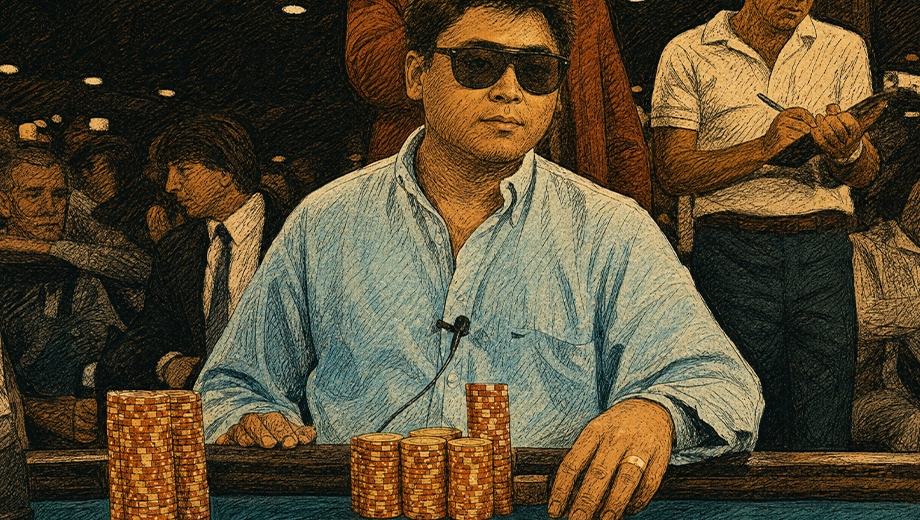
I only knew three names walking in: Phil Hellmuth, Doyle Brunson, and Johnny Chan. That first break was the moment it hit me that everyone else in that hallway probably knew who I was, or at least knew I wasn’t one of them. I wasn’t nervous about it. I’d wrestled and boxed as a kid — that’s where nerves live for me. Cards never did that to me the same way. But I did clock, standing there, that I was almost certainly the least experienced player in the building.
That didn’t change my plan. It just meant I needed a plan that didn’t depend on experience.
How I Actually Used Those Ten Minutes
I didn’t spend the break strategizing something clever. I called my dad. I thought about the guy with the Paradise Poker shirt. I reset. Day 1 of any tournament is the boring part for me — you’re just trying not to do anything dumb before things get interesting. The break wasn’t for adrenaline. It was for making sure I still had some left for Day 2, when the real accumulating starts.
What I took out of that hallway wasn’t a strategy. It was a decision: play the players in front of me, not the names on the wall. Harrington could sit wherever he wanted. I had a big blind to defend and a guy in a Paradise Poker shirt to find out about.
Frequently Asked Questions
What did Binion’s Horseshoe look like during the 2003 WSOP Main Event?
The casino had removed its slot machines and replaced them with poker tables to fit the field. Ceilings felt low, players were tracked on a whiteboard with a marker instead of a digital system, and an overflow room called Benny’s Bullpen held roughly 40 additional tables.
Who did Chris Moneymaker sit next to on Day 1 of the 2003 Main Event?
He didn’t recognize the player two seats to his right until a break, when he checked the wall of champions and realized it was Dan Harrington — a past Main Event champion he hadn’t identified on sight.
How many players made the money in the 2003 WSOP Main Event?
Out of 839 entrants, only 63 players cashed — less than 8% of the field. The tournament’s total prize pool was $7,987,860, with $2,500,000 going to first place.
How many professional players did Chris Moneymaker recognize entering the tournament?
Only three: Phil Hellmuth, Doyle Brunson, and Johnny Chan. Everyone else at the tables, including future Hall of Famers, were faces he didn’t know until later.
Did Chris Moneymaker have a strategy going into Day 1?
His approach was to identify weaker opponents at his table rather than rely on experience he didn’t have. He picked a player who had won his seat through an online drawing as an early target to build his stack and his confidence.
Was Day 1 of the Main Event exciting for Chris Moneymaker?
Not particularly, by his own account. He considers Day 1 of any tournament the least exciting stretch — the priority is avoiding mistakes and preserving energy for the accumulation and reads that come later in the event.