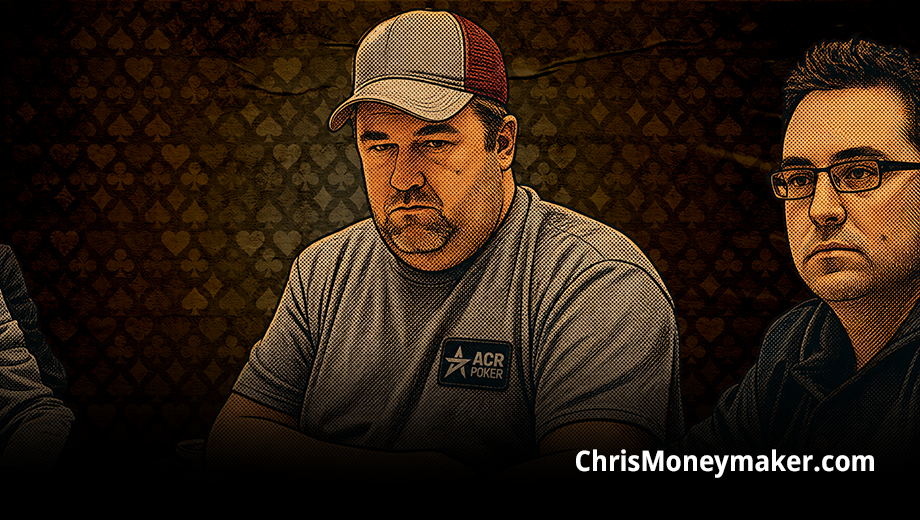

I told PokerStars to stop putting me in high rollers. Put me in the $1,500 events instead. That’s where my people are. I got more joy out of meeting a guy who saved up for a year to play his first tournament than I ever did sitting across from the same ten pros at a $25,000 buy-in. That preference shapes how I think about which WSOP events actually make sense for someone who isn’t playing poker for a living.
People ask me every year which event they should play. There’s no single right answer, but there’s a way to think about it that keeps you from wasting your bankroll or your week.

Buy-In Isn’t the Only Number That Matters
A lower buy-in doesn’t automatically mean a better event for a recreational player. What matters more is the structure — how many chips you start with relative to the blinds, and how much time you get between levels. A $500 event with a brutal structure can feel worse than a $1,500 event that gives you room to actually play poker instead of just shoving and hoping.
If you’re newer to tournaments, look at the starting stack and the level length before you look at the price tag. More play for your money usually beats a cheaper buy-in with a structure built to finish fast.

Why I Still Believe in the Cheap Seats
ACR runs a $100 tournament with a $100,000 top prize. That’s the kind of lottery-ticket dream I want people to have access to — not because everyone’s going to win it, but because everyone should get the chance to find out. That’s the same math that got me into the 2003 Main Event: a small buy-in, a real shot, and no idea what was about to happen.
The Moneymaker Tour exists for the same reason. Too many series were canceling guarantees or handing seats to cash game regulars just to fill a room. A recreational player deserves an event that actually delivers what it promises — a fair structure, an honored prize pool, and enough hands to feel like you actually played, win or lose.

What to Look For Before You Register
Field Size and Payout Structure
Bigger fields mean bigger prize pools, but they also mean longer days and more variance. If you’ve got limited time, a smaller field with a faster payout structure might suit you better than chasing a massive guarantee you can’t stick around for.
Re-Entry Rules
Some events let you re-enter if you bust early. That can be a lifeline for a recreational player who wants a second shot, but it also means your effective buy-in is higher than the sticker price if you plan to fire more than once. Know your actual budget before you sit down, not after you bust the first time.
Time of Day and Day of the Week
Events later in the summer schedule tend to have fields that include more grinders who’ve been in town for weeks. Events earlier in the series, or ones that run on weekdays, often skew more recreational. Neither is better or worse — just know what you’re walking into.

Low Buy-In vs. Mid-Range Events: What Actually Changes
People assume everything under a few hundred dollars is basically the same experience. It isn’t.
| Factor | Lower Buy-In Events | Mid-Range Events ($1,000–$1,500) |
|---|---|---|
| Field composition | Heavier mix of first-timers and casual players | More regulars, but still plenty of recreational players |
| Structure quality | Varies widely — check level length | Generally more play, deeper stacks |
| Atmosphere | Looser, more forgiving of mistakes | Slightly sharper, still approachable |
| Time commitment | Often one or two days | Can run three or more days if you go deep |
Neither category is automatically the right call. It depends on how much time you have and what kind of experience you’re chasing.

The Only Advice That Really Matters
Play the event you can actually afford to lose without changing your life, and play it somewhere you’ll enjoy the room even if you bust on Day 1. I don’t want to inspire people to become professional poker players. I want people to enjoy the game, take a chance, and see what happens. That’s a different goal than optimizing your ROI, and it should shape which event you pick.
The full lineup changes every year, so check the current WSOP Schedule before you commit to anything — buy-ins, starting flights, and structures all get finalized closer to the summer.
Whatever you pick, remember that somebody won their seat through an $86 satellite once, with $200 in their account and no idea what they were doing. It happens more than people think.
Frequently Asked Questions
Does Chris Moneymaker prefer high roller events or lower buy-in events?
He has said he prefers lower buy-in events, once telling PokerStars to stop entering him in high rollers and put him in $1,500 events instead, saying that’s where his people are.
What is the Moneymaker Tour?
It’s a series of low buy-in live tournaments focused on recreational players across the U.S., built on the principle of always honoring guarantees and offering player-friendly structures.
What should a recreational player look for when choosing a tournament?
Starting stack size, level length, re-entry rules, and field composition all matter more than the buy-in price alone. A cheaper event with a poor structure can be a worse experience than a slightly pricier one with more play.
How much did Chris Moneymaker pay to qualify for the 2003 WSOP Main Event?
He qualified through an $86 satellite on PokerStars, at a time when he had roughly $200 in his online account.
Where can I find the current WSOP event schedule and buy-ins?
The official WSOP Schedule, published on wsop.com, lists current buy-ins, structures, and dates, since the lineup changes from year to year.