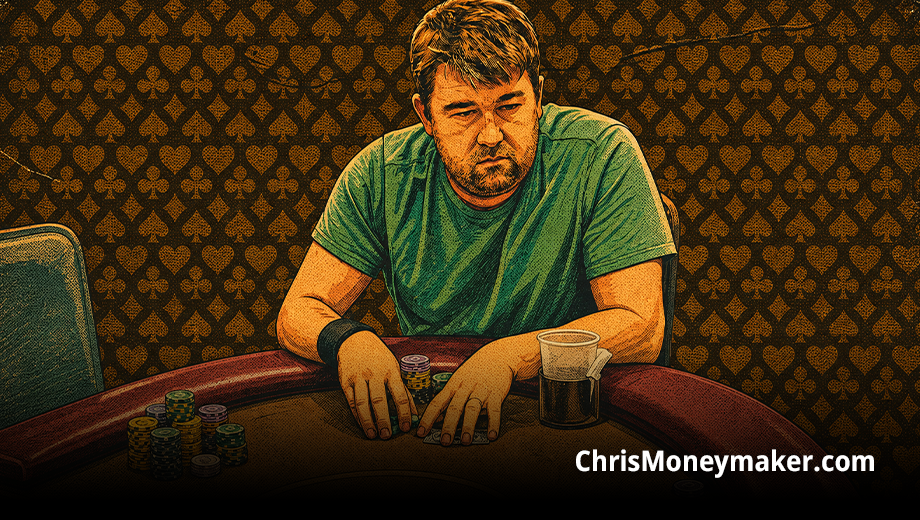

The ceilings at Binion’s felt six feet tall. That’s the first thing I noticed. I walked in expecting a casino and found something that looked like they’d cleared out the furniture to make room for an event nobody had quite figured out yet. The slot machines were gone. In their place: poker tables, folding chairs, and a whiteboard with player names written in magic marker. That was the tracking system. A whiteboard.
I’d never been to the World Series of Poker before. Never been to Binion’s Horseshoe. I was 27 years old, I’d qualified online for $86, and I walked in thinking I was probably the worst player in the field. That last part turned out to be accurate.
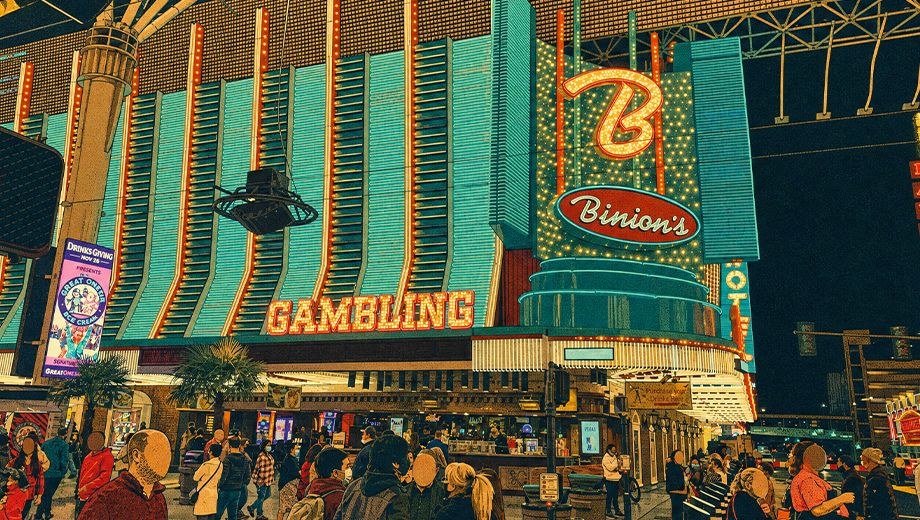
What Binion’s Actually Looked Like
People who weren’t there tend to imagine something grand. The World Series of Poker — it sounds like a big production. It wasn’t. Not in 2003.
Upstairs was a room called Benny’s Bullpen. About 40 tables packed into one space. The years before mine had cigarette smoke so thick you had to duck below it to breathe. By 2003 they’d dealt with that, but the room still had that lived-in, slightly cramped feel of a place that had been hosting this tournament since 1970 without much interest in updating the decor.
839 players registered that year. Today that sounds like a small field. At the time, it was the biggest the Main Event had ever been. People were tracked on a whiteboard. Not a screen, not a digital display — a whiteboard, with a magic marker. Someone walked over and updated it by hand.
That’s the version of the WSOP I walked into for the first time.
Sitting Down at the Table
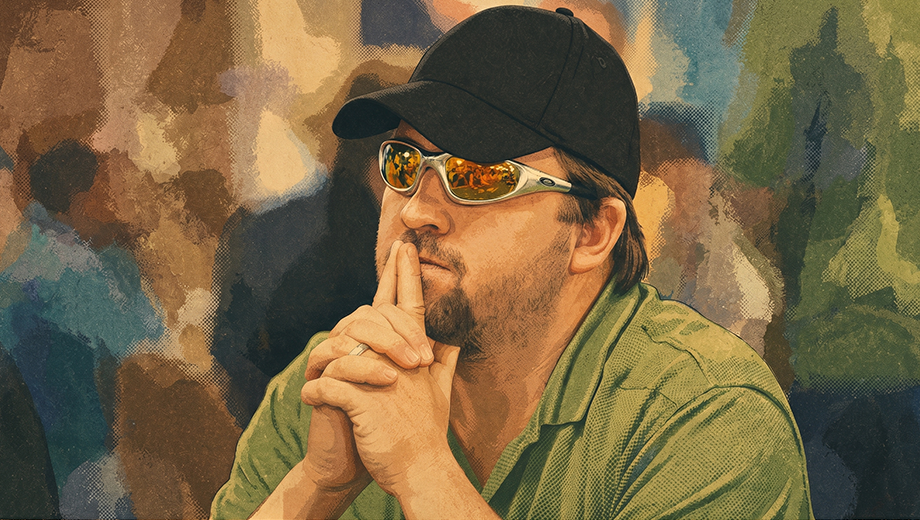
I found my seat and looked around. Didn’t recognize anyone. That part didn’t surprise me — I’d come up through online poker, and the live circuit was a different world. I checked the wall of champions when I spotted the man sitting two seats to my right. Dan Harrington. Multiple WSOP bracelets. 1995 Main Event champion. Great.
I knew three player names going into that tournament: Phil Hellmuth, Doyle Brunson, and Johnny Chan — the last two because of Rounders, the first because of how many bracelets he had. Everyone else was just a face with chips. Phil Ivey was in the field. I had no idea who he was. I saw a young guy with a stack and moved on.
The guy who gave me the most trouble on Day 1 wasn’t a famous pro. He was wearing a PokerStars patch. His name was Jim Worth. He kept raising my big blind and I spent the better part of a level trying to figure him out. The famous names weren’t the problem — it was the guy nobody had heard of who kept applying pressure.
My first target, the one I used to build confidence early, was a player in a Paradise Poker shirt who’d apparently won his seat in a drawing as a 50-cent/dollar limit player. I figured if I could get chips from him without too much trouble, I belonged at the table. That worked out.
The Part That Surprised Me Most
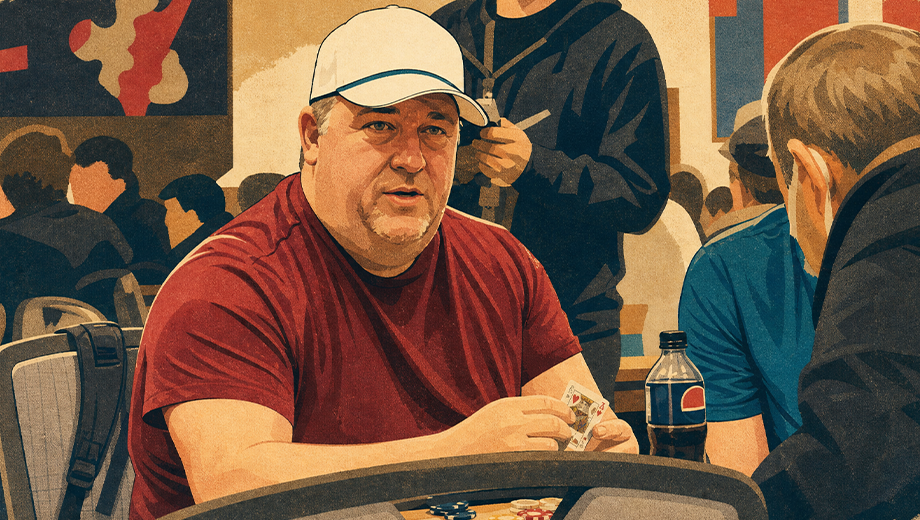
I’d expected to be intimidated. I wasn’t, really. Not by the room, not by the setup, not by the players I didn’t recognize. The thing that actually caught me off guard was how mechanical it all felt at first — registration, seat assignment, shuffle up and deal. Nobody gave a speech. Nobody explained what was happening. You just sat down and played.
Poker before 2003 had its own rules that varied by region, by casino, by table. Check-raising was banned in some rooms. Preflop 3-bets meant you had Jacks or better, or Ace-King — that was it. A 4-bet meant Kings or Aces, nothing else. The game hadn’t been standardized by the internet yet. Every player at that table had learned in a slightly different environment.
What that meant in practice: reading people was easier. Not because I was particularly gifted at it — it’s not rocket science, it’s simple observation — but because the ranges were narrow enough that you could make reliable guesses. I folded a lot that first day and spent most of my time watching the rest of the hand play out, trying to guess everyone’s cards. When they showed at showdown, I checked. I was right more often than I expected.
Day 1 bag: 60,000 chips from a 10,000 starting stack. Six times starting stack. I went home, slept, and came back the next day.
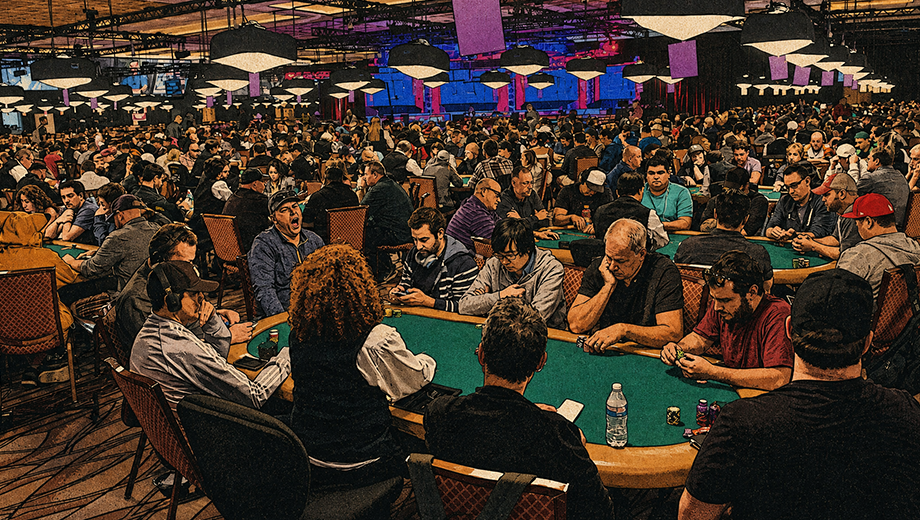
What That Room Looks Like Now
The WSOP doesn’t live at Binion’s anymore. The Main Event moved, the field grew, the infrastructure caught up with the demand. From 839 players in 2003 to over 10,000 by the early 2020s. The whiteboards are gone. There are screens everywhere. The whole thing is a production now.
I still play the Main Event every year. Walk in, find the seat, sit down. The room is different. The feeling isn’t that different — you’re still just a person with chips trying to outlast the field. What changed is everything around it.
“Before I won, these tournaments didn’t exist. There was nowhere to play poker.” That’s not an exaggeration. Seven months after winning $2.5 million, I couldn’t find a tournament to enter. Had to drive to Bay 101 in California in February just to find a field. That’s how fast it all changed — and how empty the calendar was before it did.
If you want to see what that calendar looks like today, the WSOP Schedule runs year-round now. It’s a different world.
What I’d Tell Someone Walking In for the First Time
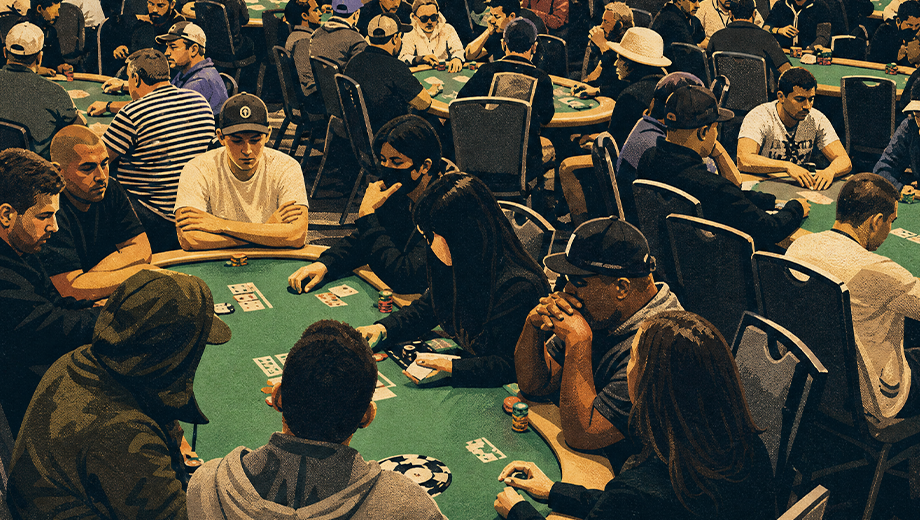
The room is going to be louder than you expect. More chaotic. More ordinary. There’s no ceremony when you sit down — nobody hands you a moment. You just find your table number, locate your seat, and start playing cards with strangers.
The famous players are in there somewhere. Most of the time they look like everyone else at the table. The ones who scare you on Day 1 usually aren’t the ones you need to worry about by Day 3. The ones you need to worry about are the ones you haven’t heard of yet — the ones quietly accumulating chips two tables over while everyone’s focused on the name they recognize.
I walked into Binion’s in 2003 thinking I’d be gone by the end of the day. I stayed for ten days. What I remember most clearly isn’t the final hand or the chip counts or the moment I won. It’s that first walk across the floor — low ceilings, packed tables, the smell of a place that had been running this tournament for thirty years — and sitting down next to Dan Harrington without knowing who he was.
That part was lucky. Ignorance helped.
Frequently Asked Questions
Where was the 2003 WSOP Main Event held?
The 2003 WSOP Main Event was held at Binion’s Horseshoe in downtown Las Vegas. The tournament took place in a room called Benny’s Bullpen, a packed upstairs space with roughly 40 tables. Players were tracked on a whiteboard with a magic marker — a far cry from the production the WSOP has become today.
How many players entered the 2003 WSOP Main Event?
839 players entered the 2003 WSOP Main Event — the largest field the tournament had seen at that point. The total prize pool was $7,987,860, with first place paying $2,500,000. Less than 8% of the field finished in the money, with 63 places paid.
How did Chris Moneymaker qualify for the 2003 WSOP?
Chris Moneymaker qualified through an $86 online satellite on PokerStars — which he entered accidentally, thinking it was a cash sit-and-go. That satellite fed into a $615 qualifier with 69 players, awarding 3 Main Event seats. He won a seat, then went on to win the Main Event itself.
What was Chris Moneymaker’s chip stack after Day 1 of the 2003 WSOP?
Moneymaker bagged 60,000 chips at the end of Day 1 from a starting stack of 10,000 — six times the starting stack. He increased his stack in nearly every two-hour level throughout the tournament, with one significant setback on Day 2 that he recovered from almost immediately.
Did Chris Moneymaker know any of the professional players at the 2003 WSOP?
He knew only three names going in: Phil Hellmuth, Doyle Brunson, and Johnny Chan — the latter two from the movie Rounders. He didn’t recognize Phil Ivey, who was considered by many the best player in the world at the time. He found out after eliminating him.
How has the WSOP Main Event changed since 2003?
The field grew from 839 players in 2003 to over 10,000 by the early 2020s. The tournament moved out of Binion’s Horseshoe and into larger venues. Prize pools that once topped out at under $8 million now regularly exceed $12 million. The infrastructure, coverage, and global reach of the event are unrecognizable compared to the 2003 version.