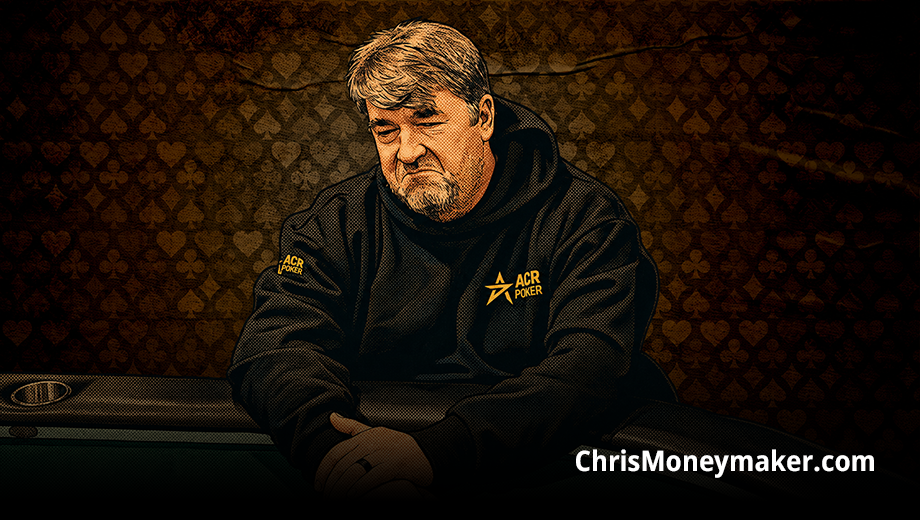

By four in the morning I’d been playing ten-handed for hours straight, and the room had that specific kind of quiet you only get when everyone left is trying not to think about how much money is on the table. I had 1.5 million in chips. Phil Ivey had about 500,000. Neither of us knew yet that this hand was going to end up on ESPN a few months later and get replayed more than almost anything else from that whole tournament.
I held Ace-Queen. Flop came Queen-Queen-6 — trip queens, about as good as it gets. Ivey had pocket nines. Turn brought another nine. Full house. The money went in anyway. I called with 17% equity and won the hand. That’s the kind of thing that sounds terrifying when you say it out loud years later. In the moment, I just didn’t know enough to be scared.
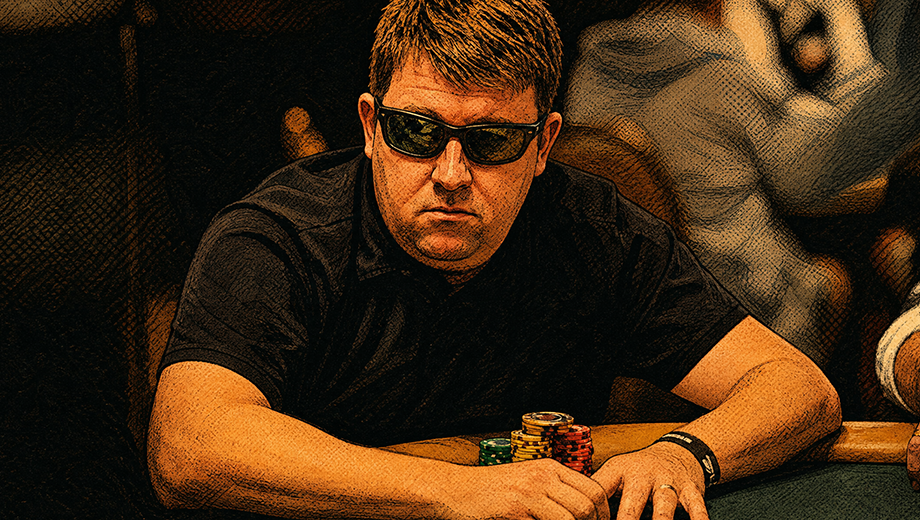
I Only Knew Three Names in That Room
Going into the 2003 Main Event, I could tell you exactly three professional poker players: Phil Hellmuth, because everyone talked about his bracelet count, and Doyle Brunson and Johnny Chan, both of whom I only knew from watching Rounders. That was it. That was the entire list.
So when I looked across the table and saw Phil Ivey — a young guy with a big stack — he didn’t register as a threat. I found out afterward that people considered him the best player in the world. At the time I just saw a kid with chips. Dan Goldman from PokerStars had actually given me a daily rundown of players to watch out for, and Ivey was on it. I hadn’t connected the dots. Turns out ignorance has its uses.
What the Table Actually Felt Like
The Physical Reality
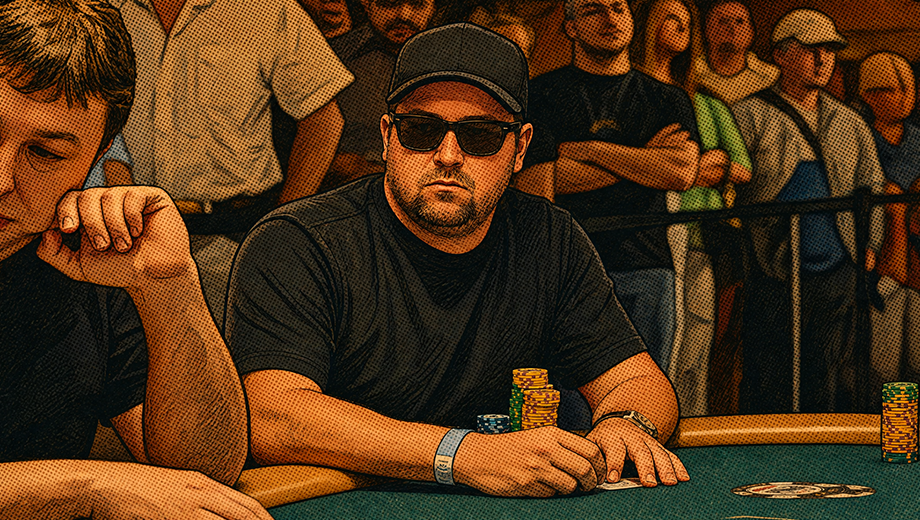
Nobody talks about how long you’re sitting there. Four hours ten-handed before that Ivey hand even happened. No breaks that matter. You’re not thinking about strategy every second — a lot of it is just staying upright and paying attention when it counts.
What I Told Myself Going In
“I had already told myself — I am not busting before the final table. Zero percent chance. I would have walked away and not played another hand if I had to.” That’s not bravado. That’s just the deal I made with myself before I sat down. Once you’ve made that deal, a lot of decisions get simpler.
The Hand Everyone Remembers
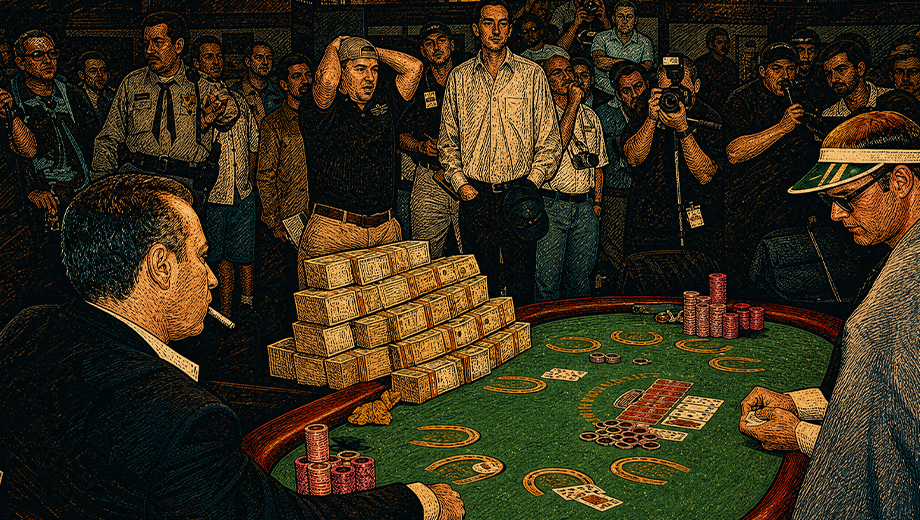
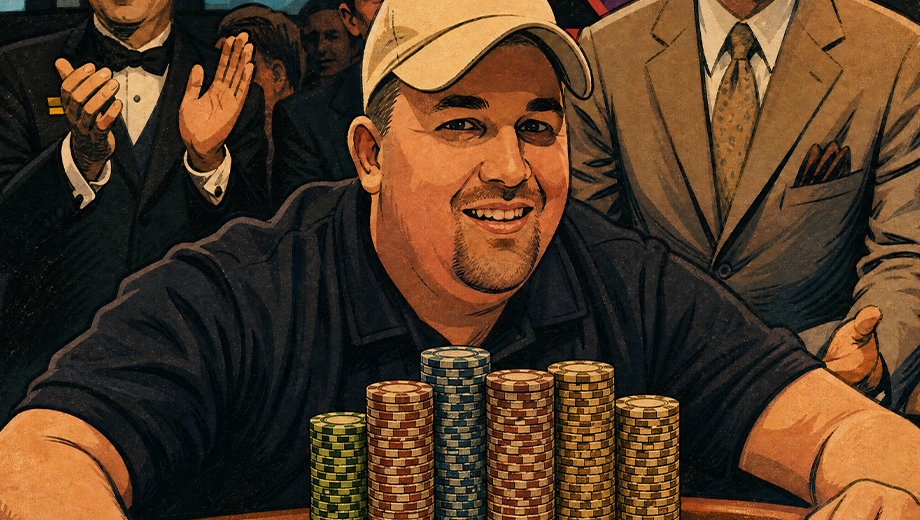
Heads-up against Sammy Farha, I had roughly a 2:1 chip lead. Board was J-5-4. I was holding 5-4 myself — a total bluff. I’d read Sammy as someone who wanted to use experience to grind me down slowly, not someone looking to play a massive pot right there. I moved all-in. He folded J-5 face up. Farha folding there is still the part that surprises me most looking back — in today’s game, with what players know now, nobody folds that hand. But it wasn’t today’s game. It was 2003, and the read was right.
What It Actually Means Looking Back
People want the final table to sound like a religious experience. It wasn’t. I was 27, I’d never played at that level before, and I was mostly just trying not to do anything stupid. The nerves other people expect weren’t really there. Wrestling and boxing in high school — that’s where you get nervous. This was cards. “We’re playing cards. Have fun.” That’s genuinely the mindset I had sitting down.
What I do think about, when I think about it at all, is how different the read had to be back then. Preflop 3-bets meant Jacks or better, or Ace-King. A 4-bet meant Kings or Aces — nothing else. The game was narrower, which made it easier to read people accurately. That’s not a skill I invented. It’s just what the format allowed. If you want to see how much the structure of these events has changed since then, the WSOP Schedule today looks nothing like it did in 2003.
How I’d Read That Same Table Today
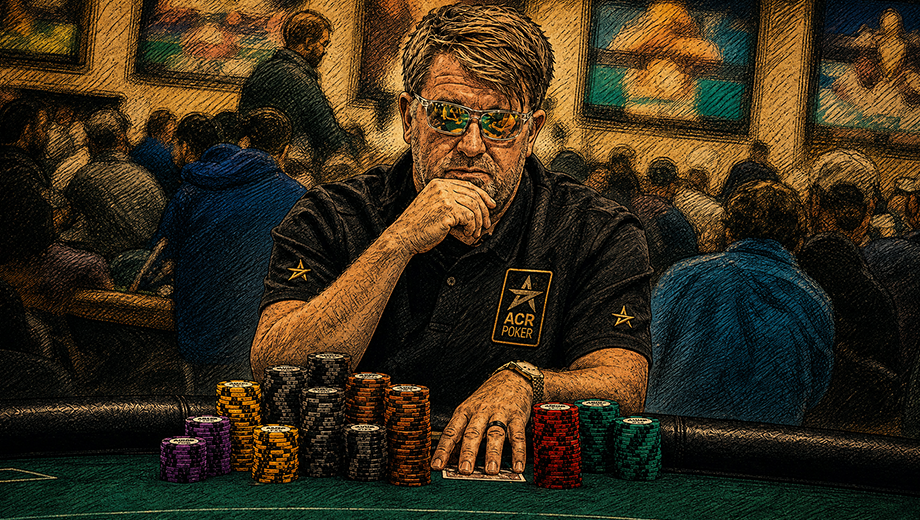
The method hasn’t changed even if the players have. When I fold a hand, I watch how the rest of it plays out and guess what everyone’s holding. At showdown, I check myself. Right or wrong, I learn something. Do that for six hours and by Day 2 you know more about the table than most of the people sitting at it.
The difference now is the players know more coming in. An 18-year-old today can have more hands under his belt in six months than most of the 2003 field had in their whole careers. The reading still works. It’s just working against sharper opponents.
I’ve never played 2003 as some kind of blueprint. It was one tournament, one table, one specific set of circumstances that isn’t coming back. What stuck with me wasn’t the chip counts or the hands — it’s the version of yourself you find out you are when the stakes stop being theoretical.
Frequently Asked Questions
What happened between Chris Moneymaker and Phil Ivey at the 2003 WSOP final table?
Moneymaker held Ace-Queen and flopped trip queens against Phil Ivey’s pocket nines. Ivey hit a full house on the turn, but Moneymaker called with 17% equity and won the hand, eliminating Ivey from the tournament.
Did Chris Moneymaker know who Phil Ivey was at the time?
No. Moneymaker only knew three professional players going into the tournament: Phil Hellmuth, Doyle Brunson, and Johnny Chan. He didn’t recognize Phil Ivey as one of the best players in the world at the time.
What was the final hand against Sammy Farha?
Heads-up with a chip lead, Moneymaker held 5-4 on a board of J-5-4, a complete bluff. He moved all-in and Sammy Farha folded J-5 face up, ending the tournament.
How old was Chris Moneymaker when he won the 2003 WSOP Main Event?
Moneymaker was 27 years old when he won the 2003 WSOP Main Event, and it was his first time playing live poker at that level.
How did Chris Moneymaker read opponents at the final table?
He watched hands play out even after folding, guessing opponents’ cards and checking his reads at showdown. He credits this simple, repeated observation as the core of how he read the table.