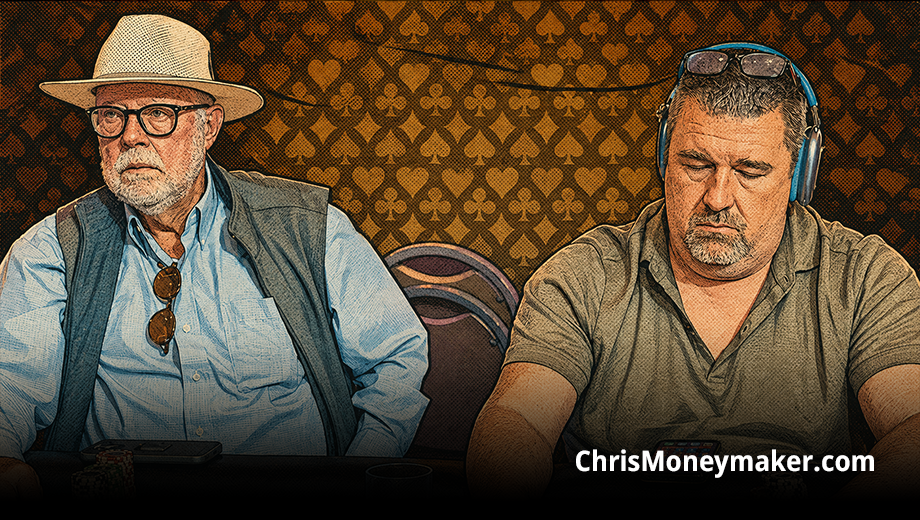

Day 1 of the 2003 WSOP Main Event, I sat down and checked the wall of champions to figure out who was two seats to my right. Dan Harrington. One of the best tournament players ever to play the game. I had no idea who he was until I looked him up. That turned out to be useful.
Not knowing his reputation meant I played him like any other player at the table. I watched how he bet. I folded when I needed to. I picked my spots. By the time I understood who I was sitting with, I’d already figured out enough about how he played to not be intimidated by the name.
That’s the short version of how I handle a tough table draw. The longer version is below.
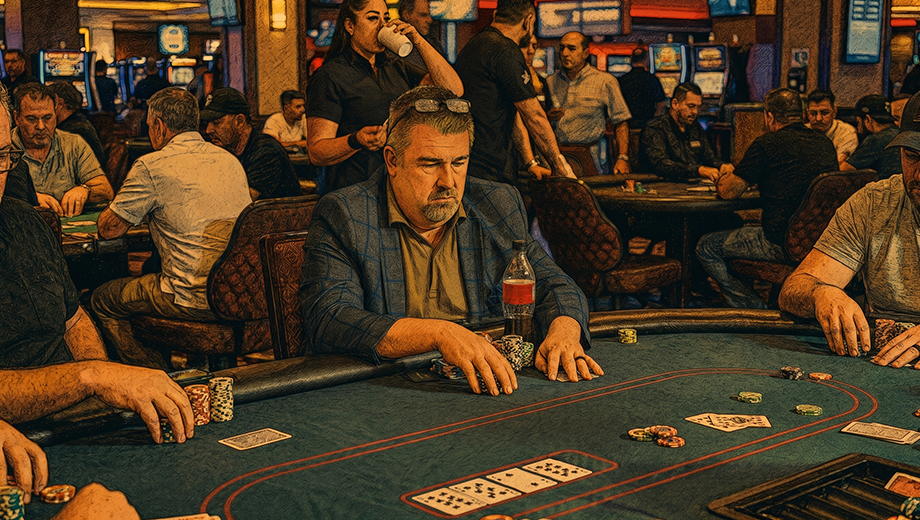
First: Decide What “Tough” Actually Means
There are two kinds of tough tables, and they need different approaches.
The first kind: strong, experienced players who apply constant pressure, three-bet light, and exploit any tendency you show. Against this table, you slow down. You pick fewer spots. You play closer to pure — if you’re not sure, you fold. The edge you give up by missing a marginal spot is smaller than the edge they take from you when you make a mistake trying to force something.
The second kind: loose, unpredictable players who call too wide and create big variance. This table looks tough because you can’t put anyone on a range. The actual solution is the opposite of the first — you need more patience, stronger hand selection, and you let them make the mistakes. You don’t try to outplay them. You wait for spots where you’re ahead and get the money in.
Most players treat both tables the same. That’s the mistake.
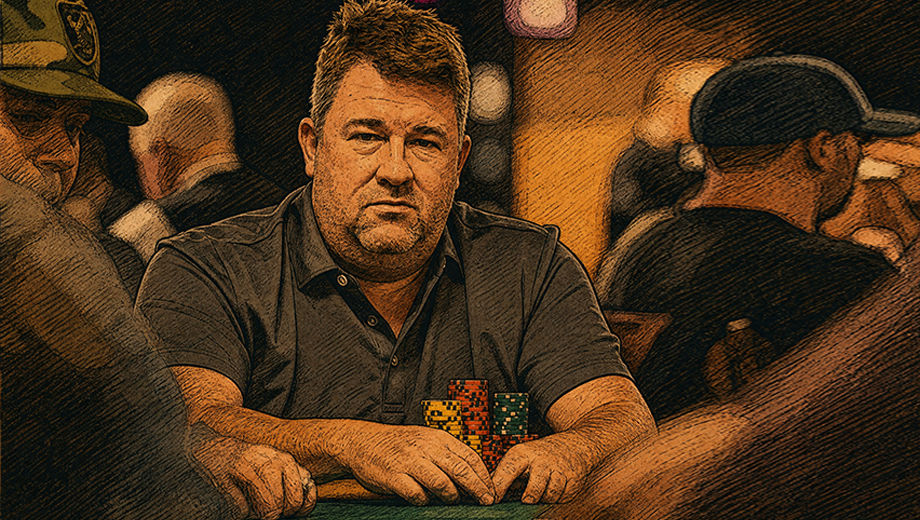
What I Actually Do in the First Two Hours
I don’t play many hands on Day 1. That’s not a strategy — it’s just how I’m wired. Day 1 bores me. The stacks are deep, the blinds are small, and nothing important happens until Day 2 when you can actually feel who’s scared and who isn’t.
But the first two hours are the most valuable data collection window of the entire tournament. Every hand I’m not in, I’m watching. When I fold, I try to put everyone still in the hand on cards. When showdown comes, I check. Right or wrong, I learn something.
By the time I play my first real pot, I usually know: who’s tight and waiting for the nuts, who’s splashing around with weak hands, who gets rattled after a bad beat, and who the dangerous players are — not by reputation, but by what I’ve actually seen.
That information is free. Most players throw it away.
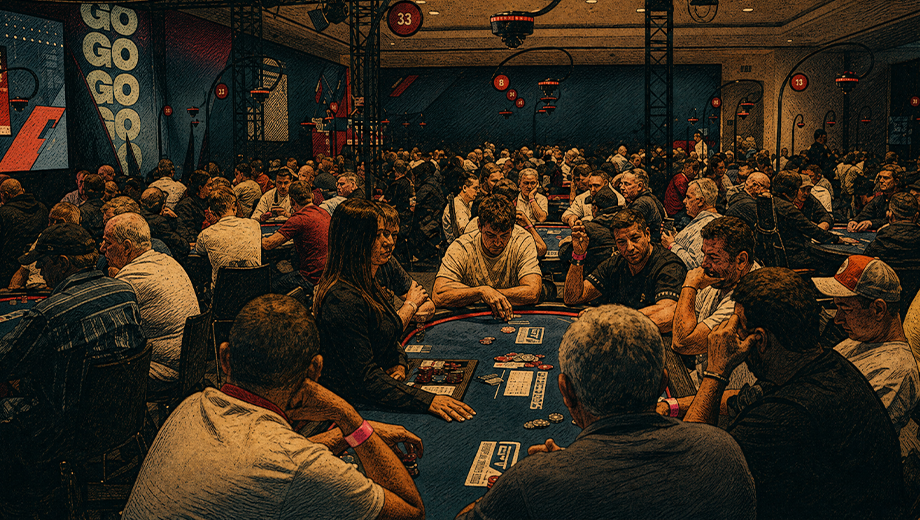
How I Think About the Good Players at the Table
Against very good players I go one of two ways. Either I play pure — close to simulation, no improvisation, nothing that gives information away. Or I go the opposite direction entirely: unpredictable, high variance, hard to put on a range. There’s no middle ground worth playing against someone who will exploit it.
What I don’t do is avoid them. That’s a trap. If a strong player is two seats to my left and I spend the whole day folding my button, I’ve handed them position for free. Better to play a few hands, establish that I’m not scared, and make them think twice before attacking.
The one exception: in a tournament like the WSOP Main Event, where there are so many players willing to give you chips in the early levels, I generally avoid unnecessary confrontations with the really good players. Why flip a coin when someone else will just hand you money? Save the war for when it matters.
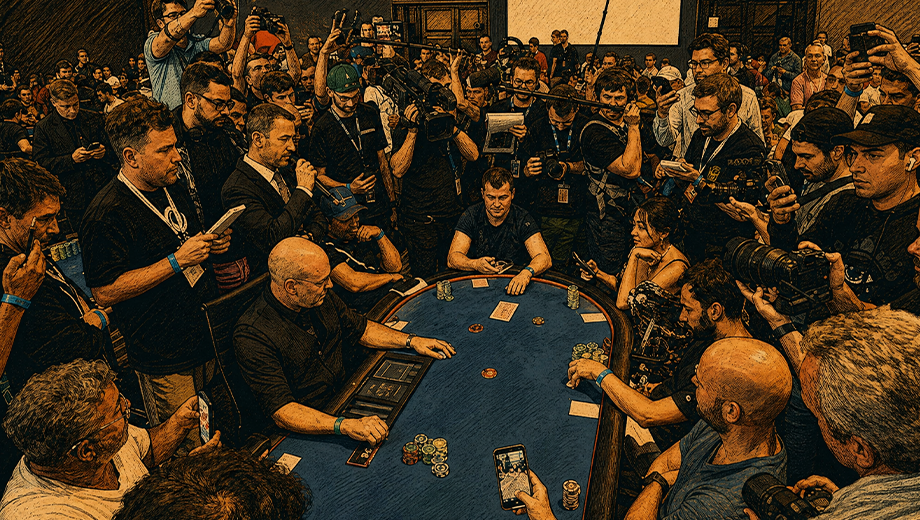
Fear at the Table
The players who look dangerous aren’t always the ones who are. I’ve sat across from players with big reputations and found they were playing scared — protecting their chips, not wanting to go home early, more interested in surviving Day 1 than in actually playing poker. Those players are easy to read once you stop being impressed by their name.
The players who actually cost me chips are usually the ones nobody’s talking about. The unknown with a big stack who plays every pot. The tight player who’s been patient all day and suddenly wakes up with a hand. The recreational player who doesn’t know enough to fold when they should.
Reputation and danger are different things. Once you separate them, a tough table draw gets a lot less tough.
The One Thing That Doesn’t Change
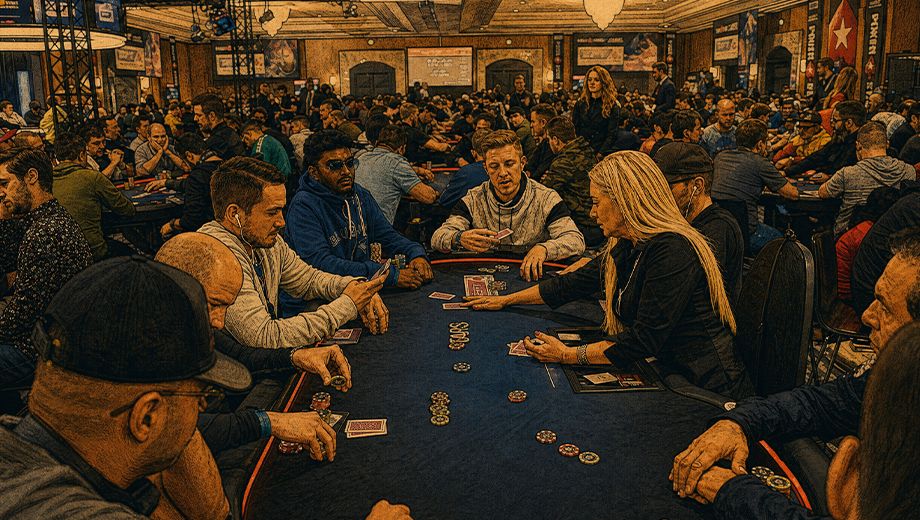
Regardless of the table — tough, soft, or somewhere in between — the approach to reading it is the same. Watch, guess, verify. Every hand, every level, every day. Not rocket science. Just consistent observation, done over and over until you know more about your table than anyone sitting at it.
The players who beat me aren’t usually the ones with the most skill. They’re the ones who paid attention longer than I did.
Day 2 is when the real game starts anyway. Survive Day 1, keep your stack healthy, and get to Day 2 with enough chips to actually play. Everything else is setup.
If you’re heading to the WSOP this year, the full event schedule — including Day 1 flight options for the Main Event — is on the WSOP Schedule page.
| Table Type | What You’re Facing | The Adjustment |
|---|---|---|
| Strong, aggressive pros | Constant pressure, light 3-bets, exploit tendencies | Tighten up, play fewer spots, minimize mistakes |
| Loose, unpredictable players | Wide calls, big variance, hard to read ranges | More patience, stronger hand selection, let them err |
| Mixed table | Some spots to exploit, some to avoid | Map the table early, target the weak, avoid the strong |
| Unknown players | No reputation data, no read yet | Watch everything for 2 hours before playing a real pot |
The table draw matters less than what you do with the first two hours of information.
Frequently Asked Questions
How should you play at a tough table in the WSOP?
It depends on what makes the table tough. Against strong, aggressive pros, tighten up and minimize mistakes — fold marginal spots rather than force action. Against loose, unpredictable players, use more patience and stronger hand selection, and let them make the errors. The adjustment is different for each type.
What is the most important thing to do at a new poker table?
Observe before you act. In the first two hours, every hand you’re not in is a free information opportunity. Try to put players on cards when you fold, then check yourself at showdown. By the time you play your first real pot, you should already have a read on who’s tight, who’s loose, and who gets rattled.
Should you avoid strong players at your WSOP table?
Not entirely. Avoiding a strong player completely hands them positional advantage for free. Play a few hands to establish you’re not scared, then pick spots carefully. In early levels of the WSOP Main Event, it generally makes more sense to target weaker players and avoid unnecessary confrontations with the best players at the table.
How important is table draw in tournament poker?
Table draw matters, but less than what you do with the information available in the first couple of hours. A tough draw forces better discipline and observation. The players who use that time well — watching every hand they’re not in, building reads before playing a pot — tend to make better decisions regardless of who they’re sitting with.
What is Chris Moneymaker’s approach to Day 1 of the WSOP?
He plays fewer hands on Day 1 and treats it primarily as a data collection period. The stacks are deep and the blinds are small, so the priority is observation — watching every hand he’s not in, building reads on the table, and arriving at Day 2 with a healthy stack and solid information about every player he’s facing.
Are famous poker players always the most dangerous at a table?
Not necessarily. Reputation and actual danger are different things. Well-known players sometimes play conservatively early in a tournament, protecting chips rather than applying pressure. Unknown players — a big stack who plays every pot, a patient tight player waiting for a spot — can be harder to play against than a well-known name.