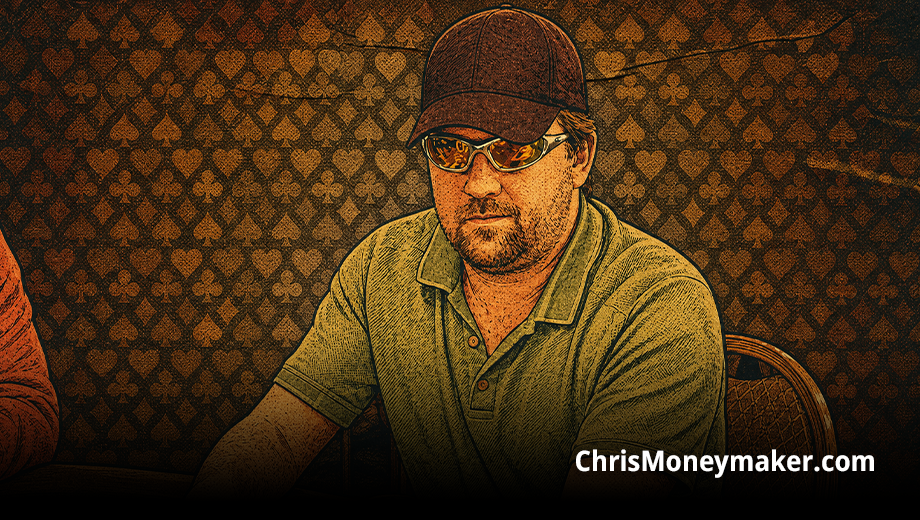

The ceilings at Binion’s Horseshoe felt six feet tall. They’d pulled out the slot machines and replaced them with poker tables. Players were tracked on a whiteboard with a magic marker. I walked in expecting some version of a casino. What I found looked more like a cramped back room that happened to be hosting the most important poker tournament in the world.
That was the first surprise. It wasn’t the last.
Nobody Told Me What I Was Walking Into
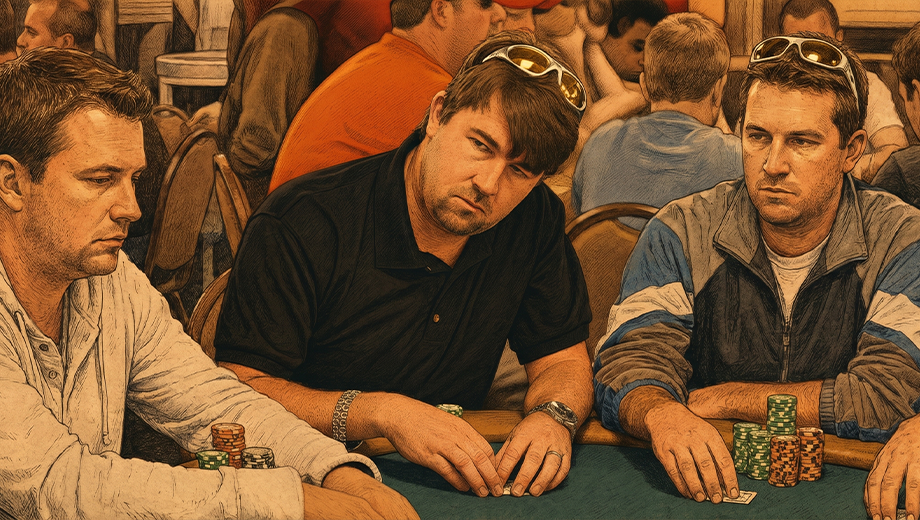
I had roughly $200 in my online account when I entered the satellite. The buy-in was $86. I thought it was a cash sit-and-go. By the time I understood what I’d accidentally qualified for, it was too late to do much about it — the seats weren’t transferable that year. So I showed up at Binion’s Horseshoe in May 2003 with 839 other players, most of whom had been preparing for this their entire poker careers.
I knew three player names going in. Phil Hellmuth because of his bracelet count. Doyle Brunson and Johnny Chan because of Rounders. That was it. The man sitting two seats to my right on Day 1 — I had to check the wall of champions to figure out who he was. Dan Harrington. One of the most accomplished tournament players of his generation. I had no idea.
What surprised me wasn’t that I didn’t recognize the players. It was that not recognizing them turned out not to matter.
How Different the Game Actually Was
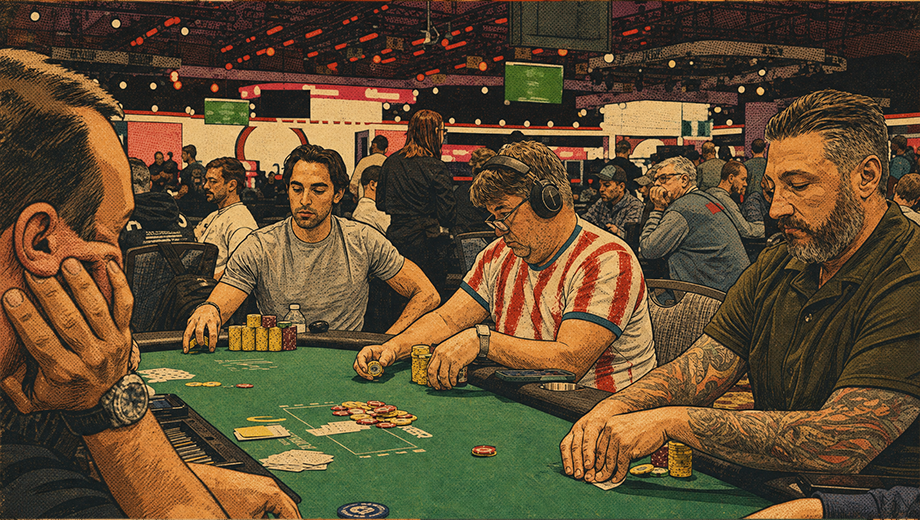
Before 2003, poker wasn’t what it is now. Not even close. Check-raising was banned in many casinos — including my local one. If you had a hand, you bet. If you checked, someone else bet for you. Preflop 3-bets only came with Jacks or better, or Ace-King. A 4-bet meant Kings or Aces, nothing else. Every region of the world had its own poker dialect, and nobody had compared notes yet.
Online players were considered second-class citizens. Serious live players thought internet poker was checkers — not a real game. The idea that someone who qualified online could show up and compete at the Main Event level was considered, at best, a curiosity.
I walked in as that curiosity. I didn’t know it at the time.
The Part That Actually Surprised Me
The biggest surprise wasn’t the field, or Binion’s, or the smoke-stained walls. It was simpler than that.
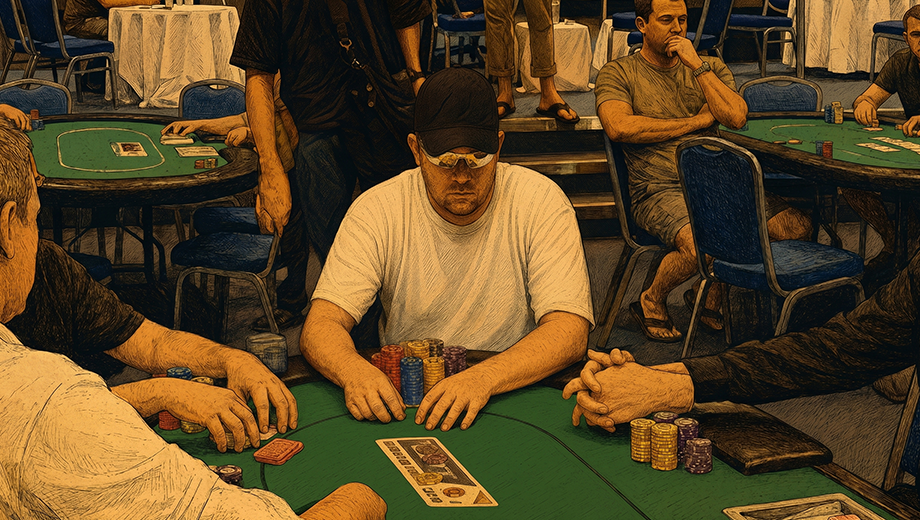
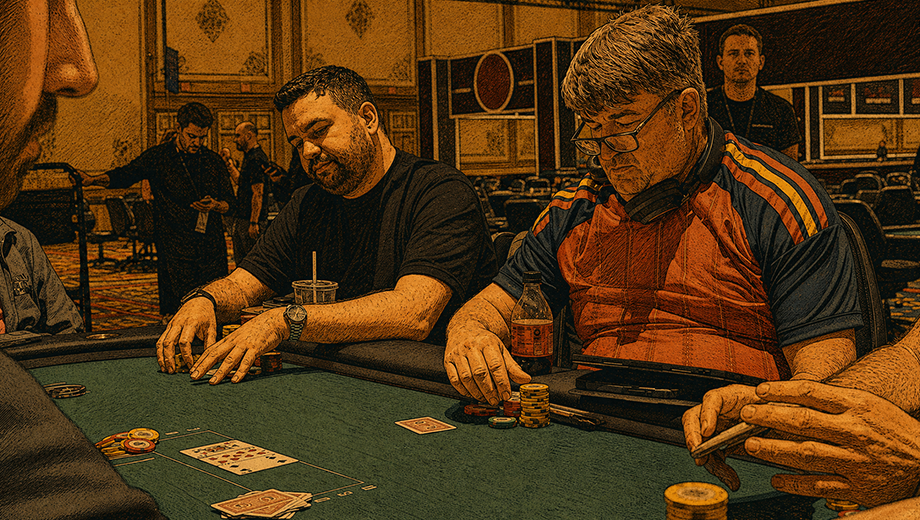
I folded a hand early on Day 1 and watched the rest of it play out. I tried to put both players on cards based on how they’d been betting. When showdown came, I checked myself. I was right. I did it again the next hand. Right again. And again. Over and over, for six days, every hand I wasn’t in — I watched, guessed, checked.
It’s not rocket science. It’s simple observation.
What surprised me was that most players weren’t doing this. They folded and looked at their phones. They went for a walk. They stopped paying attention the moment their cards were gone. I didn’t have a strategy for the WSOP. I just had nothing else to do, so I watched. That habit ended up being worth more than any hand I played.
The Players Who Were Supposed to Scare Me
The scary players in 2003 were the old veterans. The ones who’d been at Binion’s every year for twenty years. The ones who could supposedly look into your soul. Young players weren’t feared — they were overlooked.
Phil Ivey had 500,000 chips when we played our famous hand at 4am. I had 1.5 million. I saw a young guy with a stack. He didn’t scare me. I had Ace-Queen, flopped trip queens, he hit a full house on the turn with pocket nines, I called and won. Found out afterward he was generally considered the best player in the world. I had zero idea at the time. Which is probably why I called.
The experience taught me something I’ve never forgotten: fear at a poker table is usually about reputation, not reality. The players who scared everyone else were the ones I was most comfortable playing. The ones nobody mentioned were the ones who gave me the most trouble. A guy wearing a PokerStars patch named Jim Worth raised my big blind constantly on Day 1 and was harder to play against than anyone with a famous name.
What Seven Months Without a Tournament Looks Like
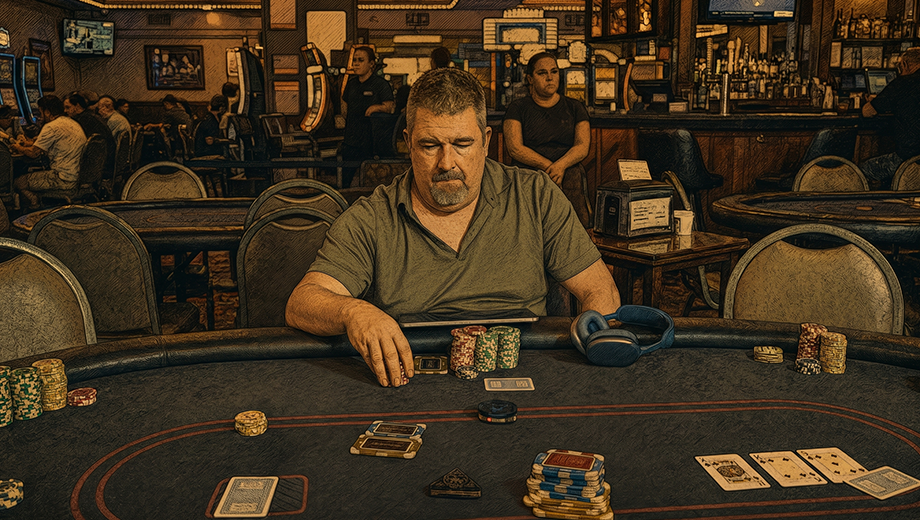
Here’s the surprise nobody talks about. Seven months after winning $2.5 million at the WSOP, I couldn’t find a tournament to play in. I had to drive to Bay 101 in California in February just to locate one. That’s how different the game was before 2003. There was nowhere to play. The circuit barely existed.
Today you can find a tournament anywhere in the world, any day of the week. The WSOP Schedule alone runs events year-round across multiple continents. That didn’t exist in any meaningful form when I walked into Binion’s. The whole infrastructure was built in the years after — partly because of what happened there, partly because of ESPN, partly because online poker gave millions of people a way in.
I almost never think about that connection. Only when I’m at the WSOP and it’s right in your face.
What I’d Tell Someone Walking In for the First Time
Don’t waste your folds. Every hand you’re not in is information you can collect for free. Watch how people bet when they’re strong. Watch how they bet when they’re not sure. Watch who relaxes after a big pot and who tightens up. By Day 2, you’ll know more about your table than most of the players sitting at it.
The rest of it — the size of the room, the famous names, the cameras, the noise — none of that matters once the cards are in the air. It’s still the same game. The ceilings felt six feet tall when I walked in. Two hours later I forgot about the ceiling entirely.
| Year | Main Event Entries | First Place Prize |
|---|---|---|
| 2001 | 613 | $1,500,000 |
| 2002 | 631 | $2,000,000 |
| 2003 | 839 | $2,500,000 |
| 2004 | 2,576 | $5,000,000 |
| 2005 | 5,619 | $7,500,000 |
| 2006 | 8,773 | $12,000,000 |
The room that felt like a back office in 2003 became the biggest tournament in the world three years later. That surprised me too.
Frequently Asked Questions
What was the WSOP Main Event like in 2003?
The 2003 WSOP Main Event had 839 players and was held at Binion’s Horseshoe in Las Vegas. It was a far smaller, more informal affair than today’s event — players were tracked on a whiteboard, and the venue had none of the scale of modern WSOP tournaments. First place paid $2,500,000.
How did Chris Moneymaker prepare for the 2003 WSOP?
He didn’t prepare in any conventional sense. He qualified accidentally through an $86 satellite on PokerStars, thinking it was a cash game. He walked into Binion’s knowing only three player names — Phil Hellmuth, Doyle Brunson, and Johnny Chan — and had never played live poker at that level before.
Was online poker respected before the 2003 WSOP?
No. Before 2003, online players were considered second-class citizens in the live poker world. Serious players viewed online poker as an inferior game. Moneymaker’s win as an online qualifier changed that perception overnight — the result was difficult to argue with regardless of how he got there.
How did the WSOP Main Event field grow after 2003?
The field grew dramatically in the years following Moneymaker’s win. From 839 players in 2003, it jumped to 2,576 in 2004, then 5,619 in 2005, and 8,773 in 2006. The combination of ESPN’s broadcast coverage and the accessibility of online satellites drove the explosion in participation.
What is Chris Moneymaker’s advice for first-time WSOP players?
His core advice is to use every fold as a free information-gathering opportunity. Watch how opponents bet when strong versus uncertain, and observe who tightens up after big pots. By Day 2, consistent observation builds a picture of the table that most players never develop because they stop paying attention when they’re not in a hand.
Did Chris Moneymaker know who Phil Ivey was at the 2003 WSOP?
No. Moneymaker did not recognize Ivey at the table. He saw a young player with chips and felt no particular concern. He found out after the tournament that Ivey was widely considered the best player in the world at the time. He has noted that not knowing likely helped him play the hand without hesitation.