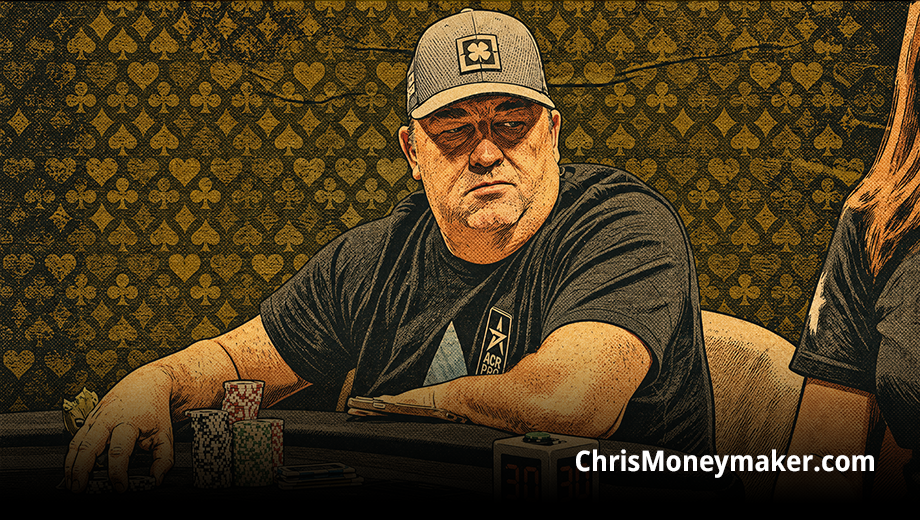

Day 1 of the Main Event bores me. That’s not a complaint — it’s a read. The field is too big, the stacks are too deep, and most people are still figuring out what they want to do. If you come in with a plan, you already have an edge on probably half the table before a single card is dealt.
I’ve played this tournament every year since 2003. I’ve sat down on Day 1 as an unknown amateur with $200 to my name online, and I’ve sat down knowing people were watching. The table dynamic changes. My approach doesn’t.

The First Thing I Do When I Sit Down
I observe. That’s it. Before I play a meaningful hand, I want to know who’s nervous, who’s there to have a story to tell, who actually knows what they’re doing, and who has chips they don’t want to lose.
The nervous player is your first target — not because they’re weak, but because they’re predictable. When they bet, they have it. When they check, they’re not sure. Fear at the table reads the same way it has for twenty years. The game changed. People don’t change.
The guy with chips who doesn’t want to lose them is actually more useful. He’ll fold the river when he shouldn’t. He’ll check back the turn to “keep the pot small.” You don’t need to bluff him often — just once, cleanly, and he remembers it for the rest of the day.
What I’m Not Trying to Do on Day 1
I’m not trying to double up. I’m not trying to build a big stack by noon. I’m not trying to make a move that people will remember.
Day 1 of the Main Event has 10,000 players and two-hour levels. The structure gives you enough room to be patient. Use it. The players who come in looking to accumulate fast are the ones who bust fast. They confuse activity with progress.
My goal for the first three or four levels is simple: end the level with more chips than I started. Every level. Not double. Not a chip lead. Just more. That compounds. By the time the field starts thinning, I want to be in a position to play — not surviving on a short stack, folding my way to Day 2 by the skin of my teeth.
Reading the Table Before You Read Your Cards
When I fold a hand early in a session, I don’t look at my phone. I watch the hand play out. I try to put everyone on a range before the cards go face-up. Then I check. Right or wrong, I learn something.
In 2003, this was almost mechanical. A preflop 3-bet meant Jacks or better, or Ace-King. That was the whole range. A 4-bet meant Kings or Aces, full stop. Today’s players are different — online volume compressed years of learning into months — but the fundamentals of observation still apply. You’re not looking for their cards. You’re looking for their patterns.
By the end of Level 2, I want to know: who at this table is playing scared money? Who is comfortable being the aggressor? Who is going to call me down with second pair because they don’t trust their own read? That information is worth more than any hand I’ll play before the dinner break.
How I Think About Stack Size
The Main Event starts everyone at 60,000 chips. That’s a lot of room. Don’t waste it.
I don’t get involved in marginal spots early. I’m not calling a 3-bet out of position with suited connectors in Level 1. The implied odds aren’t there yet because I don’t know enough about the table to know what those connectors are worth. Once I’ve watched three or four orbits and have a read on who’s going to pay me off and who isn’t, I can start to open up.
The biggest Day 1 mistake I see — and I’ve made it myself — is treating early chip accumulation like a scoreboard. You’re not winning anything at 3pm on Day 1. You’re just setting yourself up for a longer night. Build steadily. Don’t try to be the chip leader before dinner.
The One Spot I Will Take on Day 1
There’s one situation I’ll play aggressively almost every time: the bubble dynamic within the day. Even on Day 1, certain players are already thinking about making it to Day 2. They’ve paid $10,000 to be here. They want to go home and say they made it to the second day.
Those players slow down near the end of a session. They tighten up. They stop 3-betting. They fold to continuation bets they should call. I look for that shift — usually in the last level of the day — and I apply pressure. Not recklessly. Just consistently.
I don’t need to be in a huge hand to pick up chips in that window. Small pots, stolen blinds, one well-timed continuation bet that takes down a pot I had no business being in. That’s how a Day 1 session finishes with a useful stack.
What Day 1 Is Actually For
Surviving Day 1 isn’t the goal. Positioning yourself to play on Day 2 is. Those aren’t the same thing.
A player who bags 48,000 chips — below starting stack — survived. A player who bags 90,000 chips has options. They can play a big pot on Day 2 without it being existential. They can afford to be wrong once. That’s what Day 1 is building toward: not a number on a leaderboard, but the ability to make real decisions later in the tournament when it actually matters.
I’ve played this event with a short bag. I’ve played it with a big one. The second version is better. Not just for obvious reasons — but because you play differently when you have room to breathe. The mistakes you make from a comfortable stack are recoverable. The ones you make short-stacked usually aren’t.
Day 1 is long, and most of it is quiet. Pay attention during the quiet parts. That’s where the tournament actually starts.
If you’re building toward your first Main Event experience, the Moneymaker Tour runs tournaments year-round with the same structure philosophy — enough play to feel real, short enough to finish on a weekend.
Frequently Asked Questions
What is the starting chip stack in the WSOP Main Event?
The WSOP Main Event starts players with 60,000 chips and a $10,000 buy-in. The deep starting stack and structured blind levels give players plenty of room to be patient early — which is exactly why the first few levels reward observation over aggression.
How many players are in the WSOP Main Event?
In recent years the Main Event has attracted over 10,000 entries. In 2003, when Chris Moneymaker won, the field was 839 players. The dramatic growth in field size is one of the most cited examples of the Moneymaker Effect — the surge in recreational poker participation that followed the 2003 broadcast.
What is the biggest mistake players make on Day 1 of the Main Event?
Treating early chip accumulation like a scoreboard. Many players come in trying to double up quickly or make memorable plays. Day 1 rewards patience and observation. The goal isn’t to lead the chip count at noon — it’s to bag a stack that gives you real options when Day 2 begins.
How do you read opponents at a poker table early in a tournament?
Watch every hand you’re not in. When you fold, don’t check your phone — observe the action and try to put players on a range before the cards are shown. Verify at showdown. It’s not complicated, it’s just consistent attention. After a few orbits you start to see who plays scared, who is comfortable being aggressive, and who will call you down light.
How does the WSOP Main Event Day 1 structure work?
Day 1 of the Main Event is split across multiple starting flights — players choose their starting day and all surviving players bag their chips and return for Day 2. Blind levels are typically two hours long, giving players a deep, slow structure that rewards patience over gambling. Players who bag above starting stack at the end of their Day 1 flight are in a strong position heading into Day 2.
What is a good chip stack to bag at the end of WSOP Main Event Day 1?
Starting stack is 60,000. Bagging above that — ideally 80,000 or more — means you enter Day 2 with room to make real decisions. A short bag isn’t the end of the tournament, but it changes how you play. Short-stacked poker is reactive. Having chips means you get to choose your spots rather than wait for one.