
The first thing I notice every summer is the noise. Thousands of chips moving at once, dealers calling for players, a floor person reading names off a list. Then somebody walks up and asks about the Farha hand. Five-four. Jack-five-four board. I moved all-in, and he folded a jack face-up. That was over twenty years ago, and it still finds me before I find my table.
That’s the WSOP for me. The rest of the year I almost never think about 2003. I’ve said it before: “Honestly, I almost never think about it. Only when I go to the WSOP and it’s right in your face.” So you’d think I’d stay away. I keep going back anyway. Here’s why.
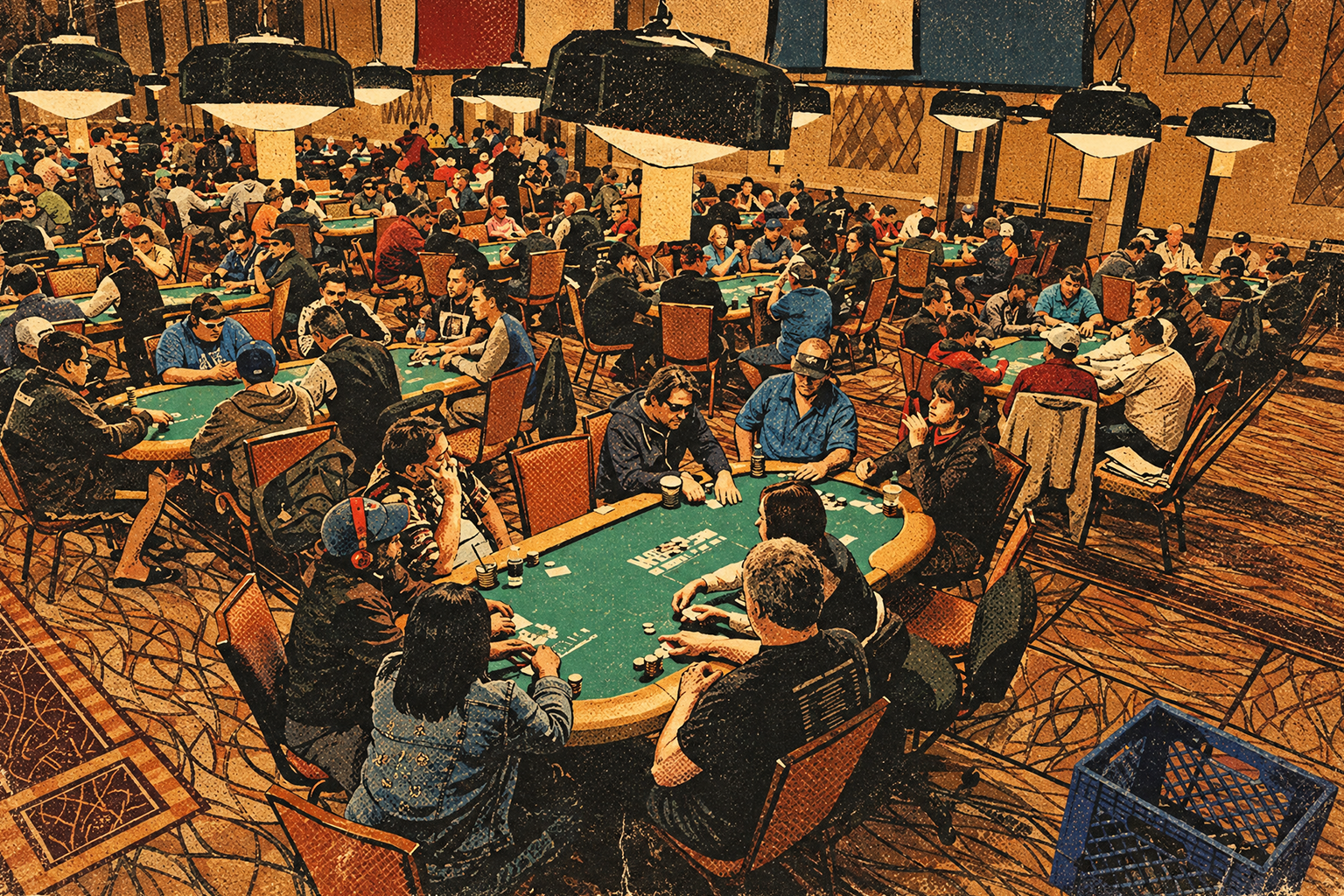
The Room Wasn’t Always This Full
In 2003 the Main Event had 839 players. I knew the names of three of them: Phil Hellmuth, Doyle Brunson, and Johnny Chan. I got there through an $86 satellite on PokerStars that I entered by accident. I thought it was a cash sit-and-go. That led to a $615 qualifier with 69 players and three seats, and that led to the $10,000 Main Event. If I could have sold the seat, I would have.
The scale now is hard to explain to anyone who wasn’t around back then. “Unless you’re my age and played before me, you have no clue how different this sport was.” There just weren’t many places to play. I’ll stand by what I said about it: “Before I won, these tournaments didn’t exist. There was nowhere to play poker.”
That’s a big part of why I go back. Not to relive anything. To look at the room. Every year it’s full of people who maybe started playing because an accountant from Tennessee got lucky on television. That’s not a bad place to spend a few weeks. Chris Moneymaker, professional bystander.
The People Are the Point
Meeting People Beats Chasing Bracelets
“I never intended on being a professional poker player. My goal was never to chase bracelets or be the best player in the world.” That hasn’t changed. What I got out of the last two decades was mostly people. “I got more joy out of meeting people and introducing them to poker than I did playing high buy-in tournaments.”
The WSOP is where all of those people end up in the same building at the same time. Players I met at a Moneymaker Tour stop. People who qualified online for a few bucks, the way I did. People who just want a photo and a minute. I’m not complaining about any of it.
The Handshake Test
I have one standard for whether I did my job as an ACR ambassador. “I know I’ve done my job as an ambassador when the person I bust shakes my hand and says it was an honor.” You don’t get that handshake at home. You get it at a crowded table at the Series, from someone who’s going to tell the story to their friends that night.
For the record, I still don’t think of it as fans. “I just played in a poker tournament. I don’t have fans. That’s not a thing. I’m just a normal guy.” Normal guy, crowded room, a lot of handshakes. That works for me.
It’s Not About Winning It Again
People assume I go back chasing a second Main Event title. I know how the first one happened. “I’m smart enough to know that’s not sustainable. I ran really good.” It took miracle after miracle just to get a seat. Planning a summer around a repeat of that would be a strange way to plan a summer.
What changed is how I play. From 2005 to 2015 I didn’t study a single hand. Family came first, and there was too much else going on. In the last few years I’ve gone back to it seriously. I’ve worked with Chip Leader Coaching, Joe McKeehen, Faraz Jaka, and Rob Creun at Elite Poker Coaching. The WSOP is where I find out if any of it stuck, against fields where, as I put it once, “An 18-year-old kid today can have more experience than Doyle Brunson got in his entire life — in six months.”
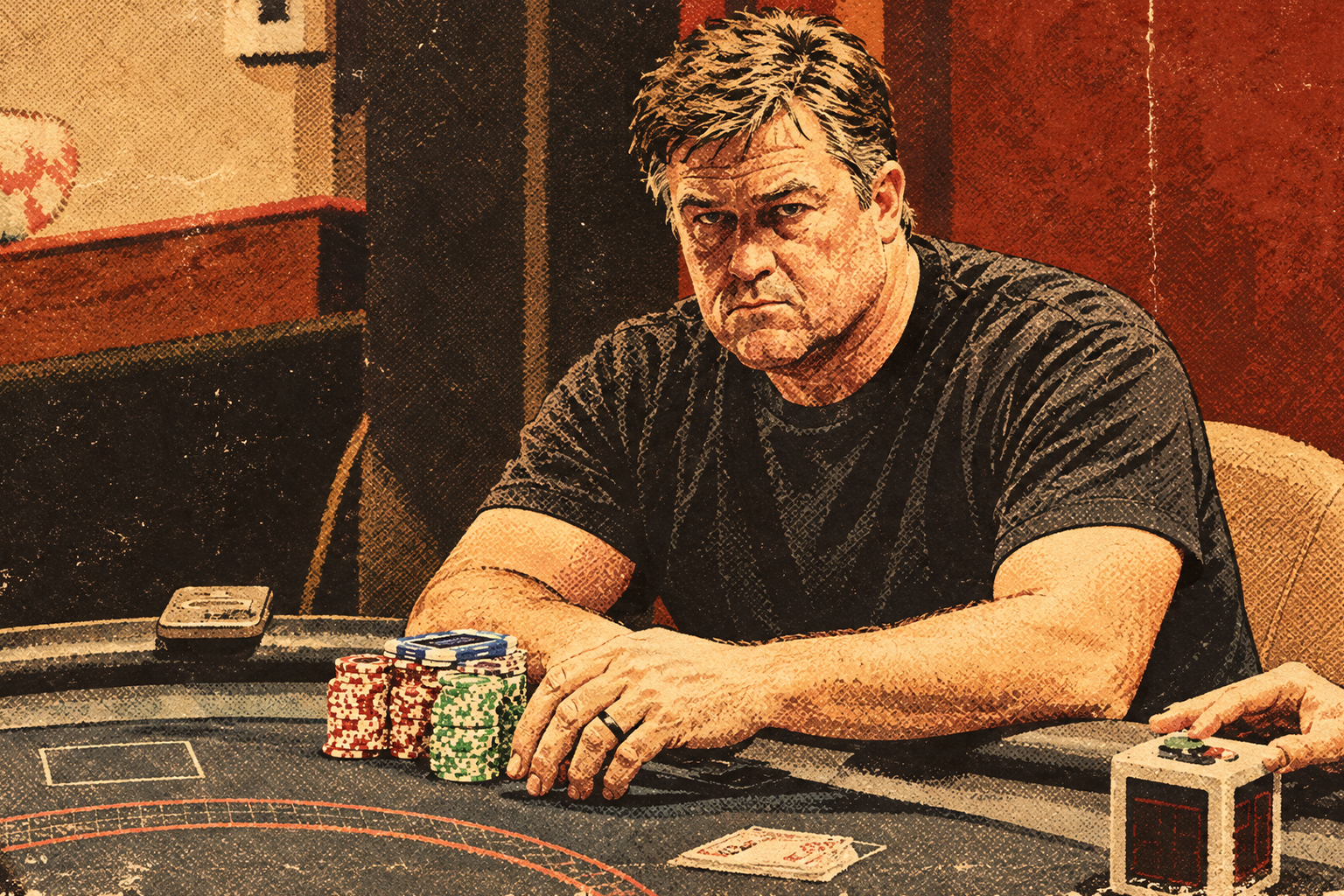
Some of the proof shows up away from Las Vegas. I finished 10th in the 2024 WSOP Paradise Main Event for $500,000. Nice reminder that the work counts. If you’re thinking about making the trip yourself, start with the WSOP Schedule and work backward from the events you can actually afford.
How I Approach the Summer Now
Short version: I pick my spots. I’m a father first, and the Series runs long.
Not Living Out There
Poker can keep you on the road for most of a year if you let it. I stopped letting it. “The thought of leaving them for half a year, or uprooting my whole family — it just wasn’t as appealing as it was before.” So I plan around the events I actually want to play instead of trying to play everything on the calendar.
Patience at the Table
Once I sit down, my approach is the same one I had in 2003. I fold a lot and I watch a lot. “It’s not rocket science. It’s simple observation.” The other part is keeping my head. “More than anything else: patience. Not getting too emotional. Not reacting to situations.” A WSOP day can be hours of nothing followed by one hand that matters. You have to still be paying attention when it shows up.
The Numbers Behind the Room
Here’s what the Main Event looked like before and after 2003, and where it sits now. This is the moneymaker effect people talk about, in plain numbers.
| Year | Main Event Entries | First Place Prize |
|---|---|---|
| 2002 | 631 | $2,000,000 |
| 2003 | 839 | $2,500,000 |
| 2004 | 2,576 | $5,000,000 |
| 2005 | 5,619 | $7,500,000 |
| 2006 | 8,773 | $12,000,000 |
| 2019 | 8,569 | $10,000,000 |
| 2022 | 8,663 | $10,000,000 |
| 2023 | 10,043 | $12,100,000 |
839 players in 2003. 10,043 twenty years later. I’ll accept a small share of the blame.
After I won in 2003, I flew home Saturday and was back at work Monday morning. The broadcast didn’t air until August, so most people had no idea yet. Now I walk into the WSOP and the first person I see usually does. I’ll answer the question about the Farha hand again. Then I’ll go find my seat. “The fun part of life is not knowing what tomorrow brings.” Every summer out there, I still don’t.
Frequently Asked Questions