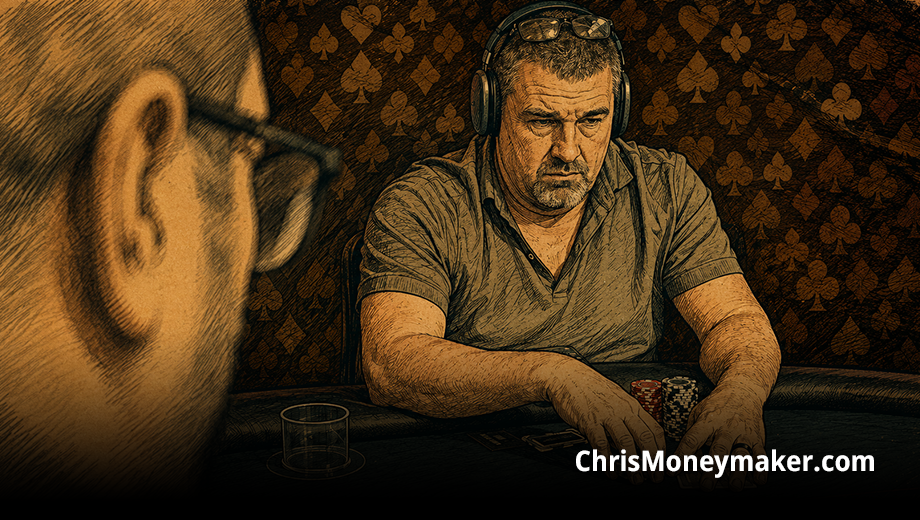

It was 4am at Binion’s, ten hours into a session, and I’d been staring at a stack across the table without knowing who it belonged to. I only knew three names going into the 2003 WSOP Main Event: Phil Hellmuth, Doyle Brunson, and Johnny Chan. Everyone else was just a face with chips. When I looked at Phil Ivey, I saw a young guy with a big stack. He didn’t scare me. I had no idea I was looking at someone who’d turn out to be one of the best players in the world.
That ignorance probably won me the hand.

The Setup
I had about 1.5 million chips at that point. Ivey had roughly 500,000 to start the hand. I held Ace-Queen. The flop came Queen-Queen-6 — trip queens, about as good a flop as you can ask for. Ivey turned a full house on the next card. Chips went in. I was sitting at 17% equity to win the hand, and I called anyway.
I bet 75,000 on the flop, then 200,000 on the turn — about half of what Ivey had left. When he shoved, it only cost me 200,000 more to call. Jason Lester, sitting in the hijack, had actually folded pocket tens earlier in the same hand. I never saw that fold. I just saw a stack, made my read, and moved forward.
Why the Read Was Wrong and It Didn’t Matter
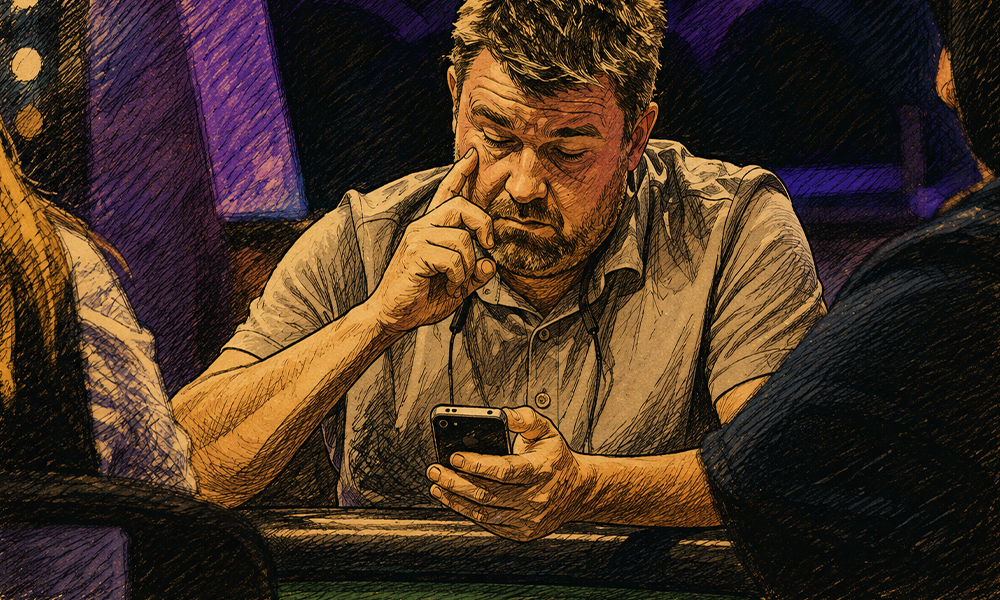
Here’s the part that still makes me shake my head: I told myself before that hand that I wasn’t busting before the final table. Zero percent chance. If I’d had to walk away right there, I don’t know that I’d have played another hand the same way for the rest of the tournament. That kind of certainty isn’t strategy. It’s closer to stubbornness. But it’s also exactly the mindset that let me call off a big chunk of my stack against a full house without flinching.
Ivey didn’t shake my hand right away afterward. He was in his own zone, and I understood that later — we talked it out without any hard feelings once the moment passed. What I didn’t understand until afterward was who I’d actually been playing against. PokerStars had a guy, Dan Goldman, giving me a daily rundown of players to watch. Ivey was on that list. I just hadn’t connected the name to the young guy across the table yet.
What Not Knowing Actually Did For Me
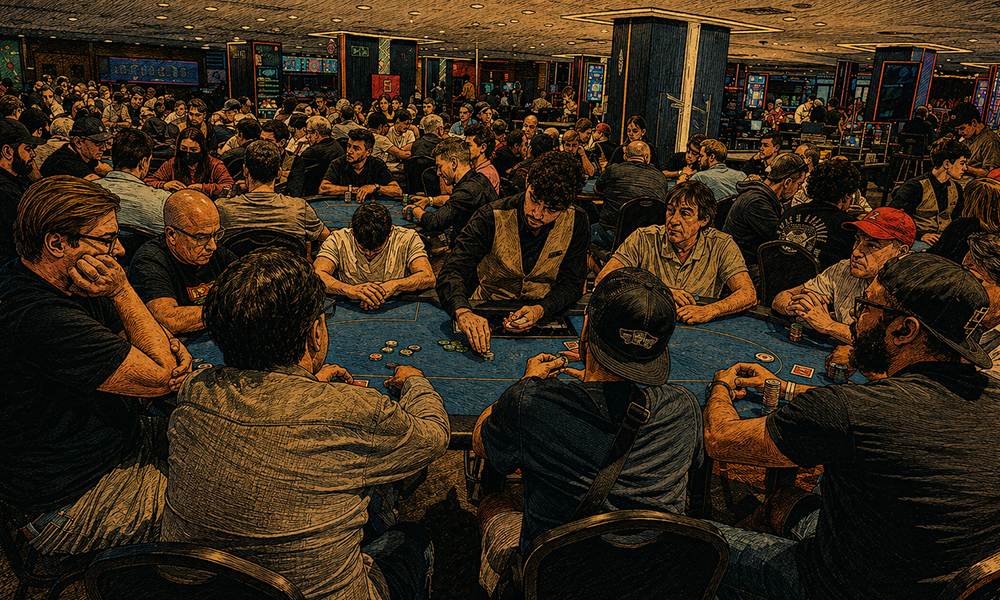
The scary players in 2003 were the old-school veterans — the ones people said could look into your soul across a table. Young players weren’t feared yet, because nobody had built a reputation for them. Ivey hadn’t become “Ivey” in the cultural sense. He was just a young guy with chips, and I treated him like exactly that: another stack to play a hand against, not a legend to avoid.
If I’d known what I know now about Ivey, I don’t know if I make that call. Fear changes decisions. Reputation changes decisions. I didn’t have either working against me in that hand, and it let me play the situation instead of the name.
The Lesson I Actually Take From It
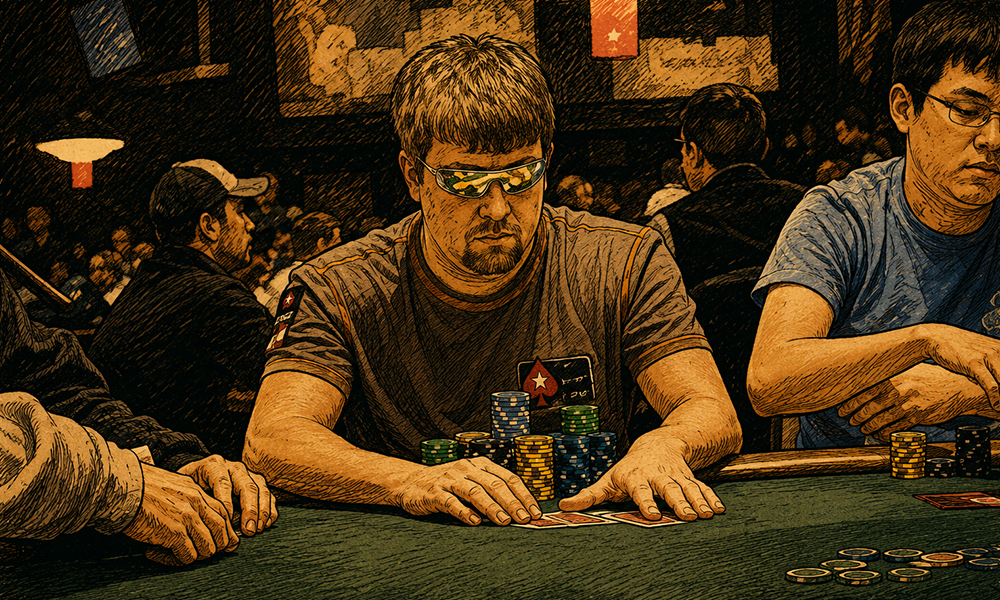
It’s not rocket science. It’s simple observation — and observation only works on what’s actually in front of you, not what you assume should be there based on someone’s résumé. I read Ivey’s stack size and his behavior in that hand, not his reputation, because I didn’t have one to read from. Turns out that was the right way to play it anyway.
Now, when I sit at a table, I know more names than I did in 2003. That’s both a help and a trap. Knowing someone is good can make you play tighter against them than the actual hand calls for. The read should always come first, before the reputation gets a vote.
What Happened After
I went on to win that tournament, obviously. Ivey went on to become one of the most respected players in the game, and we’ve crossed paths plenty of times since without any weirdness from that hand. It’s become one of the more replayed moments from that Main Event, mostly because people love the detail that I had no idea who I was up against. I get why. It’s a good story. It’s also just what actually happened — I wasn’t playing a legend that night. I was playing a stack of chips that happened to belong to one.
Frequently Asked Questions
What happened in the Chris Moneymaker vs. Phil Ivey hand at the 2003 WSOP?
Moneymaker held Ace-Queen and flopped trip queens. Ivey turned a full house with pocket nines. Moneymaker called off a large portion of his stack at roughly 17% equity and won the hand, eliminating Ivey.
Did Chris Moneymaker know who Phil Ivey was during the 2003 Main Event?
No. Moneymaker only recognized three players’ names going into the tournament — Phil Hellmuth, Doyle Brunson, and Johnny Chan. He did not know who Phil Ivey was at the time of their hand.
What were the chip stacks in the Moneymaker-Ivey hand?
Moneymaker had approximately 1.5 million chips, while Ivey had roughly 500,000 chips at the start of the hand.
Did Phil Ivey and Chris Moneymaker remain on good terms after the hand?
Yes. Ivey didn’t shake hands immediately after the hand, but the two talked it through afterward with no hard feelings.
Why did Chris Moneymaker call off so many chips against a full house?
He had told himself he was not busting before the final table under any circumstance, a mindset that led him to call despite being a significant underdog in the hand.