

The ceilings at the old Binion’s felt six feet tall. Slot machines pulled out, replaced with poker tables, players tracked on a whiteboard with a magic marker. That’s where I first learned that surviving Vegas for a summer has nothing to do with how good you are at cards and everything to do with how you manage the hours you’re not playing them.
People plan their buy-in and stop there. The buy-in is the easy number. Living in Vegas for two, four, six weeks is the part that actually breaks budgets.
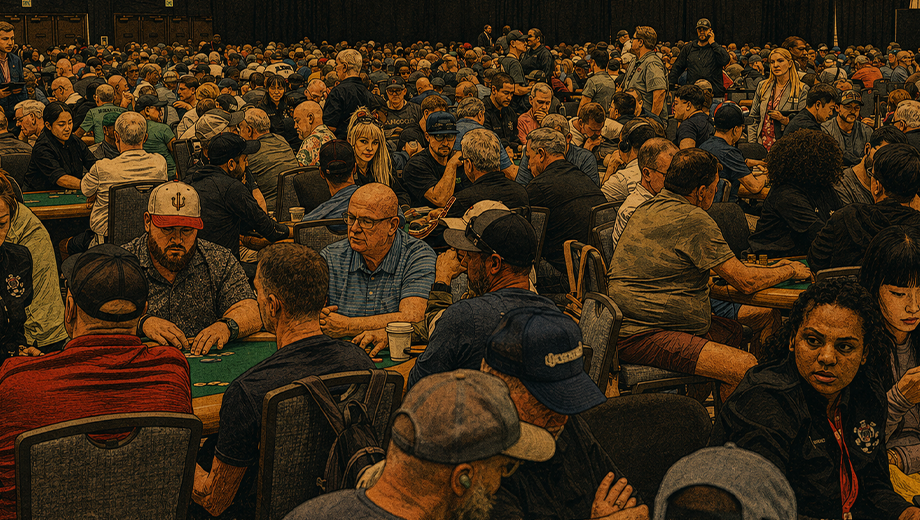
Your Schedule Isn’t Your Own Anymore
At home I wake up at 6 or 7am. On the road, I run on poker hours — bed around 6am, up in the afternoon, moving on tournament time instead of real time. That shift changes what you eat, when you eat it, and how much you’re willing to pay for it, because 24-hour room service and late-night casino food aren’t cheap, and they’re often your only real option at 3am.
Budget for that reality instead of fighting it. You’re not going to keep a normal schedule during a WSOP run, so don’t build a budget that assumes you will.

Where the Real Costs Hide
Lodging
Vegas hotel pricing during the summer isn’t the same as Vegas hotel pricing the rest of the year. If you’re staying multiple weeks, look at rates for the whole stretch before you book night by night — a longer commitment often prices better than stacking short reservations, and it keeps you from getting surprised by a rate hike mid-series.
Food
Between long tournament days and odd hours, food adds up fast. I like a good meal — steak, pasta, seafood — but during a grind, that’s not always realistic. Budget for a mix: a few real meals a week, and something faster and cheaper for the rest, instead of assuming you’ll eat like it’s a vacation.
Downtime
Between hands and between levels, I use my downtime to meditate — or nap, if I’m honest — and to watch something on my iPad to rest my mind. None of that costs money. But plenty of players fill that same downtime with the pit, and that’s where a controlled Vegas trip turns into an uncontrolled one.

The Gym Isn’t Optional
I try to get to the gym before I play whenever I can. It’s not about looking a certain way. Long tournament days wear on your body, and staying somewhat physical helps you think clearly in hour ten of a session as much as hour one. Factor a gym or basic workout routine into your daily plan the same way you’d factor in a meal — it’s part of playing well, not an extra.

The Real Risk: The Pit
Casinos are built to make idle time expensive. The same 24-hour access that makes it easy to grab food at 3am makes it just as easy to sit down at a blackjack table you never planned on playing. That’s not a moral lecture — it’s just math. Every dollar that goes into the pit is a dollar that isn’t backing your next tournament entry, and pit games are built to take your money a lot faster than poker is.
If you know that about yourself going in, you can plan around it — set a number for “extra” gambling before you arrive, separate from your tournament bankroll, and treat it as already spent the moment you land.

What I’d Tell Someone Doing Their First Vegas Summer
Budget your lodging for the full length of your stay, not night by night. Expect to eat on tournament hours, not normal ones. Build in a workout routine like it’s part of the schedule, because it is. And separate any “fun money” for the pit from your actual poker bankroll before you ever walk through the doors — because once you’re in the building, that line gets a lot blurrier than it looks from home.
The WSOP Schedule will tell you when to show up and what it costs to play. Nobody tells you what it costs to just be there for a month. Now you know.
Frequently Asked Questions
What costs do WSOP players usually underestimate in Vegas?
Lodging across a multi-week stay, food during odd tournament hours, and casual pit gambling during downtime are the most commonly underestimated costs beyond the tournament buy-ins themselves.
What does Chris Moneymaker do during downtime at a poker tournament?
He uses breaks to meditate or nap and watches something on his iPad to rest his mind between hands and levels.
Does Chris Moneymaker follow a normal sleep schedule during tournaments?
No. On the road he runs on poker hours, typically going to bed around 6am, which is different from his at-home routine of waking up at 6 or 7am.
Why does Chris Moneymaker prioritize the gym during tournaments?
He tries to get to the gym before playing because staying physical helps him think clearly through long tournament days, not for appearance-related reasons.
How can players avoid overspending on casino games while in Vegas for a tournament series?
Setting a separate, fixed amount for casual gambling before arriving, apart from the tournament bankroll, helps prevent downtime spending from eating into money meant for tournament buy-ins.