

When I showed up to Binion’s Horseshoe in 2003, I had no idea what I was walking into. Not just the poker — the logistics. Players were tracked on a whiteboard with a magic marker. There was no app, no digital check-in, no livestream telling you what was happening at the other tables. You found your seat assignment on a piece of paper and you sat down.
That was 2003. The WSOP has changed significantly since then — more events, more players, more structure around how registration actually works. If you’re thinking about playing for the first time, here’s what you need to know before you get there.

Start With the WSOP Schedule
Before anything else, you need to look at the WSOP Schedule. The World Series of Poker runs dozens of events across several weeks every summer, and not all of them are the $10,000 Main Event. There are events at various buy-in levels — some starting under $1,000 — so your first decision is which event or events you actually want to play.
The schedule lists buy-ins, starting dates, starting times, and event formats. Some events have multiple starting flights, which means you can choose which day you begin Day 1. The Main Event itself typically has multiple Day 1 flights across several days before the field combines. That matters for planning your travel.
Read the schedule carefully before you book anything. Events sell out. Popular lower buy-in events especially fill up fast and registration closes once the field is capped.
How Registration Actually Works
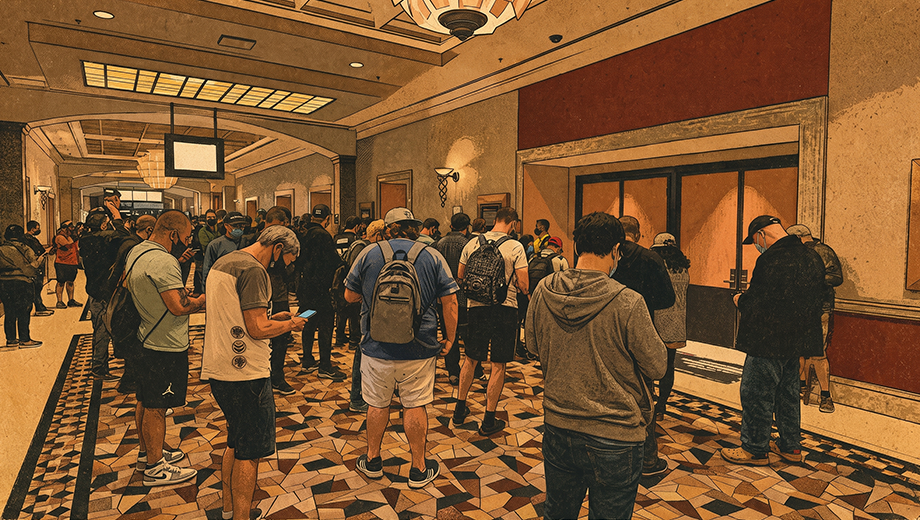
You register at the WSOP cage — the cashier area inside the venue. For most events, you can register in person at the cage before the event starts, or in some cases online in advance through the WSOP website. The process for online pre-registration has expanded over the years, but in-person registration at the cage remains the primary method for most players.
What you’ll need: valid government-issued photo ID. That’s the main thing. You pay your buy-in at the cage, receive your seat assignment, and that’s it. You’re in. No complicated process. No poker experience requirement. No qualification necessary — for most events you just show up with the buy-in amount and register.
The Main Event works the same way. The $10,000 buy-in goes to the cage. You get a seat card. You find your table and sit down. I did it for the first time in 2003 after qualifying online. The registration process itself wasn’t the hard part. Finding out which table Dan Harrington was sitting at — that was the surprise.

What Qualifying Online Looks Like
You don’t have to pay the full buy-in directly. Satellites exist specifically to let players win their way into bigger events for a fraction of the cost. I qualified for the 2003 Main Event through an $86 satellite on PokerStars. That satellite led to a $615 qualifier with 69 players, which awarded three Main Event seats. I won one of those seats and played the $10,000 Main Event without paying $10,000 directly.
That model still exists today. Online satellites run year-round on various platforms, including ACR, where you can qualify into WSOP events at a significant discount on the buy-in. The concept is identical to what I did in 2003 — small buy-in, win a seat, show up with that seat instead of cash.
One thing worth knowing: in 2003, seats were non-transferable. If you won a seat, you had to use it yourself. You couldn’t sell it. I actually tried to negotiate my way out of playing and take the cash equivalent — fourth place in my qualifying tournament paid $8,000. My friend talked me out of it. Those rules may vary by event and platform, so always check the specific satellite terms before you enter.
On the Ground: What to Expect at the Venue
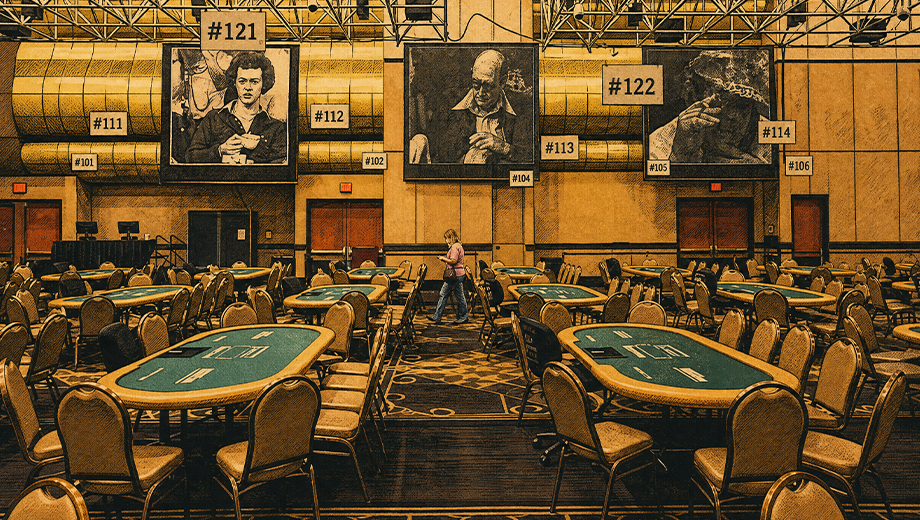
The WSOP has been held at various Las Vegas venues over the years. The scale is significant — thousands of players, dozens of tables, multiple rooms running simultaneously. For a first-time player, it can feel overwhelming before you sit down. Once you’re at the table, it’s just poker.
Arrive early on Day 1. Registration lines can back up, especially for popular events close to the start time. Give yourself time to find the cage, register if you haven’t pre-registered, find your table, and get settled before the first hand is dealt. The last thing you want on your first day is to miss the first level because you were standing in line.
Bring cash or verify in advance what payment methods the cage accepts. Most major venues accept multiple forms of payment for buy-ins, but cash is always straightforward. Don’t assume anything — confirm before you show up.

The Part Nobody Tells You
The registration process is the easy part. What most new players don’t think about before their first WSOP event is everything else: where you’re staying, how far the hotel is from the venue, what you’re eating during twelve-hour days, how you’re handling the time pressure when you’re in a hand.
Day 1 of any WSOP event is long. Levels run for set time periods, breaks are scheduled but the days still stretch late. If you’re not used to playing for that duration, it will feel different from your home game or local tournament. The logistics around actually playing — stamina, food, focus — matter more than most new players expect.
I went back to work the Monday morning after winning $2,500,000 in 2003. The tournament finished, I flew home, and I was at my desk. That’s how compartmentalized the whole experience felt at the time — because the actual process of registering and playing wasn’t mystified for me. I just showed up, found my seat, and played. That’s all it is. The mystique is mostly in the name.
Frequently Asked Questions
How do you register for the WSOP Main Event?
You register at the WSOP cage — the cashier area at the venue. Bring valid government-issued photo ID and your buy-in. Pay the $10,000 buy-in, receive your seat assignment, and you’re in. Online pre-registration has become available for some events, but in-person cage registration remains the standard method for most players.
Do you need to qualify to play in the WSOP Main Event?
No. Anyone can register directly by paying the $10,000 buy-in at the cage. There is no qualification requirement for direct entry. Satellites exist as an alternative path — you can win a seat through an online or live satellite for a fraction of the buy-in — but they are optional, not required.
What is a satellite and how does it work for the WSOP?
A satellite is a smaller tournament where the prize is a seat — or seats — in a larger event rather than cash. Chris Moneymaker qualified for the 2003 WSOP Main Event through an $86 satellite that led to a $615 qualifier awarding three Main Event seats. Online satellites run year-round on platforms like ACR, allowing players to win Main Event seats for a fraction of the $10,000 buy-in.
How many events are at the WSOP and what are the buy-ins?
The WSOP runs dozens of events across several weeks each summer, with buy-ins ranging from under $1,000 to the $10,000 Main Event and higher for select high roller events. The full schedule is published on the WSOP website and lists buy-ins, formats, dates, and starting times for every event.
Can WSOP events sell out?
Yes. Popular lower buy-in events in particular can fill their field cap before the start time. Registration closes once the cap is reached. If you’re planning to play a specific event, check whether it has a field limit and register early to avoid being shut out.
What should a first-time WSOP player bring to the venue?
Valid government-issued photo ID is required for registration. Beyond that: your buy-in (cash or an approved payment method — confirm with the venue in advance), comfortable clothing for a long day, and realistic expectations about the duration. WSOP event days run twelve hours or more. Plan your logistics — hotel, food, transportation — before you arrive.