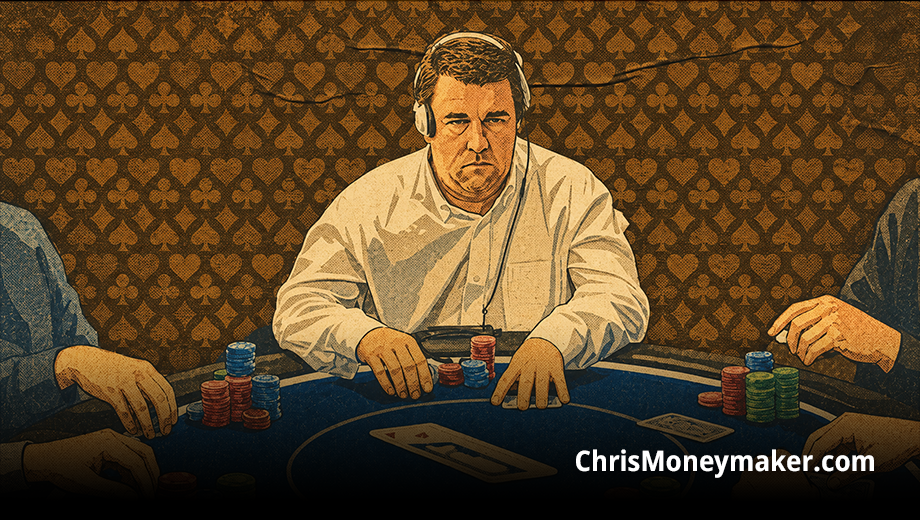

Nobody handed me a guide when I walked into Binion’s Horseshoe in 2003. I showed up with $86 worth of online satellite luck, a week off work, and roughly zero understanding of what I was walking into. I thought I’d be gone by the end of Day 1. I wasn’t. But I also made plenty of mistakes along the way that had nothing to do with poker — and everything to do with not knowing how the WSOP actually works.
If you’re playing the WSOP for the first time, here’s what I’d tell you. Not strategy — you can find strategy anywhere. This is the stuff nobody thinks to mention until you’re already there.
The Field Is Bigger Than You Think It Will Feel
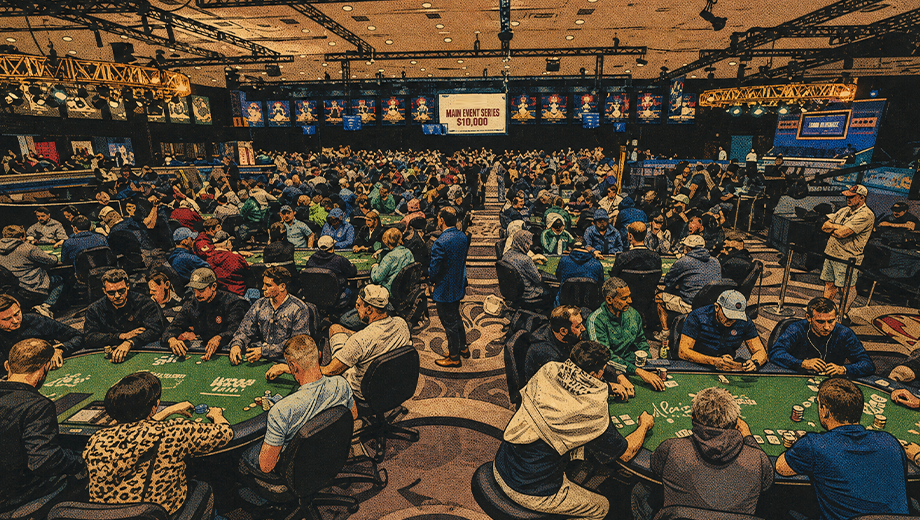
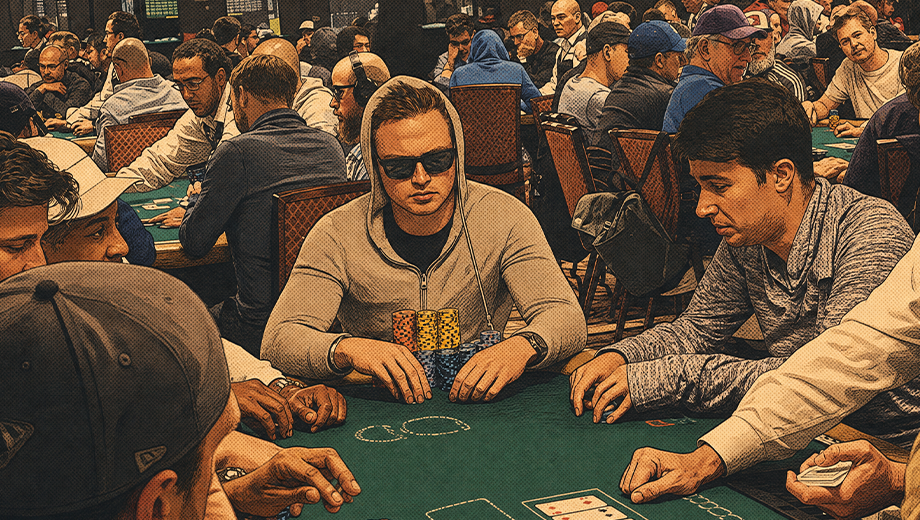
839 players were in the 2003 Main Event. That number has grown significantly since then — the Main Event has drawn over 10,000 players in recent years. When you walk in on Day 1, the room feels chaotic. Tables everywhere. Noise. People you don’t recognize. It’s overwhelming for about twenty minutes, and then it’s just poker.
The size of the field works in your favor early. When 8,000 or 10,000 people are playing, the math protects you on Day 1. You don’t need to make moves. You don’t need to manufacture action. You just need to survive and accumulate. The field thins on its own. Let it.
Day 1 Is Not When the Tournament Is Won
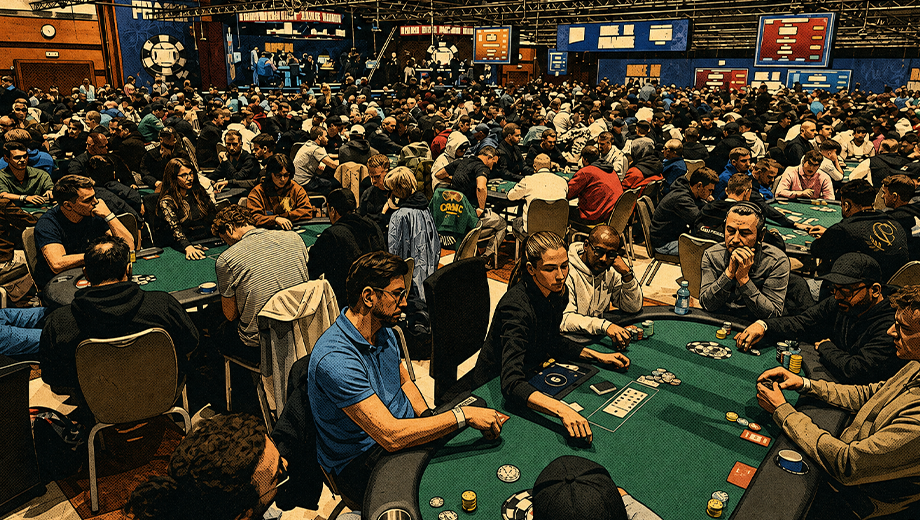
I’ve never won a tournament on Day 1. Nobody has. Day 1 is about getting to Day 2 with above-average chips. That’s it. The goal isn’t to double up. The goal isn’t to be the chip leader. The goal is to bag a healthy stack, go get some sleep, and come back when the field has thinned enough that the reads start to matter.
The biggest mistake first-timers make is playing Day 1 like it’s the final table. They force action, chase pots they don’t need, take unnecessary risks because they’re excited to be there. That energy is real and understandable. It’s also how you bust before dinner. Slow down. Fold a lot. Watch the table. The tournament doesn’t actually start until Day 2.
You Won’t Recognize Most of the Famous Players
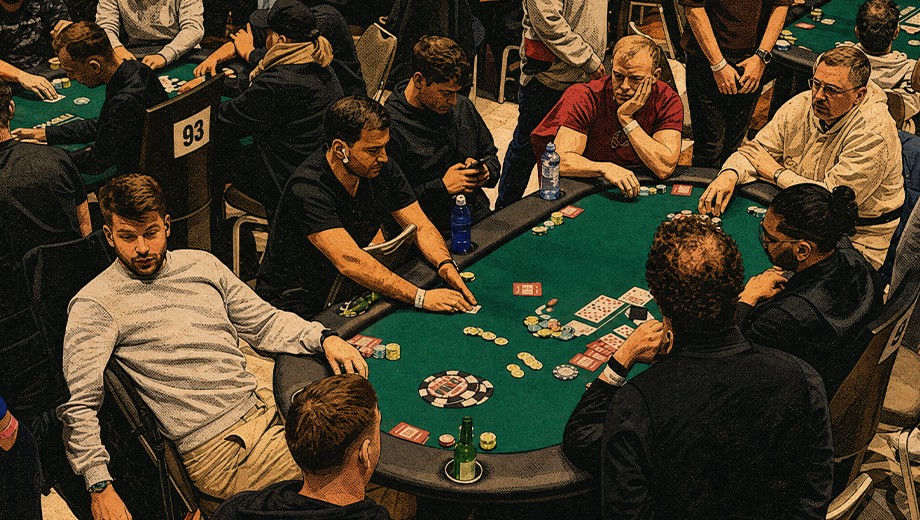
I walked into the 2003 Main Event knowing three player names: Phil Hellmuth, Doyle Brunson, and Johnny Chan. I sat down next to Dan Harrington on Day 1 — a former champion — and didn’t know who he was until I checked the wall of champions. Phil Ivey was in the field. I saw a young guy with chips. That was it.
This is actually useful information. Most of the scary names at a WSOP table are only scary if you know who they are. If you don’t, you just play them like anyone else — watch their patterns, figure out how they bet, and look for spots. The reputation doesn’t matter at the table. The chips do.
What does matter: the players you haven’t heard of. The unknown grinder who’s been playing small stakes for ten years and qualified for $500. The online player with 500,000 hands logged. Those are the people worth paying attention to, because they have patterns — and patterns are exploitable once you know them.

Vegas Will Try to Drain You Before the Cards Do
This one isn’t about poker at all. It’s about survival.
The WSOP is in Las Vegas. Las Vegas is specifically designed to keep you up late, eat badly, drink too much, and make decisions you wouldn’t make at home. Tournament poker requires focus, patience, and emotional control across very long days. You cannot play well when you’re exhausted, hungover, or running on casino food and four hours of sleep.
Go to bed at a reasonable hour the night before a playing day. Eat something real before you sit down. Drink water at the table, not alcohol. These things sound obvious. They’re not obvious when you’re in a city that makes it very easy to do the opposite. I’ve seen players bust out of tournaments they should have gone deep in because Vegas got to them before the poker did.
The Structure Is Your Friend — If You Use It
The WSOP Main Event has a player-friendly structure compared to most tournaments. The levels are long. The starting stacks are deep relative to the blinds. You have time. More time than almost any other tournament you’ll play in a year.
Use it. Don’t rush. The deep structure is specifically designed to reward patience and punish recklessness. Players who treat the Main Event like a turbo tournament — making decisions quickly, gambling early, trying to accumulate fast — are fighting the structure instead of working with it. The slow build is the right build. That’s how the tournament is designed. Trust it.
You’re Allowed to Be There
I walked in as the worst player in the field. I knew that. I didn’t try to pretend otherwise. What I did was fold and watch and pay attention and wait for spots — and it turned out that was enough to get to Day 2, and then Day 3, and eventually all the way through.
The WSOP Main Event has been won by an accountant who qualified for $86 online. It’s been won by people who had never played at that level before. The field is large enough and the structure is slow enough that preparation, patience, and a little run-good can take anyone deep. You don’t need to be the best player in the room. You need to be better than average often enough, at the right times, to survive.
That’s a lower bar than most first-timers think. Don’t raise it by psyching yourself out before you sit down.
Check the WSOP Schedule if you’re figuring out which events to enter. There are events at every buy-in level — you don’t have to start with the Main Event to get a feel for the room and the structure before the big one.
Frequently Asked Questions
What should a first-time WSOP player know before they go?
First-time WSOP players should know that Day 1 is about survival and chip accumulation, not big moves. The field is large and chaotic at first but settles quickly. Focus on watching your table before playing hands, manage your sleep and food in Las Vegas, and use the deep structure to your advantage by playing patiently rather than forcing action.
How many players are in the WSOP Main Event?
The WSOP Main Event field has grown dramatically since 2003, when 839 players entered and Chris Moneymaker won. In recent years the Main Event has drawn over 10,000 players, with prize pools exceeding $12 million. The large field means Day 1 survival is the primary goal — the math works in your favor when thousands of players are still in the tournament.
What is the WSOP Main Event buy-in?
The WSOP Main Event buy-in is $10,000. Players can qualify directly or through satellite tournaments — Chris Moneymaker famously qualified in 2003 through an $86 online satellite, winning the Main Event and $2,500,000. Satellites at various buy-in levels run throughout the WSOP series leading up to the Main Event.
How long does the WSOP Main Event last?
The WSOP Main Event runs across multiple days — Day 1 through Day 2 thin the field significantly, with later days reducing it to hundreds, then dozens, and finally the final table of nine players. The final table is typically played on a separate day weeks or months after the main tournament days conclude. Deep runs require sustained play across a week or more.
Can an amateur win the WSOP Main Event?
Yes. Chris Moneymaker won the 2003 WSOP Main Event as an amateur accountant who had never played at that level before, qualifying through an $86 online satellite. The large field, deep structure, and variance in tournament poker mean that well-prepared recreational players can and do make deep runs. Patience, observation, and emotional control matter as much as technical skill at the WSOP.
What are the biggest mistakes first-time WSOP players make?
The most common mistakes first-time WSOP players make include playing Day 1 too aggressively, neglecting sleep and nutrition in Las Vegas, trying to force action instead of letting the field thin naturally, and letting nerves push them into decisions they wouldn’t normally make. The deep structure rewards patience — fighting it by playing fast and loose is how most first-timers bust earlier than they should.