
I walked into Binion’s Horseshoe in May 2003 with $200 in my online account, three player names in my head, and zero live tournament experience at this level. I thought the satellite I’d entered was a cash sit-and-go. By the time I figured out what I’d actually qualified for, it was too late to back out — the seats weren’t transferable.
I won the tournament. Which means I am probably the least qualified person to give conventional advice about how to prepare for your first WSOP Main Event. And also maybe the most qualified person to tell you what actually matters.
Lower Your Expectations for Day 1
Day 1 is going to bore you. That’s not a warning — it’s a feature.
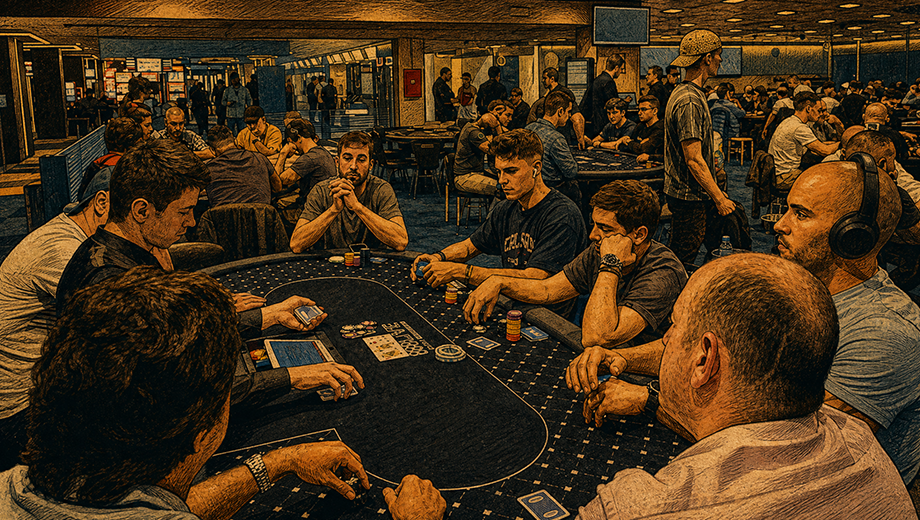
The stacks are deep, the blinds are tiny, and for the first several levels almost nothing consequential happens. Most first-timers either play too many hands trying to build a stack early, or they tighten up so much from nerves that they’re irrelevant. Both are mistakes.
The right frame for Day 1: you’re not there to win chips. You’re there to collect information. Every hand you fold is a free look at how your table plays. Watch who’s aggressive early, who’s waiting for premium hands, who gets frustrated after a bad beat, who’s splashing around with weak holdings. By the end of Day 1 you should know more about your table than most of the players sitting at it — just from watching.
That’s it. Survive Day 1 with a healthy stack and a full read on your table. Day 2 is when poker actually starts.

Three Things to Sort Out Before You Arrive
None of these are about poker strategy. They’re about not making your first WSOP harder than it needs to be.
First: sleep. The Main Event runs long days — sometimes 10 to 12 hours at the table. If you arrive jet-lagged or sleep-deprived, you’ll be making decisions in hour nine that you’d never make fresh. Get your sleep schedule sorted before you fly in.
Second: food. The venue food situation at the WSOP is what it is. Know where you’re going to eat before play starts and during breaks. Hunger and dehydration affect decision-making in ways most players underestimate. Bring snacks. Drink water. Not complicated.
Third: bankroll clarity. Know exactly what you’re prepared to lose before you register. The Main Event buy-in is $10,000. Most players don’t cash. That’s not a discouragement — it’s math. Go in clear-eyed about what the money means to you, and you’ll make better decisions at the table because you’re not playing scared.
What the Room Actually Looks Like
People imagine the WSOP Main Event as something cinematic. The reality is different.
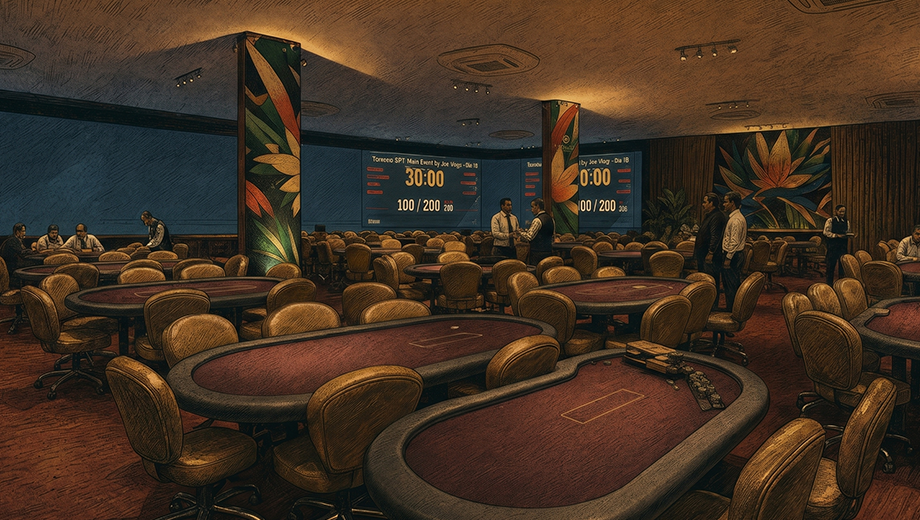
When I walked into Binion’s in 2003, the ceilings felt six feet tall. They’d pulled the slot machines out and replaced them with poker tables. Players were tracked on a whiteboard with a magic marker. It was cramped, loud, and smoke-stained. Nothing about it felt like a movie.
The modern Main Event is a different scale — thousands of players across multiple floors, cameras, commentary — but the table feels the same. Nine people, cards, chips. The noise and the cameras disappear within the first twenty minutes. After that it’s just poker.
Don’t spend the first level gawking. Get settled, find your rhythm, start watching.

On Famous Names at Your Table
You might draw a table with a recognizable name. Maybe someone you’ve watched on TV or followed online. Here’s what I’d tell you: reputation and danger are not the same thing.
I sat with Dan Harrington on Day 1 in 2003 and had no idea who he was until I checked the wall of champions. That turned out to be fine. I played him the same as anyone else — watched how he bet, picked my spots, folded when I needed to. Later in the tournament I eliminated Phil Ivey, who was generally considered the best player in the world at the time. I didn’t know that either.
The players who actually cost you chips at a first WSOP are usually the ones nobody warned you about. The unknown with a big stack who plays every pot. The patient recreational player who’s been waiting all day for one hand. Pay attention to what’s actually happening at your table, not to what you read about someone online.
The One Habit That Costs Nothing
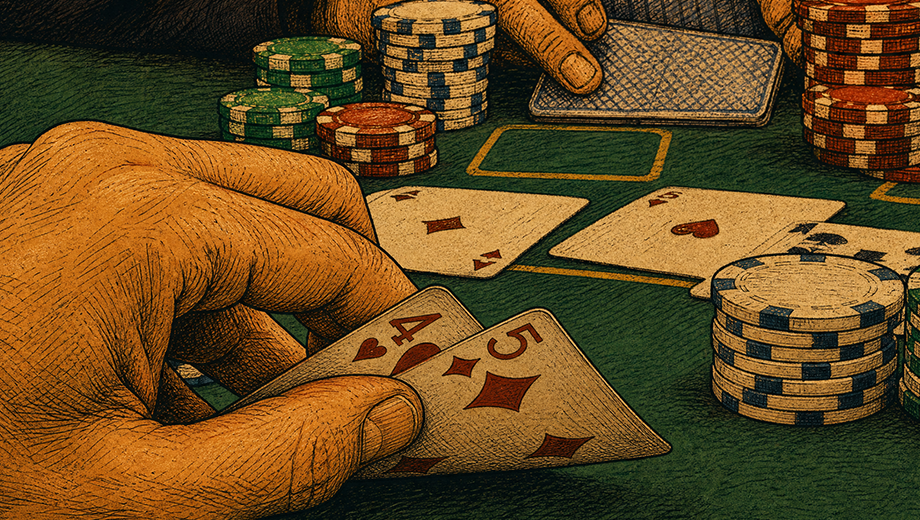
Every time you fold, watch the rest of the hand. Try to put the remaining players on cards based on how they’ve been playing. Check yourself at showdown.
Do this every hand, for every level, for the entire tournament.
It costs nothing. It takes no skill to start. And by Day 2, you’ll have a picture of your table that most players — including experienced ones — never develop, because they stop paying attention the moment their cards are gone.
It’s not rocket science. It’s simple observation. It was the most valuable thing I did in 2003, and I didn’t even do it on purpose.
The full structure sheets and Day 1 flight options for the Main Event are on the WSOP Schedule page — worth reading before you show up so you know exactly what you’re walking into.
| Before You Arrive | Day 1 Priority | What to Avoid |
|---|---|---|
| Sort sleep schedule | Observation — watch every hand you fold | Playing too many hands early |
| Plan food and hydration | Build reads on every player at your table | Getting intimidated by famous names |
| Be clear on your bankroll | Survive with a healthy stack | Forcing action in the first few levels |
| Review the structure sheets | Arrive at Day 2 with information | Treating Day 1 as the main event |
Day 1 is setup. Everything that matters happens after it.
Frequently Asked Questions
How do you prepare for the WSOP Main Event as a first-timer?
The most important preparation is practical: sort your sleep schedule before arriving, plan your food and hydration during play, and be clear on what the buy-in means to your bankroll. At the table, treat Day 1 as a data collection session — observe every hand you fold, build reads on your table, and survive with a healthy stack.
What is the WSOP Main Event buy-in?
The WSOP Main Event buy-in is $10,000. Players can enter directly or qualify through satellites — online or live — for significantly less. Chris Moneymaker famously qualified through an $86 online satellite on PokerStars in 2003 and went on to win the $2,500,000 first-place prize.
What should you focus on during Day 1 of the WSOP Main Event?
Day 1 is primarily about observation and survival. The stacks are deep and the blinds are small, so the priority is watching — every hand you fold is a free opportunity to read how your table plays. The goal is to arrive at Day 2 with a healthy chip stack and detailed reads on every player at your table.
How long does the WSOP Main Event last each day?
Main Event playing days typically run 10 to 12 hours. Physical and mental endurance matter — sleep deprivation, hunger, and dehydration all affect decision-making in the later levels of a long day. Arriving rested and having a food and hydration plan before play starts is more impactful than most players expect.
What mistakes do first-time WSOP players most often make?
The two most common Day 1 mistakes are playing too many hands trying to build an early stack, and tightening up so much from nerves that you become irrelevant. Both are driven by treating Day 1 as the main event rather than a setup phase. Getting intimidated by well-known players at your table is also common — reputation and actual danger at the table are different things.
Can an amateur win the WSOP Main Event?
Yes. Chris Moneymaker won the 2003 WSOP Main Event as an amateur accountant who had never played live poker at that level, qualifying through an $86 online satellite. The tournament’s structure — deep stacks, multi-day format, large fields — creates genuine opportunities for recreational players who play patiently and observationally, especially in the early levels.