
An 18-year-old kid today can have more experience than Doyle Brunson got in his entire life — in six months. That’s not an exaggeration. That’s just what online volume does. The player sitting across from me at the WSOP Main Event in 2025 has run through more hand histories, more solver outputs, more training content than anyone in 2003 could have imagined. And they play like it.
The question isn’t whether the game has changed. It has. The question is what you actually do about it when you’re sitting across from someone who’s been studying 40 hours a week since they were a teenager.
Here’s what I’ve figured out. Some of it’s counterintuitive. None of it involves memorizing charts.
Understand What You’re Actually Up Against
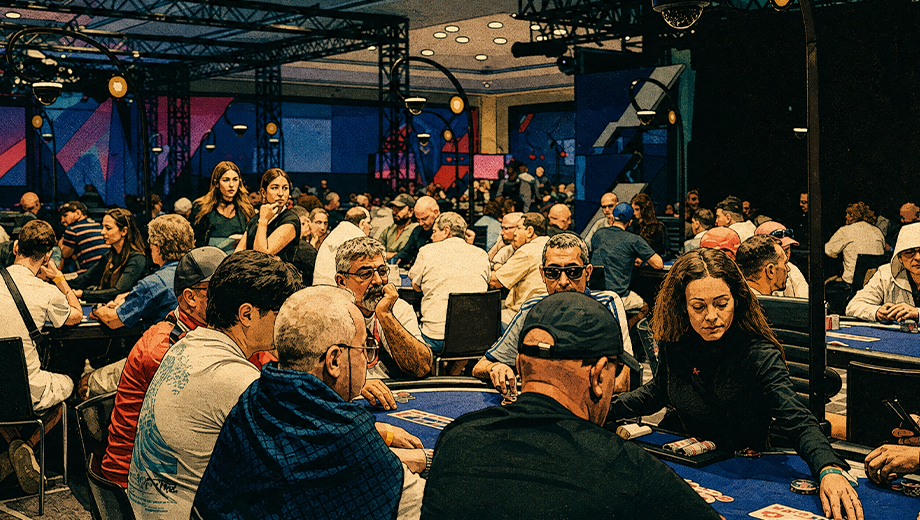
The modern aggressive player — the young online-trained pro — has a specific profile. They three-bet wide. They barrel multiple streets. They’re comfortable applying pressure in spots most recreational players and older pros find uncomfortable. They don’t blink at big bets. They’ve seen every sizing, every runout, every spot a thousand times in a training environment.
What they’re sometimes less comfortable with is genuine unpredictability. Not randomness — unpredictability. There’s a difference. Randomness is spewing chips with no logic. Unpredictability is making decisions they can’t model because your line doesn’t fit a standard pattern.
Against very good players, I play pure — trying to make theoretically sound decisions. But against the general WSOP tournament field, I often go the other direction entirely. Super aggressive, high-variance, hard to read. The goal is to be a problem they haven’t trained a solution for.
The First Adjustment: Stop Giving Them Easy Decisions
Aggressive modern players are comfortable in high-frequency spots. They’ve played them thousands of times. Three-bet pot, continuation bet, check-raise — these are familiar. They have ranges for all of it. They have responses trained.
What creates discomfort is when the spot doesn’t fit a category. The weird sizing. The unexpected passive line followed by a big raise. The call where everyone expects a fold. The lead into the preflop raiser from out of position on a board that doesn’t obviously favor your range.
None of these lines are inherently good. What makes them useful is that they force the opponent into decision trees they’ve visited less often. Less repetition means less certainty. Less certainty means more mistakes.
I’m not advocating for playing bad poker. I’m saying that against a player with a big theoretical edge, reducing the number of textbook spots — and replacing them with uncharted territory — changes the dynamic in your favor.
The Second Adjustment: Use Their Aggression Against Them
Aggressive players are profitable partly because they put pressure on people who can’t handle it. Fold too much and you’re giving them chips. Call too wide and you’re spewing into their value range. The standard response — trying to find the right call/fold frequency — plays right into their hands because they’ve optimized for that.
A different response: let them build the pot, then take it away. Not always. Not on a schedule. But selectively — in spots where their aggressive line is more likely to be a bluff or a semi-bluff, in spots where a check-raise or a cold call followed by a lead makes their range uncomfortable.
The key is reading fear. Most players, even aggressive ones, have a zone where they’re confident and a zone where they’re not. The confident zone is their trained spots — three-bet pots, late-position steals, standard continuation bets. The less confident zone is usually when the pot gets genuinely big and they’re not certain where they stand in their range.
That’s where I want to be. Not fighting them in their preferred spots. Finding the edges of their comfort zone and applying pressure there.
The Third Adjustment: Day 1 Is Research, Not Combat
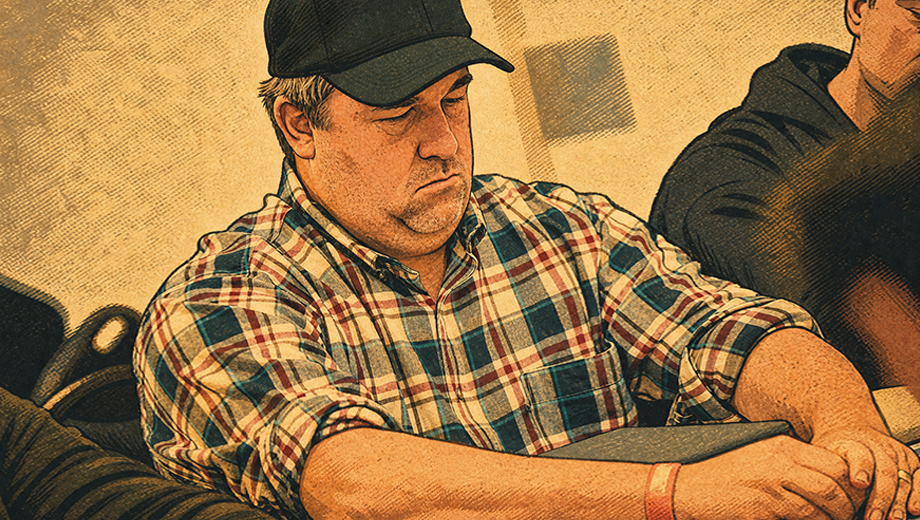
This is the one most people skip. Day 1 of the WSOP Main Event bores me in terms of playing. But it’s not wasted time. Every hand I fold, I watch. I try to figure out what everyone is holding before the showdown. When cards go face up, I check how close I was.
By the end of Day 1, I know things about the aggressive player at my table that they haven’t consciously shared. I know which bet sizes they use for value versus protection. I know whether their aggression is position-dependent or not. I know whether they slow down on the river when called twice or keep firing.
Against a player with more theoretical knowledge than me, information is the equalizer. The solver tells them what the range should do. It doesn’t tell them what this specific person at this specific table actually does. That’s what observation gives you — and it’s not in any training course.
What Doesn’t Work
Two adjustments I’ve seen fail consistently against aggressive modern players:
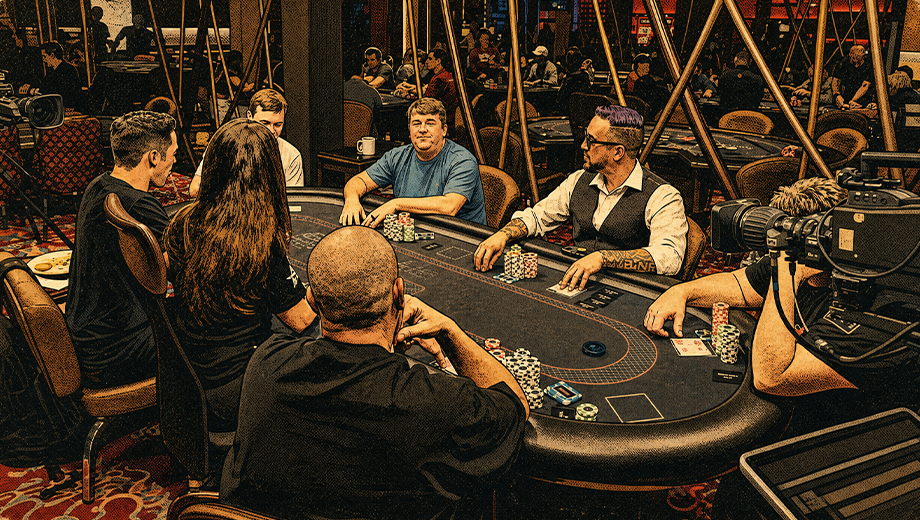
The first is trying to outplay them in their own game. If someone has 50,000 hands of experience in three-bet pots and you have 5,000, don’t make three-bet pots your battleground. You will lose more often than you win. Pick different terrain.
The second is going on tilt when they run a big bluff. It happens. They’re going to fire three streets at you sometimes and be wrong. The temptation is to adjust — start calling down wider, looking for the bluff. That adjustment usually comes at exactly the wrong time, right when they’ve switched back to value betting. Short memory. Next hand. Move on.
Poker is about controlling your emotions and how those emotions affect your decisions. That’s true against any player. Against an aggressive player who knows how to apply psychological pressure, it’s doubly true.
How the Modern WSOP Field Has Shifted
For context — here’s how the Main Event field has grown, and what that means for the player makeup you’re walking into today.
| Year | Entries | First Place Prize |
|---|---|---|
| 2003 | 839 | $2,500,000 |
| 2006 | 8,773 | $12,000,000 |
| 2010 | 7,319 | $8,944,310 |
| 2019 | 8,569 | $10,000,000 |
| 2022 | 8,663 | $10,000,000 |
| 2023 | 10,043 | $12,100,000 |
More players means more variety — recreational players, first-timers, online grinders, live veterans. The aggressive modern pro is one type in a large field. Finding them early and building a profile is worth the patience it takes on Day 1.
The Honest Version
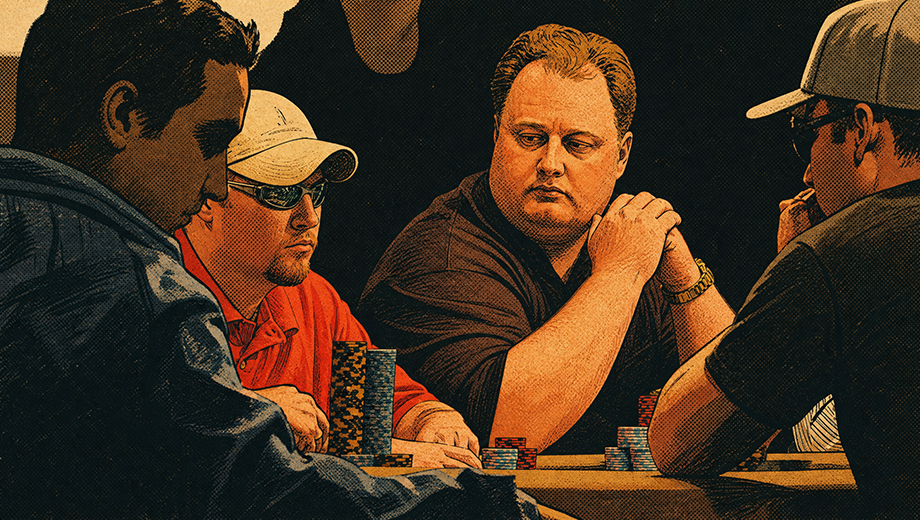
Between 2005 and 2015 I didn’t study a single hand of poker. There was just too much else going on. The game passed me by in certain ways during that decade. When I came back to studying seriously, I had to confront the fact that the field had evolved and I hadn’t kept pace.
What I found is that the adjustments above aren’t really about poker theory. They’re about knowing yourself, knowing your opponent, and being honest about where the edge actually is. Against a player who’s better than me in pure theory, the edge isn’t going to come from out-theorizing them. It comes from unpredictability, patience, and reading the specific person — not the abstract range.
That part of the game hasn’t changed since 2003. The rest of it has.
If you want to work on your live reads and table presence before the Main Event, the Moneymaker Tour stops give you exactly that kind of real tournament environment — without the $10,000 buy-in.
Frequently Asked Questions
How has the WSOP Main Event field changed in terms of player aggression?
The modern field contains far more online-trained players who study extensively and play high-frequency aggressive strategies. An 18-year-old today can accumulate more hand experience in six months than players from previous generations got in entire careers. The result is a field with much wider three-betting, more multi-street bluffs, and comfort with large bet sizings.
What is Moneymaker’s main adjustment against aggressive modern poker players?
Unpredictability over theoretically correct responses. Against players with a big theoretical edge, he avoids standard spots where their training gives them an advantage, and instead creates uncharted decision trees — unusual sizings, unexpected passive lines followed by big raises, spots that don’t fit a textbook pattern. The goal is reducing their comfort zone, not out-theorizing them.
How does Moneymaker use Day 1 of the WSOP to prepare against strong players?
He treats Day 1 as observation, not combat. Every hand he folds, he watches and tries to identify each player’s cards before showdown. By the end of Day 1 he has a read on which bet sizes signal value versus protection, whether aggression is position-dependent, and how players respond when called multiple times. That information doesn’t come from training software — it comes from watching the specific person.
What adjustments don’t work against aggressive modern WSOP players?
Two things consistently fail: trying to beat them in their own game by engaging in the high-frequency spots they’ve trained thousands of hours in, and going on tilt after a big bluff and overcorrecting by calling down too wide. Both play into the aggressive player’s strengths. Picking different terrain and maintaining emotional control are more effective responses.
How does Chris Moneymaker approach playing against better players at the WSOP?
He’s honest about where the edge actually is. Against a player with a significant theoretical advantage, the edge doesn’t come from out-theorizing them — it comes from unpredictability, patience, and reading the specific person at the table rather than their abstract range. He admitted publicly that he didn’t study poker for nearly ten years and had to adapt when he returned to serious play.
Why does Moneymaker prefer unpredictable play against trained modern players?
Trained players have optimized responses for standard situations. Unpredictability forces them into decision trees they’ve visited less often — less repetition means less certainty, and less certainty leads to mistakes. This is different from random play, which is just spewing chips. Deliberate unpredictability means making non-standard moves with logic behind them, in spots where their training gives them less of an edge.