
If you’ve watched enough poker, you know that confidence can be a funny thing.
One day you’re stacking chips, making deep runs, and feeling like you’ve got every decision figured out. The next day, you’re firing bullets, busting tournaments, and wondering if the poker gods even remember your name.
This vlog was one of those days.
In fact, I joked early on that I didn’t feel like Chris Moneymaker. I felt more like Chris Moneyloser.
The frustrating part wasn’t that I felt like I was playing badly. Quite the opposite. I thought I was making good decisions. The cards just weren’t cooperating.
That’s poker.
The Monster Stack Strikes Again
The day started with another shot in the WSOP Monster Stack.
My first bullet ended in brutal fashion after running Ace-King into Ace-Queen and somehow finding a way to lose a hand that should have doubled me up. If you’ve played tournament poker long enough, you know those are the ones that stick with you.
You replay them in your head.
You know you got the money in good.
You know you’d make the same play every time.
And yet you’re walking to the registration desk again.
So it was time for bullet number two.
Table Draws and Friendly Abuse
One thing about the World Series of Poker is that no matter how bad you’re running, your friends won’t let you feel sorry for yourself for very long.
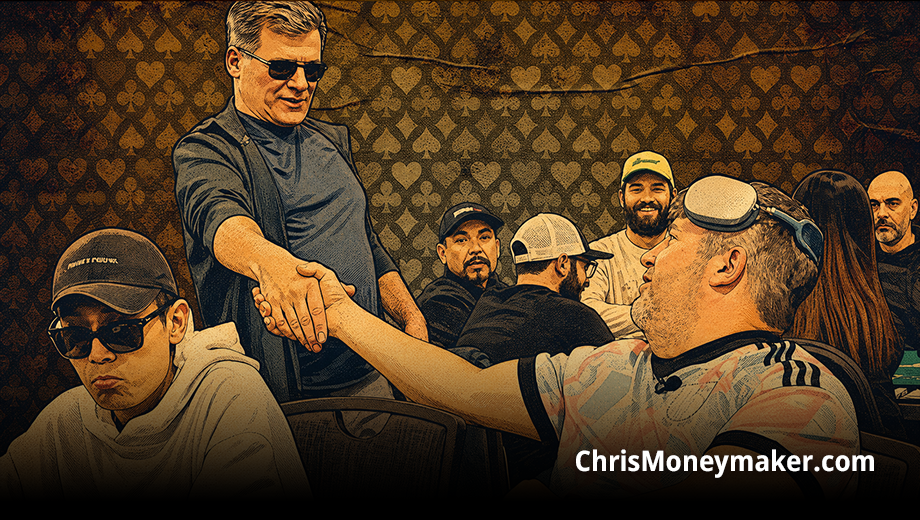
I ended up at a table with several familiar faces, including fellow ACR Pro Chris “Moneymaker Number Two” Morman.
The table conversation quickly turned into a roast session, mostly directed at me.
Honestly, that’s one of the things I love about the WSOP.
When things aren’t going your way, having people around who can laugh with you—and occasionally at you—helps keep things in perspective.
Unfortunately, Morman didn’t stop at the trash talk.
He eventually busted me.
I’m still considering whether I can forgive him.
Knowing When Not to Play Bigger
After another early exit, I had a decision to make.
There was a $25,000 No Limit Hold’em event starting.
There was also a $1,500 Pot-Limit Omaha Eight-or-Better tournament.
Normally, the bigger buy-in might be tempting.
But one of the hardest lessons in poker is understanding where your head is at mentally.
When you’re running poorly, confidence matters.
That doesn’t mean you’re playing worse. It just means you’re fighting an uphill battle emotionally.
I looked at the field in the $25K and realized it was absolutely loaded.
Meanwhile, the PLO8 tournament offered a softer field and a game I genuinely enjoy playing.
So I swallowed my ego and registered for the smaller event.
Sometimes the smartest poker decision isn’t the most glamorous one.
Back to the Omaha Streets
The PLO8 event turned into exactly what Pot-Limit Omaha tournaments usually become: controlled chaos.
One minute you’re nearly busted.
The next minute you’re scooping a pot and back in contention.
A few hands later you’re wondering how you survived at all.
At one point I folded a big hand that turned out to save my tournament life. Later I made the nuts and doubled up.
That’s Omaha.
You can go from drawing dead to feeling invincible in the span of a few minutes.
The game keeps you humble.
The People Make the WSOP Special
One thing I’ve enjoyed most about filming these vlogs is capturing the interactions that happen away from the felt.
Throughout the day I ran into fans, friends, fellow pros, and poker legends.
I caught up with Allan “Chainsaw” Kessler, who has spent decades fighting for players and speaking up when he sees something wrong in poker.
I met fans who told me they started playing poker because of my 2003 WSOP win.
I took photos.
Shook hands.
Shared stories.
And despite getting kicked around by variance all week, moments like those remind me how lucky I’ve been.
Twenty-three years later, people still stop me in the hallway to tell me they watched that Main Event.
That’s something I’ll never take for granted.
A Reality Check About Tournament Poker
Toward the end of the vlog, I talked about something that every tournament player eventually experiences.
Losing stretches happen.
A lot.
The public usually sees the final tables, trophies, and winner photos.
They don’t see the dozens of tournaments that end with a busted stack and a walk back to the parking lot.
Sean Deeb mentioned he’d played dozens of events without a score.
That’s not unusual.
Even the best players in the world go through stretches where nothing seems to work.
Poker isn’t a game where you win every week.
Sometimes you don’t win for months.
The key is continuing to make good decisions and trusting the process.
Looking Ahead
The good news?
Tomorrow is another day.
Another tournament.
Another chance to turn things around.
The cards don’t care what happened yesterday.
They don’t care what happened this morning.
And they definitely don’t care how tilted you are.
So we’ll show up, register again, put the chips in the middle, and see what happens.
Because that’s tournament poker.
And whether I’m Chris Moneymaker or Chris Moneyloser for the day, I’m not done firing yet.