
One of the things I love about the World Series of Poker is that no two days are ever the same.
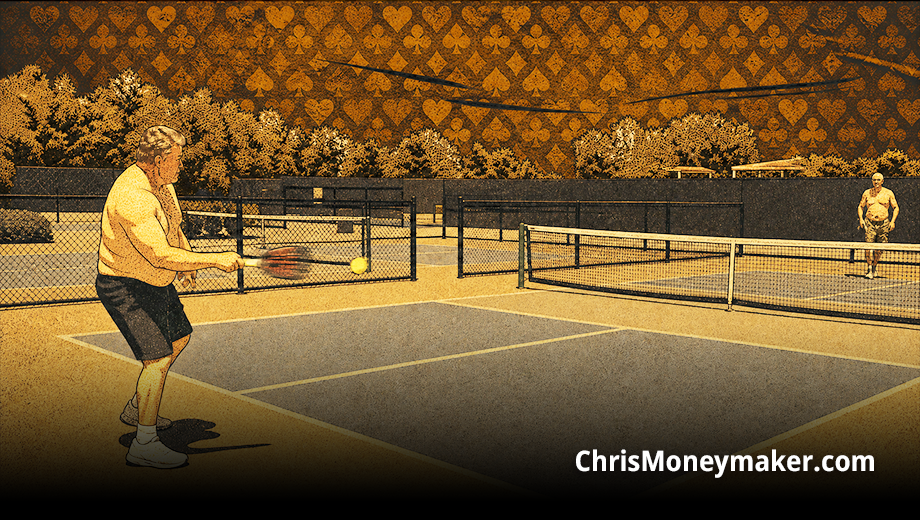
Some mornings start with coffee and studying a game I barely know. Others start with a little competition on the pickleball court.
This day happened to start with pickleball.
There’s something about getting outside, moving around, and talking a little trash before heading into the Horseshoe that helps clear my head. I wouldn’t call myself a pickleball champion, despite what some people around me might claim, but it was a fun way to start the day before jumping into one of the more unique events on the WSOP schedule.
The tournament on deck was the $10,000 Deuce-to-Seven Single Draw Championship.
Now, if you’ve watched my recent vlogs, you’ll know that this isn’t exactly the game I’ve spent my entire career mastering. The good news is that I’d already played it recently, so unlike last time, I didn’t have to spend the morning frantically researching the rules.
At least I knew what I was doing this time.
Or so I thought.
Early on, things couldn’t have gone much better. I kept finding myself on the right side of coolers. In one big hand, I made a seven while my opponent made an eight. In Deuce-to-Seven, that’s about as good as it gets.
When you’re making sevens and your opponents are making eights, life is pretty good.
At one point I joked that if I kept running like that for the rest of the tournament, I was going to win the whole thing.
Poker has a funny way of humbling you after thoughts like that.
One of the highlights of the day was sharing a table with some absolute legends. At various points I found myself surrounded by players like Jesse Lonis, Phil Hellmuth, Gus Hansen, Nick Schulman, Scott Seiver, and others.
One of the best things about the WSOP is that you’ll often find yourself playing a game you’ve only recently learned while sitting next to players who have spent years mastering it.
That’s both exciting and terrifying.
For a while, everything was clicking. I built a healthy stack, survived table changes, and felt comfortable navigating situations that would have looked completely foreign to me just a short time ago.
Then came the swing.
I lost a massive pot where I stood pat with a ten and watched my opponent draw into a better hand. Just like that, a stack that had me feeling comfortable suddenly became one of the shorter stacks in the room.
That’s tournament poker.
One hand can change everything.
From there, it became survival mode. Every small pot mattered. Every orbit mattered. Every decision felt magnified as we approached the money bubble.
Eventually we got down to around 35 players, just a few spots away from cashing.
And then came the hand.
I picked up an 8-6, a very strong hand in this game. In a format where making a seven is incredibly difficult, an eight is usually a hand you’re more than happy to go to battle with.
Unfortunately, my opponent had one of those rare sevens.
That’s poker.
I busted just a few spots short of the money, marking my second bubble in only a few days.
Was I frustrated? Absolutely.
Nobody enjoys making a deep run only to leave empty-handed.
But here’s the thing: I was actually happy with how I played.
Sometimes you make mistakes and lose. Those are the ones that really sting.
Other times you make decisions you would make again and again, and your opponent simply has it. Those are easier to live with, even if the result isn’t what you wanted.
That’s where I found myself after this one.
Disappointed with the outcome, but comfortable with the process.
The WSOP is a marathon. Every event is another opportunity. Every day is another chance to learn something new, improve, and hopefully put yourself in position for a bracelet run.
This one didn’t end the way I wanted.
But tomorrow is another tournament.
And who knows?
Maybe I’ll start the day with pickleball again.