
I wrestled in high school. Boxed a little. Played football. Those are the places where you get nervous — when someone is physically trying to take you apart and you have to figure out what to do about it. Poker is not that. Poker is cards on a felt table with strangers. I’ve never really gotten nervous playing it.
Except once. Kind of.
It wasn’t during the 2003 Main Event. People always assume it was. It wasn’t. I had $200 in my account, accidentally entered a satellite, and ended up at the World Series of Poker for the first time in my life. I didn’t know enough to be scared. I thought I was the worst player in the field. Turns out that’s actually a reasonable mental state to be in — no ego to protect, nothing to lose, just cards.
What Nerves Actually Feel Like at a Poker Table
Most players describe nerves as a physical thing — shaking hands, dry mouth, heart going fast. I don’t get that at the table. What I get is something quieter. A kind of heightened awareness. Everything slows down a little. You notice things you normally skim past.
Day 1 of a tournament bores me, honestly. Nine-handed, everyone is playing tight, nobody wants to go home on Day 1. It’s careful poker. I fold a lot, watch the rest of the hand, try to figure out what everyone is holding. By the time they show at showdown, I usually have a read. That process keeps me occupied. It’s not exciting — it’s more like data collection.
Day 2 is where I wake up. That’s when the dynamics shift. Stacks get deeper relative to some players and shorter for others. Fear enters the room. You can see it. The guy with a big stack who doesn’t want to risk it. The short stack playing not to bust instead of playing to win. Those are the readable moments. Those are the ones I actually enjoy.
Nerves, in that context, aren’t a problem. They’re information.
The Moment That Actually Got to Me
It wasn’t a hand. It was before a hand. It was the morning of the final table in 2003.
I woke up knowing that by the end of the day I was either going home with $2.5 million or I wasn’t. That’s a simple fact. But simple facts can sit on your chest in a way that complicated ones don’t. I’d been running on instinct for days — just playing, reacting, moving forward. That morning there was nowhere to move yet. Just time to think.
I thought about the fact that I’d accidentally entered a satellite. That I’d tried to finish fourth in the qualifier and take the $8,000 cash. That I’d sold 40% of my action before anyone wanted to buy it. That I’d told my bosses at the restaurant group I’d be back Monday morning. All of it had led to this one day, and I hadn’t planned any of it.
That’s the closest I’ve come to nervous at a poker table. Not during a hand. Before the day even started.
Why the Table Itself Doesn’t Scare Me
Once I sit down, something resets. It’s not a strategy — it’s just how I’m wired. There’s a hand in front of me. There’s a player across from me. The situation is concrete. Concrete is easier than abstract.
In 2003 I didn’t recognize most of the people I was playing against. Phil Hellmuth, Doyle Brunson, Johnny Chan — those were the three names I knew. Everyone else was a face with chips. When Phil Ivey sat across from me, I saw a young guy with a stack. Didn’t know who he was. Didn’t scare me. Found out later he was considered the best player in the world at the time. Useful information in retrospect. At the table it wouldn’t have changed much.
The players who scared people in 2003 were the old veterans. The ones who’d been at Binion’s for twenty years, who could supposedly look into your soul. That was the reputation. I was 27 and hadn’t been there before. I didn’t know enough to be impressed.
That’s not bravado. It’s just true. Ignorance has a calming effect.
What I’d Tell Someone Who Gets Nervous
I’m not going to tell you nerves are good, actually, or that pressure is a privilege, or any of that. That’s not how I think about it.
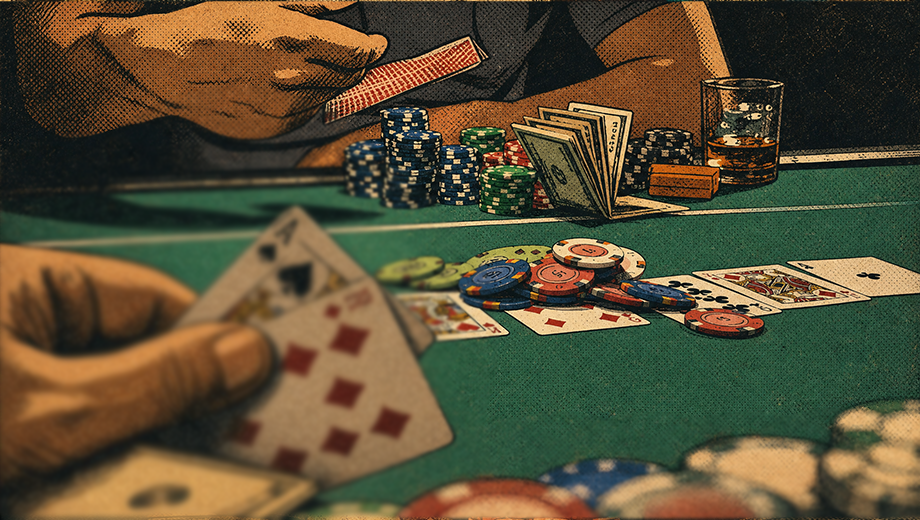
What I’d say is this: the hand in front of you is the only real thing. The stack sizes. The bet. The player. Everything else — the crowd, the cameras, what happens if you bust, what happens if you win — that’s not in front of you. The hand is.
I’ve watched players go on tilt after a bad beat and completely fall apart. The hand is over. It’s done. The next hand is the one that matters. That’s the whole game, really — short memory, next hand, next decision. The players who can’t do that give away a lot of chips to the ones who can.
The morning of the 2003 final table, I sat with all of it for a while. Then I went and played poker. That’s all there was to do.
If you want to experience that same build-up for yourself, the WSOP Main Event is open to anyone willing to earn a seat — including through satellites, the same way it started for me.
The Numbers Behind That Final Table
Context helps. The 2003 field wasn’t small, but it wasn’t what it became either. Here’s what the Main Event looked like in the years around the win.
| Year | Entries | First Place Prize |
|---|---|---|
| 2001 | 613 | $1,500,000 |
| 2002 | 631 | $2,000,000 |
| 2003 | 839 | $2,500,000 |
| 2004 | 2,576 | $5,000,000 |
| 2005 | 5,619 | $7,500,000 |
| 2006 | 8,773 | $12,000,000 |
839 players in 2003. Within three years it was more than ten times that. Something changed after that final table.
After the Final Table
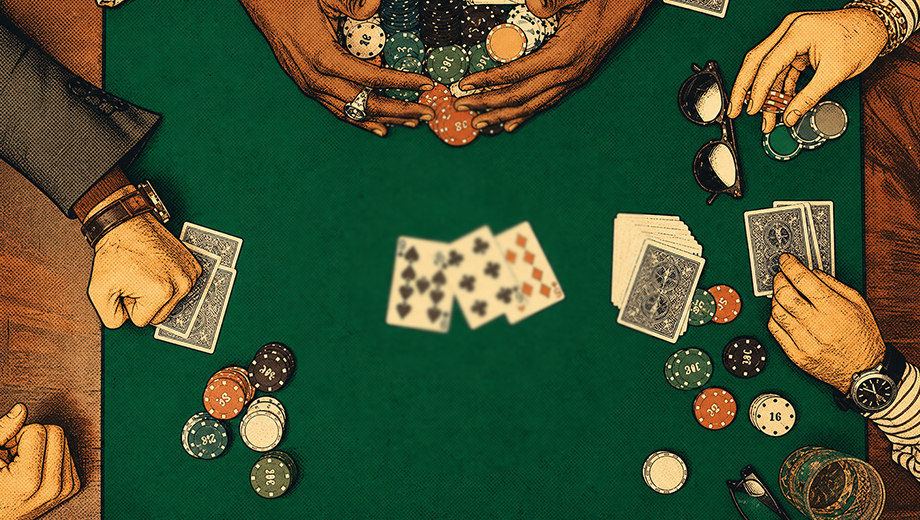
The final table ran. I played. Won some hands, lost some, made the decisions I made. By the end of it I had $2.5 million and a PokerStars patch and no idea what came next. Flew home Saturday. Party that night. Back at work Monday morning. Nobody outside of about 30 people knew what had happened — the broadcast didn’t air until August.
The nervous part was the morning. The poker part was just poker.
Frequently Asked Questions
Did Chris Moneymaker get nervous during the 2003 WSOP Main Event?
Not during the hands themselves. The closest he came to nerves was the morning of the final table — before play started — when the weight of the situation had time to settle. Once he sat down and the cards were in front of him, the concrete reality of the hand replaced the abstract pressure.
How does Chris Moneymaker handle nerves at the poker table?
He focuses on the immediate hand — the stack sizes, the bet, the player in front of him. Everything outside that is noise. He also attributes a lot of his calm to having nothing to prove in 2003: he didn’t know most of the players, didn’t have a reputation to protect, and entered expecting to be the worst player at the table.
Did Moneymaker know he was playing Phil Ivey at the 2003 WSOP?
No. He only knew three players by name going into the tournament: Phil Hellmuth, Doyle Brunson, and Johnny Chan. When the hand with Ivey happened at 4am, he saw a young player with chips — not the man widely considered the best in the world at the time. He found that out afterward.
How many players were in the 2003 WSOP Main Event?
839 players entered the 2003 WSOP Main Event at Binion’s Horseshoe in Las Vegas. The prize pool was $7,987,860, with first place paying $2,500,000. By 2006, the field had grown to 8,773 players — more than ten times the 2003 size.
What does Moneymaker say about poker tilt and emotional control?
He sees emotional control as the core skill in poker. A bad beat is over the moment it ends — the next hand is what matters. Players who can’t reset after a loss give away chips to those who can. He describes it as a short memory: take the hit, step back mentally, come back focused on what’s in front of you now.
What did Moneymaker do after winning the 2003 WSOP Main Event?
He flew home the same weekend, had a party, and went back to work at his accounting job Monday morning. The ESPN broadcast didn’t air until August 2003, roughly three months after the win, so the public moment came much later. He worked for eight more months before finally leaving.