
When I walked into Binion’s Horseshoe for the first time in 2003, the ceilings felt six feet tall. They’d pulled the slot machines out and replaced them with poker tables. Players were tracked on a whiteboard with a magic marker. There was a room upstairs — Benny’s Bullpen — about 40 tables packed into one space. Previous years, there’d been so much cigarette smoke you had to duck below it just to breathe.
That was my introduction to the World Series of Poker. No orientation. No guide. Just walk in, find your seat, and figure it out.
It’s a little different now. But not as different as you’d think. Here’s what to actually expect when you show up for the first time.
The Scale Is Going to Surprise You
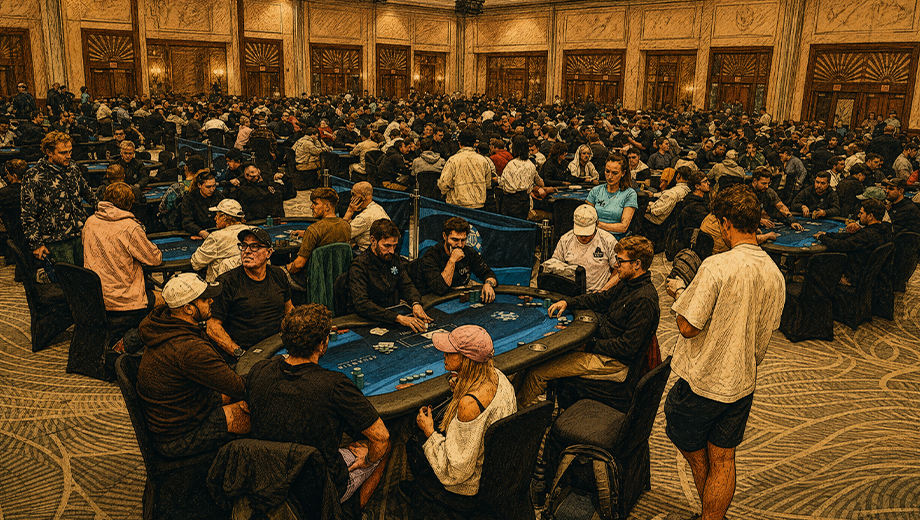
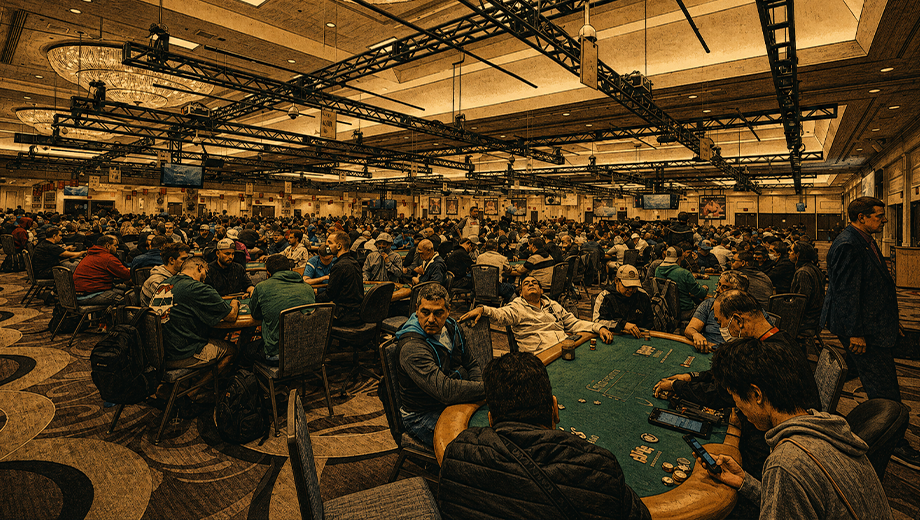
The WSOP is not one tournament. It’s dozens of events running simultaneously across weeks. Bracelet events, ring events, satellites, cash games — all of it happening at the same time in the same building. The first thing most first-timers feel when they walk in is overwhelmed, and that’s normal.
The Main Event alone has grown from 839 players in 2003 to over 10,000 in recent years. That’s a lot of people. A lot of tables. A lot of noise. You’ll spend your first hour just getting oriented — where registration is, where your table is, where the bathrooms are, where you can get food without missing too many hands.
Give yourself time for that. Show up early. Walk the floor before your event starts. It sounds obvious, but most first-timers don’t do it and spend the first two levels distracted.
The Players Look Like Regular People — Because They Are
Before I won in 2003, I assumed everyone at the WSOP was a professional. Seasoned veterans who’d been playing for decades. People who could look into your soul across the table.
Some of them are. Most of them aren’t.
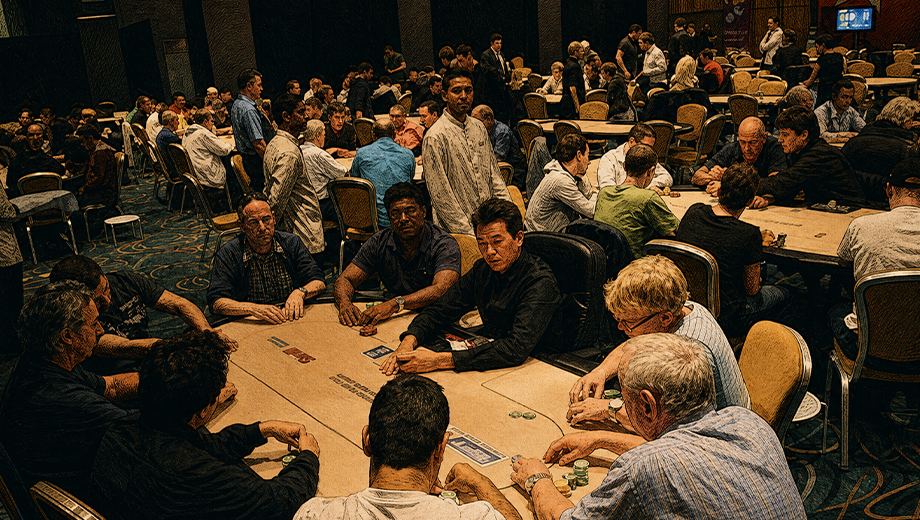
The modern WSOP field — especially the Main Event — is full of recreational players. People who qualified online, people who saved up for years to play it once, people who are on vacation and decided to enter. The intimidation factor, if you’re carrying one, is almost entirely in your head. The guy in seat three with the big stack might be a retired accountant from Ohio who ran good on Day 1. The woman in seat seven who seems relaxed might be a first-timer too.
Look around your table before you assume anything. Watch a few hands. You’ll get a read faster than you think.
What a Full Day Actually Looks Like
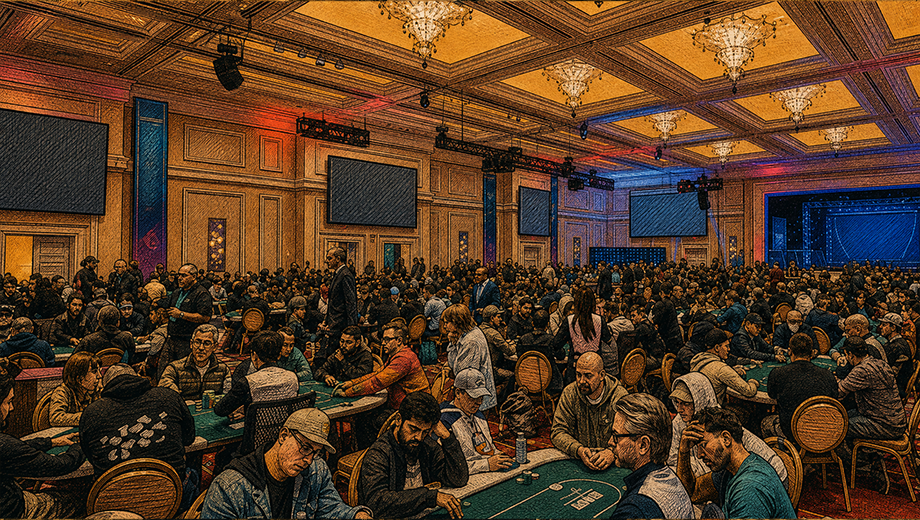
Tournament days at the WSOP are long. The Main Event runs roughly 10 to 14 hours per day, depending on the level structure and how fast the field thins. You’ll start around noon. You’ll finish somewhere between midnight and 2am. In between: two-hour levels, short breaks every two hours, one longer dinner break mid-session.
The first few levels feel slow. Deep starting stacks mean nobody is forced to do anything stupid. Use that time to observe — watch how your table plays, who the aggressor is, who folds to pressure, who’s playing scared. The reads you build in the first four hours are what you use when the blinds get big and decisions get real.
Food matters more than people admit. You’re sitting for 12 hours. Your brain is working the whole time. Eat during the dinner break. Don’t skip it because you’re running good — you’ll fade in levels nine and ten and make decisions you wouldn’t have made on a full stomach.
The Registration and Logistics Nobody Explains
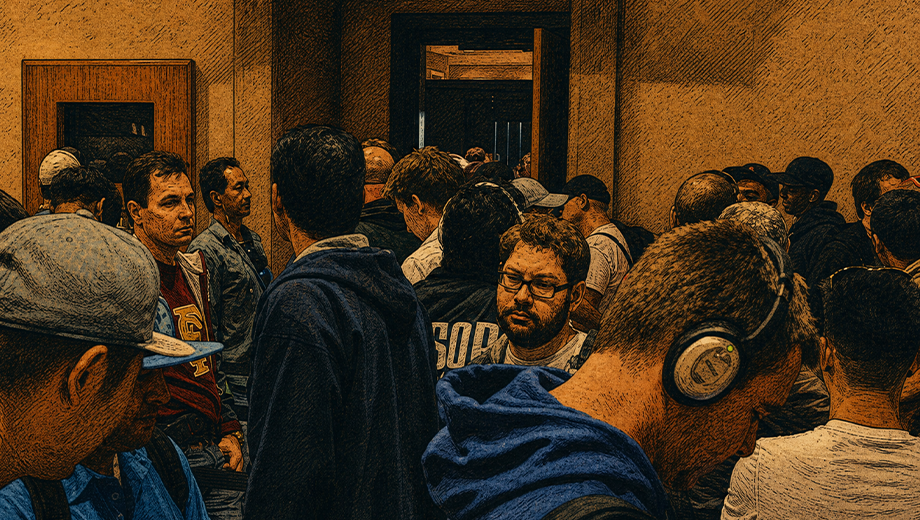
Registration lines can be long. For major events, show up well before the start time. Bring your ID — you will need it. If you’re playing a satellite first and winning your way in, know exactly how the seat transfer works before you sit down, because the process varies by event and year.
In 2003, seats were non-transferable. I couldn’t sell my Main Event seat even if I’d wanted to — and I did want to. That rule has changed over the years, but always verify the current rules for the specific event you’re entering. Don’t assume anything carries over from what you read about a previous year.
Chip bagging at the end of the day is straightforward: count your chips, place them in the provided bag, write your chip count and player number on the outside, hand it to the floor. They’ll give you a receipt. Keep it. You’ll need it to re-enter on Day 2.
How to Handle the Table Draw
You don’t get to pick your table. You get assigned one. You might draw a table with a former champion two seats to your right. You might draw a table full of first-timers just like you. Either way, the approach is the same: observe first, play second.
When I sat down at Binion’s in 2003, I found Dan Harrington two seats to my right. I didn’t recognize him — had to check the wall of champions. Another player at the table, wearing a PokerStars patch, kept raising my big blind and gave me the most trouble all day. The player who scared me least was the guy in the Paradise Poker shirt who had won his seat in a drawing as a 50-cent/dollar limit player. I made him my first target.
The point: your table is information. Use it. The chip leader isn’t always the most dangerous player. The quiet player in seat five might be the one to watch. Figure out who’s who before you start getting involved in pots.
What First-Timers Get Wrong
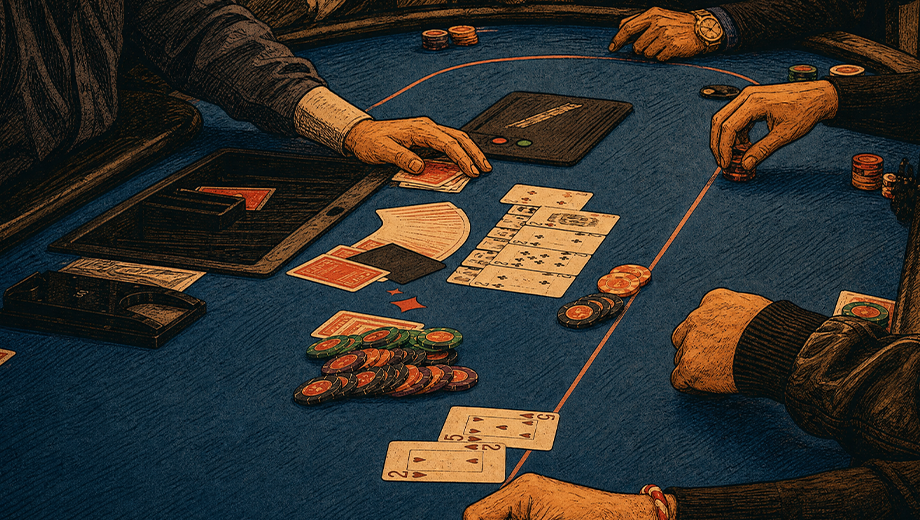
They play too many hands early. Deep structures in the Main Event reward patience. There’s no urgency in the first four levels — the blinds are small relative to your stack, and most of the field is playing cautious. This isn’t the time to make moves. It’s the time to build your table read and pick spots that actually matter.
They get rattled by bad beats. One hand, even a big one, is rarely the end of your tournament. I took a bad beat on Day 2 of the 2003 Main Event — got a lot of money in ahead and lost. Walked outside, thought it was over. Very next hand: dealt Aces, nearly doubled up immediately. Short memory. Move on. The players who survive deep are the ones who treat each hand as a new situation, not as the continuation of whatever just happened.
They forget to enjoy it. The WSOP is a remarkable thing to be part of, even if you bust on Day 1. The field, the atmosphere, the history in the room — it’s worth paying attention to. You can take the poker seriously and still look up from your cards once in a while.
If you want to get a feel for multi-day tournament poker before you make the trip to Vegas, the Moneymaker Tour runs the same format at accessible buy-ins across the U.S. Same structure. Same bubble pressure. Same bagging at the end of the night. Worth doing at least once before your first WSOP.
Frequently Asked Questions
What should a first-timer bring to the WSOP?
Bring a valid government-issued ID — you’ll need it for registration. Bring comfortable clothing for a 12-plus hour day, something to eat or money for the dinner break, and any medications or personal items you’d need for a long session. A hoodie or light jacket is useful — the tournament room is often cold. Leave anything you don’t need at your hotel.
How long is a WSOP Main Event day?
A typical Main Event day runs 10 to 14 hours. Play generally starts around noon and ends between midnight and 2am. Each level is two hours long, with short breaks between levels and a longer dinner break mid-session. Day 2 typically starts at noon the following day.
How many players are in the WSOP Main Event?
The field has grown significantly since 2003. In 2003 there were 839 players. By 2006 the field had grown to 8,773. In recent years the Main Event has surpassed 10,000 entrants. The exact number varies by year. Check the WSOP official site for current year registration numbers.
Is the WSOP Main Event only for professional poker players?
No. The modern Main Event field includes a large percentage of recreational players — people who qualified online, saved up to play once, or are entering as a bucket list experience. Chris Moneymaker himself was a recreational player with no live high-stakes experience when he won in 2003. The field is competitive, but it is not exclusively professional.
What is chip bagging at the WSOP?
At the end of each tournament day, surviving players count their chips and place them in a provided plastic bag. They write their chip count and player number on the outside of the bag and hand it to a floor staff member, who gives them a receipt. Players bring that receipt back the next day to collect their bag and resume play.
Can you qualify for the WSOP Main Event online?
Yes. Online satellites have been a path to the Main Event since before 2003, when Chris Moneymaker qualified through an $86 PokerStars satellite — winning his way through multiple rounds into the $10,000 buy-in event. Online qualifiers are available through multiple platforms each year. ACR (Americas Cardroom) runs satellites to major live events including the WSOP.